


Wydawcy
Katalog tematyczny
- Archeologia (109)
- Ekonomia, finanse, business (13704)
- Filozofia (1445)
- Historia (3040)
- Języki i językoznawstwo (2356)
- Lifestyle, hobby i rozrywka (475)
- Medycyna (9704)
- Chirurgia (272)
- Inne gałęzie medycyny (1871)
- Medycyna kliniczna (4187)
- Medycyna niekonwencjonalna (14)
- Medycyna przedkliniczna (269)
- Medycyna, ogólnie (1740)
- Medyczne służby pomocnicze (745)
- Studia medyczne (16)
- Weterynaria (548)
- Nauki humanistyczne (4)
- Nauki o Ziemi i środowisku (2638)
- Nauki ścisłe (20412)
- Nauki społeczne (8486)
- Nauki techniczne (13450)
- Prawo (1696)
- Publikacje informacyjne i interdyscyplinarne (1288)
- Religia i wierzenia (917)
- Technika komputerowa (4067)
- Zdrowie, relacje międzyludzkie i rozwój osobisty (657)





Informacje szczegółowe o książce
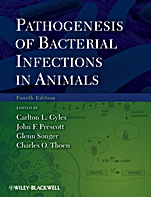
Pathogenesis of Bacterial Infections in Animals
ISBN 9780813812373
Autor: Carlton L. Gyles, John F. Prescott, J. Glenn Songer, Charles O. Thoen
Wydawca: Wiley
Dostępność: 3-6 tygodni
Cena: 1 071,00 zł
Przed złożeniem zamówienia prosimy o kontakt mailowy celem potwierdzenia ceny.
ISBN13: |
9780813812373 |
ISBN10: |
0813812372 |
Autor: |
Carlton L. Gyles, John F. Prescott, J. Glenn Songer, Charles O. Thoen |
Oprawa: |
Hardback |
Rok Wydania: |
2010-06-08 |
Numer Wydania: |
4th Edition |
Ilość stron: |
662 |
Wymiary: |
254x199 |
Tematy: |
MZ |
The Fourth Edition of Pathogenesis of Bacterial Infections in Animals captures the rapid developments in understanding the mechanisms of virulence of the major bacterial pathogens affecting animals. The new edition now includes a color plate section, providing valuable detail to clinical illustrations. Emphasis has newly been given to bacterial evasion of the immune system, overarching themes in pathogenesis, and the contributions of pathogenomics and newer approaches.
As in the previous editions, the core of the book presents both an overview of pathogenesis of important bacterial infections of animals, including relevant events that occur in the herd or flock and its environment, and in–depth analysis of actions taking place at the cellular and molecular levels. With contributions from 74 experts in the field, this book serves as a remarkable resource for veterinary and medical microbiologists, immunologists, and pathologists, as well as graduate students in veterinary medicine and animal science.
Key Features:Contributions from 74 experts in the field capture the rapid developments in understanding the mechanisms of virulence of the major bacterial pathogens of animals.Includes a color plate section that provides valuable detail to clinical images.Presents both the overview of pathogenesis, including relevant events that occur in the herd or flock and its environment, and actions taking place at the cellular and molecular levels.Serves as a valuable reference for veterinary and medical microbiologists, immunologists, and pathologists, as well as graduate students in veterinary medicine and animal science.
Spis treści:
Preface.
Contributors.
1 Themes in Bacterial Pathogenic Mechanisms (C. L. Gyles and J. F. Prescott).
Introduction.
Basic Steps in Pathogenesis Continue to Provide a Sound Foundation.
Concepts of Virulence are Being Refi ned.
HostR
11;Bacteria Communication is Critical.
Pathogenesis in the Post–Genomic Era.
Evolution of Pathogens—The Path Traveled May Provide Insights into the Road Ahead.
2 Subversion of the Immune Response by Bacterial Pathogens (D. C. Hodgins and P. E. Shewen).
Introduction.
Subversion of Innate Immune Responses.
Subversion of Adaptive Immunity.
Conclusion.
3 Evolution of Bacterial Virulence (P. Boerlin).
What are Pathogens and How do They Emerge?
Bacterial Fitness and Virulence.
Sources of Genetic Diversity, Population Structure, and Genome Plasticity.
Pathogenicity Islands.
Bacteriophages and Their Role in Pathogen Evolution and Virulence.
Illustrations of Virulence Evolution.
Conclusion.
4 Streptococcus(J. F. Timoney).
Introduction.
Streptococcus agalactiae.
Streptococcus dysgalactiae.
Streptococcus uberis.
Streptococcus equi.
Streptococcus zooepidemicus.
Streptococcus canis.
Streptococcus porcinus.
Streptococcus suis.
Streptococcus pneumoniae.
Gaps in Knowledge and Anticipated Developments.
5 Staphylococcus(K. Hermans, L. A. Devriese, and F. Haesebrouck).
Introduction.
Characteristics of the Organism.
Pathogenic Staphylococcus Species.
Sources of the Bacterium.
Bacterial Virulence Factors.
Pathogenesis.
Types of Disease and Pathologic Changes.
Interactions between the Bacterium and Host Defenses.
Immunity and Its Impact on Pathogenesis.
Conclusions: New Developments.
6 Bacillus anthracis(J. Mogridge, S. Shadomy, and P. Turnbull).
Introduction.
Etiology, Ecology, and Epidemiology.
Symptomatology and Diagnosis.
Bacteriology.
Pathogenesis.
Immunology.
Control.
Future Directions.
7 Mycobacterium(I. Olsen, R. G. Barlett
a, and C. O. Thoen).
Introduction.
Characteristics and Sources of the Organisms.
Bacterial Virulence Factors.
Pathogenesis.
Immunity.
Gaps in Knowledge and Anticipated Developments.
8 Corynebacterium and Arcanobacterium(R. Moore, A. Miyoshi, L. G. C. Pacheco, N. Seyffert, and V. Azevedo).
Corynebacterium.
Corynebacterium pseudotuberculosis.
Other Corynebacteria.
Arcanobacterium.
Arcanobacterium pyogenes.
Future Directions.
9 Rhodococcus (J. F. Prescott, W. G. Meijer, and J. A. Vázquez–Boland).
Introduction.
Characteristics and Sources of the Organism.
Bacterial Virulence Factors.
Pathogenesis.
Gaps in Knowledge and Anticipated Developments.
10 Listeria(C. J. Czuprynski, S. Kathariou, and K. Poulsen).
Introduction.
Characteristics.
Sources of Infection.
Virulence Factors.
Pathogenesis.
Host–Pathogen Interactions in Listeriosis.
Prevention and Treatment.
Conclusion.
11 Neurotoxigenic Clostridia (H. Böhnel and F. Gessler).
Introduction.
Clostridium tetani and Clostridium botulinum.
Toxins.
Tetanus.
Botulism.
Control and Prevention.
BoNT as Therapeutics.
Conclusions.
12 Histotoxic Clostridia (J. Glenn Songer).
Introduction.
Virulence Factors and Pathogenesis.
Clostridium perfringens.
Clostridium septicum.
Clostridium chauvoei.
Clostridium novyi.
Clostridium sordellii.
Conclusion.
13 Enteric Clostridia (J. Glenn Songer).
Introduction.
Clostridium perfringens.
Clostridium difficile.
Clostridium septicum.
Clostridium spiroforme.
Clostridium piliforme.
Gaps in Knowledge and Anticipated Developments.
14 Salmonella(P
. A. Barrow, M. A. Jones, and N. Thomson).
Introduction.
Salmonella Infections of Cattle.
Salmonella Infections of Sheep.
Salmonella Infections of Pigs.
Infections of Domestic Fowl and Other Avian Species.
Colonization of the Intestine.
Salmonella Invasion and Enteropathogenesis.
Systemic Disease.
Genome Structure with Reference to Virulence.
Immunity to Infection and Its Manipulation by Salmonella.
Conclusion—Problems and Opportunities.
Color Plate Section.
15 Escherichia coli(C. L. Gyles and J. M. Fairbrother).
Introduction.
Types of Escherichia coli Implicated in Disease.
ETEC.
Pathogenesis of ETEC.
STEC.
EPEC.
ExPEC.
Immunity.
Conclusions.
16 Yersinia(M. A. Bergman, R. Chafel, and J. Mecsas).
Introduction.
Classifi cation of Yersinia Species.
Sources of Yersinia Species.
Virulence Factors.
Pathogenesis.
Vaccines.
Future Directions.
17 Pasteurella(J. D. Boyce, M. Harper, I. W. Wilkie, and B. Adler).
Introduction.
Characteristics and Sources of the Organisms.
Diseases Caused by Pasteurella multocida.
Pasteurella multocida: Bacterial Virulence Factors.
Pathogenesis.
Immunity in Pasteurella multocida Infections.
Gaps in Knowledge and Anticipated Developments.
Acknowledgment.
18 Mannheimia(R. Y. C. Lo).
Introduction.
Characteristics and Sources of Mannheimia.
Bacterial Virulence Factors.
Pathogenesis and Disease.
Gaps in Knowledge and Anticipated Developments.
Acknowledgments.
19 Actinobacillus(J. I. MacInnes).
Actinobacillus pleuropneumoniae.
Actinobacillus lignieresii.
Actinobacillus equuli.
Actinobacillus suis.
Future Prospects.
20 Haemo
philus(I. Sandal, L. B. Corbeil, and T. J. Inzana).
Introduction.
Characteristics.
Habitat and Transmission.
Histophilus somni.
Haemophilus parasuis.
Avibacterium paragallinarum.
Conclusions.
21 Bordetella(K. Register and E. Harvill).
Introduction.
Characteristics of the Genus.
Sources of the Bacteria.
Virulence Factors.
Pathogenesis.
Conclusion.
22 Brucella(S. C. Olsen, B. H. Bellaire, R. M. Roop II, and C. O. Thoen).
Introduction.
Characteristics and Sources of the Organisms.
Bacterial Virulence Factors.
Pathogenesis.
Disease Control and Epidemiology.
Gaps in Knowledge and Anticipated Developments.
23 Pseudomonas(E. L. Westman, J. M. Matewish, and J. S. Lam).
Introduction.
Overview of Pathogenesis.
Virulence Factors of Pseudomonas aeruginosa.
Antibiotic Resistance.
Impact of Whole Genome Sequences.
Vaccines.
Conclusions and Future Prospects.
24 Moraxella(J. A. Angelos).
Introduction.
Infectious Bovine Keratoconjunctivitis.
Pathogenesis of Moraxella bovis.
Conclusions.
25 Campylobacter and Helicobacter(L. A. Joens, F. Haesebrouck, and F. Pasmans).
Campylobacter (L. A. Joens).
Helicobacter (F. Haesebrouck and F. Pasmans).
Gastric Helicobacters.
Enterohepatic Helicobacters.
Pathogenesis and Virulence Factors.
Conclusions.
26 Lawsonia intracellularis(C. J. Gebhart and R. M. C. Guedes).
Characteristics of Lawsonia intracellularis.
Sources of Lawsonia intracellularis.
Virulence Factors.
Pathogenesis.
Conclusion.
27 Gram–negative Anaerobes (D. J. Hampson, T. G. Nagaraja, R. M. Kennan, and J. I. Rood).
Introduction.General Bacterial Virulence Factors.
Fusobacterium.
Bacteroides.
Prevotella and Porphyromonas.
Dichelobacter.
Treponema.
Brachyspira.
Gaps in Knowledge and Anticipated Developments.
28 Leptospira(B. Adler and A. de la Peña Moctezuma).
Leptospira—The Basics.
Leptospirosis—The Disease.
Genomics, Proteomics, and Molecular Biology.
Pathogenesis of Leptospirosis.
Mechanisms of Immunity in Leptospirosis.
Diagnosis of Leptospirosis and The Typing of Isolates.
Gaps in Knowledge and Anticipated Developments.
Acknowledgments.
29 Mycoplasma (G. F. Browning, M. S. Marenda, P. F. Markham, A. H. Noormohammadi, and K. G. Whithear)
Introduction.
Characteristics of the Organism.
Sources of the Bacterium.
Bacterial Virulence Factors.
Pathogenesis.
Interactions.
Protective Immunity.
Conclusions.
30 Chlamydia (A. Pospischil, N. Borel, and A. A. Andersen).
Introduction.
Classifi cation.
Host–Parasite Relationship: Clinical Disease and Pathogenesis.
Life Cycle.
Aberrant Development Cycle.
Host Response.
Prevention and Control.
Future Directions.
31 Rickettsiales (T. Waner, S. Mahan, P. Kelly, and S. Harrus).
Introduction.
Family Anaplasmataceae.
Family Rickettsiaceae.
Index.
Nota biograficzna:
Carlton L. Gyles, DVM, MSc, PhD, FCAHS, is Professor of veterinary microbiology at Ontario Veterinary College, University of Guelph, Ontario, Canada.
John F. Prescott, MA, Vet MB, PhD, FCAHS, is Professor of veterinary microbiology at Ontario Veterinary College, University of Guelph, Ontario, Canada.
J. Glenn Songer, PhD, is Professor of Veterinary Science and Microbiology, The University of Arizona, Tucson, Arizona.
Charles O. Thoen, DVM, PhD, is Professor and Former Chair, Department of
Veterinary Microbiology and Preventive Medicine, College of Veterinary Medicine, Iowa State University, Ames, Iowa.
Okładka tylna:
The Fourth Edition of Pathogenesis of Bacterial Infections in Animals captures the rapid developments in understanding the mechanisms of virulence of the major bacterial pathogens affecting animals. The new edition now includes a color plate section, providing valuable detail to clinical illustrations. Emphasis has newly been given to bacterial evasion of the immune system, overarching themes in pathogenesis, and the contributions of pathogenomics and newer approaches.
As in the previous editions, the core of the book presents both an overview of pathogenesis of important bacterial infections of animals, including relevant events that occur in the herd or flock and its environment, and in–depth analysis of actions taking place at the cellular and molecular levels. With contributions from 74 experts in the field, this book serves as a remarkable resource for veterinary and medical microbiologists, immunologists, and pathologists, as well as graduate students in veterinary medicine and animal science.
Key Features:Contributions from 74 experts in the field capture the rapid developments in understanding the mechanisms of virulence of the major bacterial pathogens of animals.Includes a color plate section that provides valuable detail to clinical images.Presents both the overview of pathogenesis, including relevant events that occur in the herd or flock and its environment, and actions taking place at the cellular and molecular levels.Serves as a valuable reference for veterinary and medical microbiologists, immunologists, and pathologists, as well as graduate students in veterinary medicine and animal science.
Koszyk
Książek w koszyku: 0 szt.
Wartość zakupów: 0,00 zł
Informacje


Kontakt
Gambit
Centrum Oprogramowania
i Szkoleń Sp. z o.o.
Al. Pokoju 29b/22-24
31-564 Kraków
Siedziba Księgarni
ul. Kordylewskiego 1
31-542 Kraków
+48 12 410 5991
+48 12 410 5987
+48 12 410 5989
Subskrypcje
Administratorem danych osobowych jest firma Gambit COiS Sp. z o.o. Na podany adres będzie wysyłany wyłącznie biuletyn informacyjny.
Autoryzacja płatności

Informacje na temat autoryzacji płatności poprzez PayU.

© Copyright 2012: GAMBIT COiS Sp. z o.o. Wszelkie prawa zastrzeżone.
Projekt i wykonanie: Alchemia Studio Reklamy