


Wydawcy
Katalog tematyczny
- Archeologia (109)
- Ekonomia, finanse, business (13704)
- Filozofia (1445)
- Historia (3040)
- Języki i językoznawstwo (2356)
- Lifestyle, hobby i rozrywka (475)
- Medycyna (9704)
- Nauki humanistyczne (4)
- Nauki o Ziemi i środowisku (2638)
- Nauki ścisłe (20412)
- Astronomia (294)
- Biologia (5119)
- Chemia (6540)
- Chemia analityczna (361)
- Chemia fizyczna (346)
- Chemia nieorganiczna (137)
- Chemia organiczna (535)
- Krystalografia (27)
- Minerologia (46)
- Fizyka (3309)
- Matematyka (4574)
- Nauki ścisłe, ogólnie (503)
- Nauki społeczne (8486)
- Nauki techniczne (13450)
- Prawo (1696)
- Publikacje informacyjne i interdyscyplinarne (1288)
- Religia i wierzenia (917)
- Technika komputerowa (4067)
- Zdrowie, relacje międzyludzkie i rozwój osobisty (657)





Informacje szczegółowe o książce
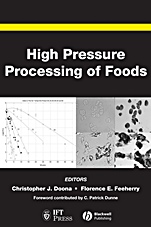
High Pressure Processing of Foods
ISBN 9780813809441
Autor: Christopher J. Doona, Florence E. Feeherry, C. Patrick Dunne
Wydawca: Wiley
Dostępność: 3-6 tygodni
Cena: 1 140,30 zł
Przed złożeniem zamówienia prosimy o kontakt mailowy celem potwierdzenia ceny.
ISBN13: |
9780813809441 |
ISBN10: |
0813809444 |
Autor: |
Christopher J. Doona, Florence E. Feeherry, C. Patrick Dunne |
Oprawa: |
Hardback |
Rok Wydania: |
2007-10-18 |
Ilość stron: |
272 |
Wymiary: |
230x162 |
Tematy: |
PN |
High Pressure Processing (HPP) is rapidly becoming the most well–known, emerging non–thermal food processing technology based on its ability to produce value–added and fresher foods. HPP has the ability to safely inactivate Clostridium botulinum spores and other potentially harmful pathogenic microorganisms without compromising food structure or food quality, and breakthroughs for exploiting HPP to produce sterile (i.e., shelf–stable) low–acid foods are imminent and will significantly impact the commercial marketplace worldwide. Effecting sterilization with HPP requires an understanding of the relevant process control parameters (pressure, temperature, time, and characteristics of the food matrix) and their interactions with target pathogenic bacterial spores.
In High Pressure Processing of Foods, an array of international experts interrelate leading scientific advancements that use molecular biology techniques to explore the biochemical mechanisms of spore germination and inactivation by high pressure; investigate the inactivation of different spore species as functions of processing parameters, such as pressure, temperature, time, food matrix, and the presence of anti–microbials; propose predictive mathematical models for predicting spore inactivation in foods treated with HPP; address commercial aspects of high pressure processing that include the high pressure equipment used to achieve the sterilization of bacterial spores in foods; and provide an assessment of the quality and sensory evaluation of actual food products preserved by HPP. High Pressure Processing of Foods is the landmark resource on the mechanisms and predictive modeling of bacterial spore inactivation by HPP.
Spis treści:
1. Introduction to High Pressure Processing of Foods – Margaret F. Patterson, Mark Linton, and Christopher J. Doona.
2. Germination of Spores of Ba
cillus subtilis by High Pressure – Peter Setlow.
3. Inactivation of Bacillus cereus by High Hydrostatic Pressure – Murad A. Al–Holy, Mengshi Lin, and Barbara A. Rasco.
4. Inactivation of Bacillus spores at low pH and in milk by high pressure at moderate temperature – Isabelle Van Opstal, Abram Aertsen, and Chris W. Michiels.
5. Pressure and heat resistance of Clostridium botulinum and other endospores – Michael G. Gänzle, Dirk Margosch, Roman Buckow, Matthias A. Ehrmann, Volker Heinz, and Rudi F. Vogel.
6. The Quasi–chemical and Weibull Distribution Models of Nonlinear Inactivation Kinetics of Escherichia coli ATCC 11229 by High Pressure Processing – Christopher J. Doona, Florence E. Feeherry, Edward W. Ross, Maria Corradini, and Micha Peleg.
7. Sensitization of microorganisms to high–pressure processing by phenolic compounds – Yoon–Kyung Chung, Aaron S. Malone, and Ahmed E. Yousef.
8. Functional genomics for optimal microbiological stability of processed food products – Stanley Brul, Hans van der Spek, Bart J.F. Keijser, Frank H.J. Schuren, Suus J.C.M. Oomes, and Roy C. Montijn.
9. Determination of Quality Differences in Low–Acid Foods Sterilized by High Pressure Versus Retorting – Ming H. Lau and Evan J. Turek.
10. Consumer Evaluations of High Pressure Processed Foods – Alan O. Wright, Armand V. Cardello, and Rick Bell.
11. Compression Heating and Temperature Control in High Pressure Processing – Edmund Ting
Nota biograficzna:
Christopher J. Doona, PhD,serves as Research Chemist of the U.S. Army –
Natick Soldier Research, Development and Engineering Center, DoD Combat Feeding Directorate, Advanced Processes and Packaging Team with responsibilities for independently and in collaboration with other research scientists conducting, executing, and coordinating innovative new areas of basic and applied research with primary benefits to the military. Dr. Doona’s award–winning research investigations specialize in novel food processing technologies and innovative disinfectant technologies for the safety and stability of foods. Florence E. Feeherry, MS, serves as Research Microbiologist for the U.S. Army – Natick Soldier Research, Development and Engineering Center, DoD Combat Feeding Directorate, Advanced Processes and Packaging Team with responsibilities for independently, and in collaboration with other researchers, carrying out basic and applied research investigations specializing in the principles of food microbiology to establish the safety of foods processed with novel technologies, such as high pressure, stabilized by formulation or “hurdle technology,” or treated with novel disinfectant technologies.
Okładka tylna:
High Pressure Processing (HPP) is rapidly becoming the most well–known, emerging non–thermal food processing technology based on its ability to produce value–added and fresher foods. HPP has the ability to safely inactivate Clostridium botulinum spores and other potentially harmful pathogenic microorganisms without compromising food structure or food quality, and breakthroughs for exploiting HPP to produce sterile (i.e., shelf–stable) low–acid foods are imminent and will significantly impact the commercial marketplace worldwide. Effecting sterilization with HPP requires an understanding of the relevant process control parameters (pressure, temperature, time, and characteristics of the food matrix) and their interactions with target pathogenic b
acterial spores.
In High Pressure Processing of Foods, an array of international experts interrelate leading scientific advancements that use molecular biology techniques to explore the biochemical mechanisms of spore germination and inactivation by high pressure; investigate the inactivation of different spore species as functions of processing parameters, such as pressure, temperature, time, food matrix, and the presence of anti–microbials; propose predictive mathematical models for predicting spore inactivation in foods treated with HPP; address commercial aspects of high pressure processing that include the high pressure equipment used to achieve the sterilization of bacterial spores in foods; and provide an assessment of the quality and sensory evaluation of actual food products preserved by HPP. High Pressure Processing of Foods is the landmark resource on the mechanisms and predictive modeling of bacterial spore inactivation by HPP.
Koszyk
Książek w koszyku: 0 szt.
Wartość zakupów: 0,00 zł
Informacje


Kontakt
Gambit
Centrum Oprogramowania
i Szkoleń Sp. z o.o.
Al. Pokoju 29b/22-24
31-564 Kraków
Siedziba Księgarni
ul. Kordylewskiego 1
31-542 Kraków
+48 12 410 5991
+48 12 410 5987
+48 12 410 5989
Subskrypcje
Administratorem danych osobowych jest firma Gambit COiS Sp. z o.o. Na podany adres będzie wysyłany wyłącznie biuletyn informacyjny.
Autoryzacja płatności

Informacje na temat autoryzacji płatności poprzez PayU.

© Copyright 2012: GAMBIT COiS Sp. z o.o. Wszelkie prawa zastrzeżone.
Projekt i wykonanie: Alchemia Studio Reklamy