


Wydawcy
Katalog tematyczny
- Archeologia (109)
- Ekonomia, finanse, business (13704)
- Filozofia (1445)
- Historia (3040)
- Języki i językoznawstwo (2356)
- Lifestyle, hobby i rozrywka (475)
- Medycyna (9704)
- Nauki humanistyczne (4)
- Nauki o Ziemi i środowisku (2638)
- Nauki ścisłe (20412)
- Astronomia (294)
- Biologia (5119)
- Chemia (6540)
- Chemia analityczna (361)
- Chemia fizyczna (346)
- Chemia nieorganiczna (137)
- Chemia organiczna (535)
- Krystalografia (27)
- Minerologia (46)
- Fizyka (3309)
- Matematyka (4574)
- Nauki ścisłe, ogólnie (503)
- Nauki społeczne (8486)
- Nauki techniczne (13450)
- Prawo (1696)
- Publikacje informacyjne i interdyscyplinarne (1288)
- Religia i wierzenia (917)
- Technika komputerowa (4067)
- Zdrowie, relacje międzyludzkie i rozwój osobisty (657)





Informacje szczegółowe o książce
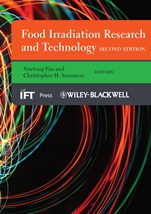
Food Irradiation Research and Technology
ISBN 9780813802091
Autor: Xuetong Fan, Christopher H. Sommers
Wydawca: Wiley
Dostępność: 3-6 tygodni
Cena: 984,90 zł
Przed złożeniem zamówienia prosimy o kontakt mailowy celem potwierdzenia ceny.
ISBN13: |
9780813802091 |
ISBN10: |
0813802091 |
Autor: |
Xuetong Fan, Christopher H. Sommers |
Oprawa: |
Hardback |
Rok Wydania: |
2012-10-19 |
Numer Wydania: |
2nd Edition |
Ilość stron: |
472 |
Wymiary: |
234x157 |
Tematy: |
PN |
The benefits of food irradiation to the public health have beendescribed extensively by organizations such as the Centers forDisease Control and Prevention in the USA and the World HealthOrganization. The American Medical Association and the AmericanDietetic Association have both endorsed the irradiation process.Yet the potential health benefits of irradiation are unknown tomany consumers and food industry representatives who are wary ofirradiated foods due to myth–information from consumer–advocate groups.
This updated second edition of Food Irradiation Research andTechnology reviews the latest developments in irradiationtechnologies as they are applied to meat, seafood fish, fruits,vegetables and nuts. Experts from industry, government, andacademia define the basic principles and public health benefits ofirradiation.
New chapters in this edition address irradiation chemistry,including furan formation due to irradiation, irradiation ofpackaging materials, processing irradiation technologies andparameters, and ready–to–eat meat products. Coverage of safety andquality of fresh fruits and vegetables, phytosanitary applicationsand consumer acceptance has been expanded to address recentinterest and development.
The book is designed to appeal to a broad readership: industryfood scientists involved in the processing of meat and fish, fruitsand vegetables; food microbiologists and radiation processingspecialists; and government and industry representatives involvedin the import and export of food commodities.
List of Contributors xix
Preface xxv
Chapter 1 Introduction: Food Irradiation Moving On 1
Joseph Borsa
Introduction 2
Two Tracks Going Forward 3
The Food Safety Track 3
The Disinfestation Track 5
Bumps Still Remain on the Road Ahead 5
Summary 7
References 7
Chapter 2 Advances in Electron Beam and X–ray Technologiesfor Food Irradiation 9
Marshall R. Cleland
Introduction 10
Basic Irradiation Concepts 10
Definition and Units of Absorbed Dose 10
Absorbed Dose versus Emitted Radiation Power 11
Temperature Rise versus Dose 12
Electron Beam Facilities 13
Absorbed Dose versus Beam Current 14
Electron Beam Technologies 14
X–ray Facilities 21
Conclusion 24
References 25
Chapter 3 Gamma Ray Technology for Food Irradiation 29
Kevin O Hara
Introduction 29
Overview of Co–60 Gamma Technology 30
Basic Irradiation Concepts 32
Gamma Ray Facilities 32
Irradiator Categories 34
Criteria for Irradiator Design and Selection 35
Pallet Irradiator 38
Tote Box Irradiator 40
Independent Dose Delivery Carrier and Stationary Irradiations41
Gray Star GenesisTM Underwater Irradiator 42
Gamma Ray Facilities for Radiation Research 43
Comparison of Irradiation Technologies 45
References 46
Chapter 4 Regulation of Irradiated Foods and Packaging47
George H. Pauli
Introduction 48
References 52
Notes 52
Chapter 5 Toxicological Safety of Irradiated Foods 53
Christopher H. Sommers, Henry Delincee, J. Scott Smith, andEric Marchioni
Introduction 54
Food Irradiation 54
Benzene, Formaldehyde, and Amines 56
Formation and Levels of 2–ACBs in Foods 57
Toxicological Safety of 2–ACBs 63
2–ACBs and Tumor Promotion 66
Diet and Tumor Promotion 67
Conclusions 67
References 68
Chapter 6 Radiation Chemistry of Food Components 75
Xuetong Fan
Basic Radiation Effects 76
Radiolysis of Water 76
Radiation Chemistry of Major Food Components 77
Radiation Chemistry of Lipids 77
Radiolysis of Proteins 80
Radiolysis of Carbohydrates 83
Reduction of Undesirable Compounds by Irradiation 88
Reduction of Furan and Acrylamide 88
Reduction of Mycotoxins 89
Antinutritional Compounds 92
Acknowledgments 93
References 93
Chapter 7 Dosimetry for Food Processing and ResearchApplications 99
Kishor Mehta and Kevin O Hara
Importance of Dosimetry 99
Introduction 100
Some Fundamentals of Dosimetry 101
Absorbed Dose 101
Dosimetry System 102
Measurement Management System 103
Selection and Characterization of a Dosimetry System 103
Types of Dosimetry Systems 103
The Selection of an Appropriate Dosimetry System 104
Dosimetry System Characterization 106
The Use of a Dosimetry System 107
Dosimetry in Food Research 108
Dosimetry at a Commercial Facility 109
General 109
Process Validation 110
Operational Qualification (OQ) 110
Performance Qualification (PQ) 114
Routine Process Monitoring and Control 117
References 120
Chapter 8 Detection of Irradiated Foods 123
Eric Marchioni
Introduction 124
Free Radicals and Electronic Excited States 126
ESR Spectroscopy 126
Luminescence 129
Stable Radiolytic Products 131
Radiolytic Products from Proteins 131
Volatile Compounds 131
Radiolytic Products from Carbohydrates 132
Radiolytic Products from Nucleic Acids 132
Radiolytic Products from Lipids 134
Modification of Macroscopic Physico–Biological Parameters of theFood 137
Gas Evolution 138
Cellular Wall Modifications 138
Bacteriological Modifications 138
Germination Inhibition 139
Irradiated Ingredients and Low–Dose Irradiated Plants 139
Conclusion 140
References 140
Chapter 9 Irradiation of Packaging Materials in Contact withFood: An Update 147
Vanee Komolprasert
Introduction 148
Current Authorizations of Packaging Materials for Irradiation ofPrepackaged Food 149
Radiation–Induced Chemical Changes in Packaging Materials157
Role of AOs 158
Evaluating Packaging Materials Irradiated in the Presence ofOxygen 159
Irradiation Effects 160
Analysis for RPs 161
Dietary Exposure to RPs 162
Safety Assessment of RPs 164
Approaches to Testing 165
Conclusions 167
Acknowledgment 168
References 168
Chapter 10 Consumer Acceptance and Marketing of IrradiatedFoods 173
Ronald F. Eustice and Christine M. Bruhn
Introduction 174
What Is Food Irradiation? 174
Why Is Food Irradiated? 174
Marketing of Irradiation Foods 176
Commercial Acceptance of Irradiation Foods 177
Resistance to New Technology 178
Risks versus Benefits 179
World s Safest Food Supply, But Not Safe Enough 179
Irradiation: A Powerful and Effective Tool to Improve FoodSafety 181
Education: The Key to Consumer Acceptance 182
Effect of Unfavorable Information 185
Can Unfavorable Information Be Counteracted? 186
Effects of Gender, Income, and Children 188
Barriers to Acceptance 188
The Minnesota Model of Consumer Acceptance 189
A Defining Moment in Food Safety 191
Is It Farm to Fork, or Turf to Tort? 192
Conclusion 192
References 193
Chapter 11 Irradiation of Ready–To–Eat Meat Products197
Christopher H. Sommers and William J. Mackay
Introduction 198
Materials and Methods 198
RTE Meats 198
Processing of Beef Bologna 199
Bacterial Isolates 199
Preparation of Inoculum 200
Inoculation of RTE Meats 200
Gamma Irradiation 200
Enumeration of Bacteria 201
Storage Study 201
D10 Values 201
Statistical Analysis 202
Results and Discussion 202
Acknowledgment 205
References 205
Chapter 12 Mechanisms and Prevention of Quality Changes inMeat by Irradiation 209
Doug U. Ahn and Eun Joo Lee
Introduction 209
Food Irradiation 210
Microcidal Effect 211
Quality Changes in Meat by Irradiation 213
Lipid Oxidation 213
Sources and Mechanisms of Off–Odor Production 214
Color Changes in Meat by Irradiation 216
Control of Off–Odor Production and Color Changes 220
Additives 220
Packaging 221
Packaging and Additive Combinations 221
Future Research 222
References 222
Chapter 13 Phytosanitary Irradiation for Fresh HorticulturalCommodities: Research and Regulations 227
Peter A. Follett and Robert L. Griffin
Introduction 228
Developing Irradiation Quarantine Treatments 228
Insect Radiotolerance 228
Methodology 231
Varietal Testing 234
Probit 9 Efficacy and Alternatives 234
Generic Radiation Treatments 236
Regulatory Aspects of Irradiation 240
USDA Regulations 242
Regional and International Harmonization 244
Trade 245
References 249
Chapter 14 Antimicrobial Application of Low–Dose Irradiationof Fresh and Fresh–Cut Produce 255
Brendan A. Niemira
Introduction 256
Produce Microbiology and Irradiation Treatment 257
Internalization of Bacteria 258
Biofilm–Associated Pathogens 260
Postirradiation Recovery and Regrowth 261
Treatment Parameters for Irradiation of Produce 262
Influence of Plant Variety 264
Combination with Sanitizers 264
Irradiation Plus Mild Thermal Treatment 265
Summary 266
Acknowledgments 266
References 266
Chapter 15 Irradiation of Fresh and Fresh–Cut Fruits andVegetables: Quality and Shelf Life 271
Xuetong Fan
Introduction 272
Ethylene and Respiration 273
Appearance 274
Texture 276
Flavor/Taste 278
Nutrients 281
Vitamin C 281
Other Nutrients 282
Combination of Irradiation with Other Postharvest Techniques284
Chemical Sanitizers 284
Hot–Water Treatment 284
Calcium and Calcium Ascorbate 285
MAP 286
Shelf–Life Extension 287
References 288
Chapter 16 Irradiation of Seeds and Sprouts 295
Kathleen T. Rajkowski and Md. Latiful Bari
Introduction 295
Outbreaks Associated with Sprouts 296
Potential Source of Contamination 301
Pathogens of Concern for Sprouts 302
Salmonella 302
Enterohemorrhagic E. coli 302
L. monocytogenes 302
B. cereus 303
Yersinia enterocolitica 303
Shigella 303
Klebsiella 303
Pathogen Decontamination Overview 304
Seed and Sprout Evaluation after Treatment 305
Radiation Dose to Reduce Microbial Pathogens on Seeds 305
Combination Treatments 308
Radiation Dose to Reduce Microbial Pathogens on Sprouts 308
Other 309
Conclusions 310
References 310
Chapter 17 Irradiation of Nuts 317
Anuradha Prakash
Introduction 317
Farming and Harvesting 318
Insect Disinfestation 318
Microbial Contamination 319
Contamination with Pathogens 320
Irradiation Treatment of Nuts 323
Insect Disinfestation 323
Molds and Aflatoxins 324
Pathogen Inactivation 325
Chemical and Sensory: Irradiation Can Catalyze or Induce LipidPeroxidation, and Lipid and/or Protein Radiolysis 325
Nonoxidative Radiolytic Reactions 329
Effect of Irradiation on Nut Allergenicity 329
Advantages of Using Irradiation to Treat Nuts 330
Research Needs 330
References 331
Chapter 18 Irradiation of Seafood with a Particular Emphasison Listeria monocytogenes in Ready–To–Eat Products 337
Denise M. Foley
Introduction 338
Listeria monocytogenes Is a Significant Contaminant of Seafood338
Stress Adaptation of the Organism 339
Irradiation Is an Effective Postprocessing Treatment for FishProducts 340
Physical, Chemical, and Sensory Changes of Irradiated Seafood344
Competing Microflora 345
Comments Regarding Irradiation and the Risk for Botulism 346
Conclusion 346
References 346
Chapter 19 Ionizing Radiation of Eggs 351
Ignacio Alvarez, Brendan A. Niemira, Xuetong Fan, andChristopher H. Sommers
Introduction 352
Ionizing Radiation of Shell Eggs 353
Microbial Lethal Effect of Ionizing Radiation on Shell Eggs353
Internal Quality of Ionizing Radiated Shell Eggs 356
Physicochemical Properties of Ionizing Radiated Shell Eggs358
Functional Properties of Ionizing Radiated Shell Eggs 358
Ionizing Radiation of Refrigerated Liquid Egg 359
Ionizing Radiation of LWE 359
Ionizing Radiation of Liquid Egg White 361
Ionizing Radiation of Liquid Egg Yolk 362
Ionizing Radiation of Dried Egg 363
Microbial Lethal Effect of Ionizing Radiation in Dried Egg363
Quality of Ionizing Radiated Dried Egg 363
Physicochemical Properties of Ionizing Radiated Dried Egg363
Functional Properties of Ionizing Radiated Dried Egg 364
Ionizing Radiation of Frozen Egg 365
Microbial Lethal Effect of Ionizing Radiation in Frozen Egg365
Physicochemical Properties of Ionizing Radiated Frozen Egg365
Functional Properties of Ionizing Radiated Frozen Egg 365
Strategies to Increase the Quality of Irradiated Egg Products366
Areas for Future Research 368
Conclusion 369
Acknowledgments 370
References 370
Chapter 20 Irradiated Ground Beef for the National SchoolLunch Program 373
Xuetong Fan
Introduction 374
Foodborne Illnesses in School 374
Regulatory Allowance and Specifications of Irradiated Foods forSchools 376
Sensory Properties of Irradiated Ground Beef 378
Conclusion 382
Acknowledgments 383
References 383
Chapter 21 Potential Applications of Ionizing Radiation385
Ju–Woon Lee, Jae–Hun Kim, Yohan Yoon, Cheorun Jo, andMyung–Woo Byun
Introduction 386
Reduction of Food Allergies by Ionizing Radiation 386
Volatile N–nitrosamine and Residual Nitrite Reduction 387
Biogenic Amines Reduction 390
Reduction of Phytic Acid and Increase in Antioxidant Activity391
Chlorophyll b Breakdown 393
Color Improvement of Plant Extracts without Change of BiologicalFunctions 393
Control of Enterobacter sakazakii in Infant Formula 394
Use of Irradiation to Control Food–Related Bacteria in MeatProducts 394
Application of Irradiation for Sea Food Safety 396
Use of Irradiation on Fresh Produces and Dairy Products 396
Application of Irradiation for the Development of TraditionalFermented Foods 397
Use of Boiled Extracts from Cooking 398
Improvement of Nutritional Conditions and Food Quality byIrradiation 399
Conclusion 399
Acknowledgments 399
References 400
Chapter 22 A Future Uncertain: Food Irradiation From a LegalPerspective 407
Denis W. Stearns
Introduction 408
Liability for the Manufacture of a Defective Food Product409
The Origins of Strict Liability in Tainted Food Cases 409
The Modern Rule of Strict Liability 410
Defining Products and Defects 410
Proving the Existence of a Defect in Food 411
Strict Liability Creates Few If Any Legal Incentives in Favor ofFood Irradiation 412
A Possible Existing Legal Duty to Use Irradiated Food: TheChallenge of Highly Susceptible Populations 414
Negligence: Failing to Avoid a Known and Avoidable Risk 414
The Eggshell Plaintiff: Irradiation, Liability, and SusceptiblePopulations 416
The Prospect of Punitive Damages as a Stronger Incentive 417
The Possibility of Liability Arising from Irradiated Foods418
Conclusion 419
Notes 420
Chapter 23 Technical Challenges and Research Directions inElectronic Food Pasteurization 425
Suresh D. Pillai, Les Braby, and Joe Maxim
Introduction 426
Target Pathogens 427
Enteric Viruses 427
Protozoan Pathogens 428
Bacterial Pathogens 428
Radiation Physics and Chemistry 428
Chemical Environment 428
Standardized Protocols 429
Electronic Pasteurization in Conjunction with Microbial RiskAssessment 430
Low Dose Electronic Pasteurization and Dosimetry 431
Product Packaging 431
Electronic Pasteurization of Complex–Shaped Packages 432
Acknowledgments 433
References 433
Index 435
Christopher H. Sommers, Ph.D., a research microbiologist and lead scientist, and Xuetong Fan, Ph.D., a research food technologist, both work for the Food Safety Intervention Technologies Research Unit, USDA–ARS–Eastern Regional Research Center, Wyndmoor, PA. Drs. Sommers and Fan were co–moderators of the IFT symposium from which this book arose and have over thirty years combined experience in food irradiation, food technology, chemistry, microbiology and toxicology.
Koszyk
Książek w koszyku: 0 szt.
Wartość zakupów: 0,00 zł
Informacje


Kontakt
Gambit
Centrum Oprogramowania
i Szkoleń Sp. z o.o.
Al. Pokoju 29b/22-24
31-564 Kraków
Siedziba Księgarni
ul. Kordylewskiego 1
31-542 Kraków
+48 12 410 5991
+48 12 410 5987
+48 12 410 5989
Subskrypcje
Administratorem danych osobowych jest firma Gambit COiS Sp. z o.o. Na podany adres będzie wysyłany wyłącznie biuletyn informacyjny.
Autoryzacja płatności

Informacje na temat autoryzacji płatności poprzez PayU.

© Copyright 2012: GAMBIT COiS Sp. z o.o. Wszelkie prawa zastrzeżone.
Projekt i wykonanie: Alchemia Studio Reklamy