


Wydawcy
Katalog tematyczny
- Archeologia (109)
- Ekonomia, finanse, business (13704)
- Filozofia (1445)
- Historia (3040)
- Języki i językoznawstwo (2356)
- Lifestyle, hobby i rozrywka (475)
- Medycyna (9704)
- Nauki humanistyczne (4)
- Nauki o Ziemi i środowisku (2638)
- Nauki ścisłe (20412)
- Nauki społeczne (8486)
- Nauki techniczne (13450)
- Prawo (1696)
- Publikacje informacyjne i interdyscyplinarne (1288)
- Religia i wierzenia (917)
- Technika komputerowa (4067)
- Zdrowie, relacje międzyludzkie i rozwój osobisty (657)





Informacje szczegółowe o książce
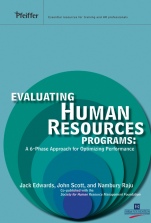
Evaluating Human Resources Programs: A 6–Phase Approach for Optimizing Performance
ISBN 9780787994877
Autor: Jack E. Edwards, John C. Scott, Nambury S. Raju
Wydawca: Wiley
Dostępność: 3-6 tygodni
Cena: 274,05 zł
Przed złożeniem zamówienia prosimy o kontakt mailowy celem potwierdzenia ceny.
ISBN13: |
9780787994877 |
ISBN10: |
0787994871 |
Autor: |
Jack E. Edwards, John C. Scott, Nambury S. Raju |
Oprawa: |
Hardback |
Rok Wydania: |
2007-06-29 |
Ilość stron: |
288 |
Wymiary: |
231x163 |
Tematy: |
KM |
Praise for Evaluating Human Resources Programs
"This book provides a new and fresh perspective on HR program evaluation by outlining a comprehensive, step–by–step approach to the entire process. HR professionals, OD practitioners, and anyone else who might find themselves held accountable for an HR program or process will find this an invaluable hip–pocket reference."
—Allan H. Church, vice president, Organization & Management Development, PepsiCo, Inc.
"The authors make a compelling case for the why and how of HR program evaluation and have done so with a rigorous and comprehensive guide filled with practical and useful examples. I will keep it nearby as I advise companies on their workforce issues."
—Gilbert F. Casellas, former chair, Equal Employment Opportunity Commission
"When I teach a course to HR professionals or graduate students on evaluating human resource programs, this book will be required reading. It is a highly informative how–to guide chock full of insights by seasoned practitioners written in a clear and accessible manner."
—Steven Rogelberg, professor and director, Organizational Science, University of North Carolina Charlotte and editor–in–chief, Encyclopedia of Industrial and Organizational Psychology
"The tone is superb. The authors really make the points well and they are so practical and useful that I wanted to cheer. It′s very down–to–earth, practical, and extraordinarily useful—the kind of material that every faculty member teaching human resources should be using."
—Maureen J. Fleming, emerita professor of Human Resource Management, The University of Montana
"HR professionals who want to assure their programs are aligned with the strategy of their organizations through disciplined program evaluation should read this practical guide. The authors have done an excellent job of recognizing the challenges of evaluating HR programs
within organizations and present pragmatic tips for overcoming the pitfalls."
—Ben E. Dowell, retired vice president, Talent Management, Bristol–Myers Squibb Company
Spis treści:
List of Tables, Figures, and Exhibits.
Preface.
A Few Words of Thanks.
Overview: Human Resources (HR) Program Evaluation.
Chapter Objectives.
Use the Approach That Best Addresses Your HR Program Evaluation’s Objectives.
Use Goal–Based Evaluations to Focus on Program Objectives.
Use Process–Based Evaluations to Focus on Workflow and Procedures.
Use Outcome–Based Evaluations to Focus on Results.
Integrate Ongoing and Periodic Program Evaluations into the Operation of HR Programs.
Enhance HR Program Performance Through Ongoing Formative Program Evaluation.
Enhance HR Program Performance Through Periodic Summative Program Evaluation.
Consider Our General Philosophy of HR Program Evaluation.
Be Prepared to Address Potential Excuses for Not Conducting an HR Program Evaluation.
Potential Excuse 1: The Resources Required to Conduct a Program Evaluation Are Better Spent on Administering the Program.
Potential Excuse 2: Program Effectiveness Is Impossible to Measure.
Potential Excuse 3: There Are Too Many Variables to Do a Good Study.
Potential Excuse 4: No One Is Asking for an Evaluation, So Why Bother?
Potential Excuse 5: “Negative” Results Will Hurt My Program.
A Look at How the Remainder of the Book Is Organized.
Phase 1: Identify Stakeholders, Evaluators, and Evaluation Questions.
Phase 2: Plan the Evaluation.
Phase 3: Collect Data.
Phase 4: Analyze and Interpret Data.
Phase 5: Communicate Findings and Insights.
Phase 6: Utilize the Results.
Deviate from Our Approach When It Makes Sense for Your Evaluation.
Phase 1: Identify Stakeholders, Evaluators, and Evaluation Questions.
Chapter Objectives.
Identify Stakeholder Groups.<
br>Decide on Internal Stakeholders First.
Consider the Perspectives of Unions and Their Members.
Don’t Forget That There Are External Stakeholder Groups.
Identify the Evaluation Team.
Ask, “How Big Should the Team Be?”
Ask, “Who Should Be on the Team?”
Ask, “Who Should Lead the Evaluation Team?”
Ask, “Should the Evaluation Team Write a Charter?”
Identify Evaluation Questions.
Determine the Types of Evaluation Questions That Match the Evaluation Objectives.
Develop and Refine Evaluation Questions.
Attend to Desirable Characteristics When Selecting Criterion Measures.
Conclusions.
Phase 2: Plan the Evaluation.
Chapter Objectives.
Determine the Resources Needed to Conduct the Evaluation.
Develop a Preliminary Budget.
Set Milestones with Dates—Making a Commitment Is Hard to Do.
Lay Out Plans for Data Collection.
Determine Desirable Attributes for the Data That Will Be Collected.
Remind the Team of All the Sources and Methods They Might Use.
Decide Whether Pledges of Anonymity or Confidentiality Will Be Needed.
Avoid or Minimize Common Data Collection Errors.
Decide When a Census or Sample Should Be Used.
Identify the Data Analyses Before the Data Are Collected.
Plan the Procedures for Supplying Feedback.
Enhance Buy–In from Top Management.
Provide an Overview of the Program Evaluation Plan.
Prepare to Defend the Budget.
Conclusions.
Phase 3: Collect Data.
Chapter Objectives.
Select Optimum Data Collection Methods and Data Sources.
Use Internal Documents and Files—Current and Historical.
Gather Internal and External Perceptual Data.
Assess Internal Processes and Procedural Information.
Utilize External Documents and Environmental Scans.
Don’t Forget Other Types of Evaluation Data.
Use Evaluation Research Designs That Address Practical Constraints.
Subgroup Comparis
ons.
Before–and–After Comparisons.
Time–Series Designs.
Case Studies.
Enhance Data Quality During Data Collection.
Check for Potential Vested Interests or Biases.
Document Procedures and Data.
Match Evaluators’ Skill Sets to Types of Assignments.
Pilot–Test Procedures and Instruments.
Train the Data Collectors.
Obtain the Same Data with More Than One Method When Resources Permit.
Verify the Data.
Beware of Becoming Sidetracked During Data Collection.
Avoid Excessive Data Collection.
Monitor Data Collection Schedules Closely.
Conclusions.
Phase 4: Analyze and Interpret Data.
Chapter Objectives.
Create and Modify a Database.
Design Data Codes.
Design the Database.
Decide What, If Anything, Needs to Be Done About Missing Data.
Take Full Advantage of Descriptive Statistics.
Consider the Many Types of Descriptive Statistics Available to the Team.
Look for Opportunities to Use Descriptive Statistics with Qualitative Data.
Address Additional Concerns in Deciding Whether Inferential Statistics Are Appropriate.
Balance the Concerns for Type I vs. Type II Error Rates When Using Statistical Tests.
Determine Whether You Are Really Using the Alpha Level That You Said You Would Use.
Be Clear in Understanding What Statistical Significance Is and Is Not.
Use Inferential Analyses If Warranted and Underlying Assumptions Can Be Met.
Look for Areas in Which Findings Support and Conflict with Other Findings.
Conclusions.
Phase 5: Communicate Findings and Insights.
Chapter Objectives.
Stick to the Basics Found in Any Good Communication Strategy.
Maintain Confidentiality When It Was Promised.
Adapt Communications to the Audience’s Skills and Needs.
Get to the Bottom Line Early.
Determine What to Do with Findings That Do Not Fit.
Tie It All Together: Findings→Conclusions→Recommendations.
Depict Findings and Re
Koszyk
Książek w koszyku: 0 szt.
Wartość zakupów: 0,00 zł
Informacje


Kontakt
Gambit
Centrum Oprogramowania
i Szkoleń Sp. z o.o.
Al. Pokoju 29b/22-24
31-564 Kraków
Siedziba Księgarni
ul. Kordylewskiego 1
31-542 Kraków
+48 12 410 5991
+48 12 410 5987
+48 12 410 5989
Subskrypcje
Administratorem danych osobowych jest firma Gambit COiS Sp. z o.o. Na podany adres będzie wysyłany wyłącznie biuletyn informacyjny.
Autoryzacja płatności

Informacje na temat autoryzacji płatności poprzez PayU.

© Copyright 2012: GAMBIT COiS Sp. z o.o. Wszelkie prawa zastrzeżone.
Projekt i wykonanie: Alchemia Studio Reklamy