


Wydawcy
Katalog tematyczny
- Archeologia (109)
- Ekonomia, finanse, business (13704)
- Filozofia (1445)
- Historia (3040)
- Języki i językoznawstwo (2356)
- Lifestyle, hobby i rozrywka (475)
- Medycyna (9704)
- Nauki humanistyczne (4)
- Nauki o Ziemi i środowisku (2638)
- Nauki ścisłe (20412)
- Nauki społeczne (8486)
- Edukacja (229)
- Kryminologia, opieka spełeczna (284)
- Obronność (10)
- Polityka (1389)
- Psychologia (777)
- Socjologia (410)
- Społeczeństwo i kultura (187)
- Nauki techniczne (13450)
- Prawo (1696)
- Publikacje informacyjne i interdyscyplinarne (1288)
- Religia i wierzenia (917)
- Technika komputerowa (4067)
- Zdrowie, relacje międzyludzkie i rozwój osobisty (657)





Informacje szczegółowe o książce
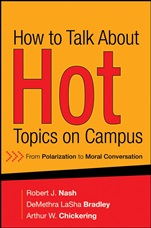
How to Talk About Hot Topics on Campus: From Polarization to Moral Conversation
ISBN 9780787994365
Autor: Robert J. Nash, DeMethra LaSha Bradley, Arthur W. Chickering
Wydawca: Wiley
Dostępność: 3-6 tygodni
Cena: 200,55 zł
Przed złożeniem zamówienia prosimy o kontakt mailowy celem potwierdzenia ceny.
ISBN13: |
9780787994365 |
ISBN10: |
0787994367 |
Autor: |
Robert J. Nash, DeMethra LaSha Bradley, Arthur W. Chickering |
Oprawa: |
Hardback |
Rok Wydania: |
2008-03-18 |
Ilość stron: |
288 |
Wymiary: |
235x160 |
Tematy: |
JD |
Praise for How to Talk About Hot Topics on Campus
"How to Talk About Hot Topics on Campus offers solid educational strategies and some of the best practical examples I have seen on how to facilitate dialogue about the many unspoken but passionately held differences that are found on campus today. Faculty, student affairs professionals, and others engaging with students on diversity issues will find this book to be a highly useful educational resource."
Jon C. Dalton, director, Hardee Center for Leadership and Ethics on Higher Education, Florida State University, and coeditor, Journal of College and Character
"Nash, Bradley, and Chickering introduce us to a new pedagogical approach, ways of conducting ′moral conversations′ that lead to greater understanding, engagement, and respect for differences, rather than divisive contestation, retreat, and anger. The authors bring substantive knowledge, years of experience in the classroom, and fresh imagination to this important task. With their help our institutions can be safer places for exploring difficult issues in a diverse democratic environment."
R. Eugene Rice, senior scholar, Association of American Colleges and Universities
"There could not be a more timely book. The authors show how we can and should use conversation as a means of bridging our many religious, racial, class, and political differences."
Alexander W. Astin, M. Cartter Professor Emeritus and founding director, Higher Education Research Institute, University of California, Los Angeles
"The authors combine considerable insight and experience to offer both a challenge and a gift for those committed to the learning, growth, and development of college students. Their challenge is the call to face what too often polarizes American higher education—issues of race, social class, and religious belief, to name a few. Their gift is an approach they call moral conversation, an encounter of interest, empathy, and respect
that promises to turn differences that divide into opportunities that provide—for the deep learning of all. Administrators, faculty, and students alike will grow from its fruits."
C. Carney Strange, author, Educating by Design: Creating Campus Learning Environments That Work, and professor, Bowling Green State University
Spis treści:
Preface.
Acknowledgments.
The Authors.
Part I: Laying the Theoretical Groundwork for Moral Conversation.
1. Igniting the Fire of Moral Conversation.
2. Promoting a Spirit of Pluralism on College Campuses.
Part II: Practicing the Moral Conversation.
3. A Faculty Member’s View on Moral Conversation from the Classroom (Robert J. Nash).
4. An Administrator’s View on Moral Conversation from the Division of Student Affairs (DeMethra LaSha Bradley).
5. A Senior Administrator’s Systemic View on Facilitating Moral Conversations Across Campus (Arthur W. Chickering).
Part III: Final Words on Moral Conversation.
6. Opportunities, Risks, and Caveats for Moral Conversation.
Appendix A: A Step–by–Step How–To Guide for Facilitators and Participants When Doing Moral Conversation (Robert J. Nash and Alissa B. Strong).
Appendix B: Additional Text References and Internet Resources.
Appendix C: Western Stereotypes About Islam from Both the Left and the Right (Robert J. Nash).
Appendix D: AWhole–Campus Teaching and Learning Rationale for Moral Conversation: Inspired by the 2004 NASPA Report Learning Reconsidered: A Campus–Wide Focus on the Student Experience (Robert J. Nash).
Appendix E: Naturalistic and Narrativistic Paradigms in Academia: Implications for Moral Conversation (Robert J. Nash).
References.
Index.
Nota biograficzna:
Robert J. Nash is a professor in the College of Education and Social Service
s at the University of Vermont. He has published eight books, as well as more than one hundred articles, book chapters, monographs, and book reviews in many of the leading journals in education at all levels. He is a member of the editorial board for the Journal of Religion & Education.
DeMethra LaSha Bradley is an assistant director for academic integrity in the Center for Student Ethics and Standards at the University of Vermont (UVM). She is currently pursuing doctoral studies in the Educational Leadership and Policy Studies program at UVM. She is the co–author of several book chapters and has made various presentations at national conferences and universities across the United States.
Arthur W. Chickering is Special Assistant to the President of Goddard College in Vermont. He is the author of several Jossey–Bass books, including Education and Identity and Encouraging Authenticity and Spirituality in Higher Education.
Okładka tylna:
Praise for How to Talk About Hot Topics on Campus
"How to Talk About Hot Topics on Campus offers solid educational strategies and some of the best practical examples I have seen on how to facilitate dialogue about the many unspoken but passionately held differences that are found on campus today. Faculty, student affairs professionals, and others engaging with students on diversity issues will find this book to be a highly useful educational resource."
Jon C. Dalton, director, Hardee Center for Leadership and Ethics on Higher Education, Florida State University, and coeditor, Journal of College and Character
"Nash, Bradley, and Chickering introduce us to a new pedagogical approach, ways of conducting ′moral conversations′ that lead to greater understanding, engagement, and respect for differences, rather than divisive contestation, retreat, and anger. The authors bring substantive knowledge, years of experience in the classroom, and fresh imagination to this import
ant task. With their help our institutions can be safer places for exploring difficult issues in a diverse democratic environment."
R. Eugene Rice, senior scholar, Association of American Colleges and Universities
"There could not be a more timely book. The authors show how we can and should use conversation as a means of bridging our many religious, racial, class, and political differences."
Alexander W. Astin, M. Cartter Professor Emeritus and founding director, Higher Education Research Institute, University of California, Los Angeles
"The authors combine considerable insight and experience to offer both a challenge and a gift for those committed to the learning, growth, and development of college students. Their challenge is the call to face what too often polarizes American higher education—issues of race, social class, and religious belief, to name a few. Their gift is an approach they call moral conversation, an encounter of interest, empathy, and respect that promises to turn differences that divide into opportunities that provide—for the deep learning of all. Administrators, faculty, and students alike will grow from its fruits."
C. Carney Strange, author, Educating by Design: Creating Campus Learning Environments That Work, and professor, Bowling Green State University
Koszyk
Książek w koszyku: 0 szt.
Wartość zakupów: 0,00 zł
Informacje


Kontakt
Gambit
Centrum Oprogramowania
i Szkoleń Sp. z o.o.
Al. Pokoju 29b/22-24
31-564 Kraków
Siedziba Księgarni
ul. Kordylewskiego 1
31-542 Kraków
+48 12 410 5991
+48 12 410 5987
+48 12 410 5989
Subskrypcje
Administratorem danych osobowych jest firma Gambit COiS Sp. z o.o. Na podany adres będzie wysyłany wyłącznie biuletyn informacyjny.
Autoryzacja płatności

Informacje na temat autoryzacji płatności poprzez PayU.

© Copyright 2012: GAMBIT COiS Sp. z o.o. Wszelkie prawa zastrzeżone.
Projekt i wykonanie: Alchemia Studio Reklamy