


Wydawcy
Katalog tematyczny
- Archeologia (109)
- Ekonomia, finanse, business (13704)
- Filozofia (1445)
- Historia (3040)
- Języki i językoznawstwo (2356)
- Lifestyle, hobby i rozrywka (475)
- Medycyna (9704)
- Nauki humanistyczne (4)
- Nauki o Ziemi i środowisku (2638)
- Nauki ścisłe (20412)
- Nauki społeczne (8486)
- Edukacja (229)
- Kryminologia, opieka spełeczna (284)
- Obronność (10)
- Polityka (1389)
- Psychologia (777)
- Socjologia (410)
- Społeczeństwo i kultura (187)
- Nauki techniczne (13450)
- Prawo (1696)
- Publikacje informacyjne i interdyscyplinarne (1288)
- Religia i wierzenia (917)
- Technika komputerowa (4067)
- Zdrowie, relacje międzyludzkie i rozwój osobisty (657)





Informacje szczegółowe o książce
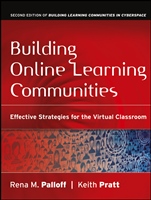
Building Online Learning Communities: Effective Strategies for the Virtual Classroom
ISBN 9780787988258
Autor: Rena M. Palloff, Keith Pratt
Wydawca: Wiley
Dostępność: 3-6 tygodni
Cena: 205,80 zł
Przed złożeniem zamówienia prosimy o kontakt mailowy celem potwierdzenia ceny.
ISBN13: |
9780787988258 |
ISBN10: |
0787988251 |
Autor: |
Rena M. Palloff, Keith Pratt |
Oprawa: |
Paperback |
Rok Wydania: |
2007-07-20 |
Numer Wydania: |
2nd Edition |
Ilość stron: |
320 |
Wymiary: |
232x176 |
Tematy: |
JD |
Building Online Learning Communities
The second edition of the groundbreaking book Building Learning Communities in Cyberspace by Rena Palloff and Keith Pratt has been completely updated and expanded to include the most current information on effective online course development and delivery. Palloff and Pratt share insights designed to guide readers, offering illustrative case studies, vignettes, and examples from a wide variety of successful online courses.
"The focus on community makes this volume distinctive in the literature about online teaching and learning. The authors′ expertise spans the nitty–gritty, practical aspects of the virtual classroom with the larger questions and context of twenty–first century education. This book goes way beyond the how–to′s of online education to a sophisticated consideration of the major challenges of teaching and learning."
—Anna DiStefano, provost, Fielding Graduate University
"This book captures the essence of a successful virtual learning experience for both students and teachers. Palloff and Pratt share valuable insights that only expert practitioners could so clearly explain."
—David Wicks, director of instructional technology, Seattle Pacific University
"As the physical and virtual worlds converge to become the ′real world′ of teaching and learning, communities play increasingly important roles in bridging distances and differences. This book underscores the real value that communities bring to distributed learning experiences, and gives readers plenty of guidance and advice for creating communities that connect, engage, and inspire."
—Ellen Wagner, senior director, WW eLearning Solutions, Adobe Systems
"This book is a must–read for faculty who truly want to help students understand and apply knowledge, and thus prepare for life in the twenty–first century. Palloff and Pratt have reaffirmed their roles as educa
tional leaders in the development of online learning communities, reminding us of the significant benefits of such communities to learners at all levels."
—Jack A. Chambers, executive director, Office of Organizational Learning Services, Florida Community College at Jacksonville
Spis treści:
List of Exhibits.
Preface to the Second Edition.
Acknowledgments.
The Authors.
PART ONE: The Learning Community in Online Learning.
One: When Teaching and Learning Leave the Classroom.
Online Issues and Concerns.
Students Online.
Making the Transition and Establishing Presence.
The Search for Knowledge and Meaning in the Online Classroom.
Putting the Pieces Together.
New Approaches, New Skills.
Implications.
Two: Recontextualizing Community.
The Importance of Community.
Community Online.
The Element of Social Presence.
Coalescence and Belonging Online.
Recontextualizing Community.
Community in the Virtual Classroom.
Participation and Desired Outcomes in the Online Classroom.
Three: The Human Side of Online Learning.
The Need for Human Contact.
Connectedness and Coalescence.
Shared Responsibility, Rules, and Norms.
Roles and Participation.
Shadow Issues: The Issues We Simply Don′t Want to Face.
Other Psychological Issues.
Ritual as the Psychological Expression of Community.
Spiritual Issues.
Culture and Language Issues.
Vulnerability, Ethics, and Privacy.
Final Thoughts.
Four: Practical Considerations in Online Learning.
About Time.
Group Size.
Cost and Other Administrative Issues.
Online Security.
Five: Managing the Relationship to Technology.
The Relationship of Person to Machine.
Technology as a Facilitative Tool.
Excuse Us, We Are Now Experiencing Technical Difficulties.
Six: Moving Teaching and Learning Online.
Effective Teaching and Learning in the Online Classr
oom.
Roles and Functions of the Instructor in the Online Classroom.
The Role of the Learner in the Learning Process.
The Hybrid Course and Online Community.
Moving to Specifics.
PART TWO: TEACHING AND LEARNING IN THE VIRTUAL LEARNING COMMUNITY.
Seven: Building Foundations.
Creating an Effective Course Design.
Constructing the Online Course Site.
If You Build It, Will They Come?
Final Thoughts.
Guiding Questions to Assist in Building an Effective Course Syllabus.
Evaluating an Effective Online Course.
Eight: Promoting Collaborative Learning.
Formulating a Shared Goal for Learning.
Problems, Interests, and Experiences as Springboards for Learning.
Dialogue as Inquiry.
Encouraging Expansive Questioning.
Sharing Responsibility for Facilitation.
Promoting Feedback.
Intergroup and Other Forms of Collaboration.
Final Thoughts.
Guiding Questions to Promote Collaborative Learning.
Nine: Transformative Learning.
The Process of Transformative Learning in the Online Classroom.
Learning About Learning Through the Use of Technology.
Creating Opportunities to Encourage Reflection on the Differences.
Learning About Technology by Using It.
Encouraging Questions and Comments About the Technology.
Self–Reflection.
Final Thoughts: We Are the Experts When It Comes to Our Own Learning.
Guiding Questions to Promote Transformative Learning.
Ten: Student Assessment and Course Evaluation.
Assessment and Evaluation Basics.
Student Performance.
Course Evaluation.
Program Evaluation.
Final Thoughts.
Questions to Consider in Student, Course, and Program Evaluation.
Eleven: Lessons Learned and a Look Ahead.
The Six Essential Elements.
The Essence of Online Learning: Community.
Unresolved Issues and Unanswered Questions.
Lessons Learned and a Look to the Future.
Extending Community Beyond the Classroom.
Implications
for Instructor Training.
APPENDIX A: Examples of Course Syllabi.
APPENDIX B: Glossary of Terms Used in Online Learning.
APPENDIX C: Internet Resources for Distance Education.
References.
Index.
Nota biograficzna:
Rena M. Palloff, Ph.D., and Keith Pratt, Ph.D. are the managing partners of Crossroads Consulting Group. They are the authors of Building Learning Communities in Cyberspace, Collaborating Online, Lessons from the Cyberspace Classroom, and The Virtual Student, all from Jossey–Bass.
Okładka tylna:
Building Online Learning Communities
The second edition of the groundbreaking book Building Learning Communities in Cyberspace by Rena Palloff and Keith Pratt has been completely updated and expanded to include the most current information on effective online course development and delivery. Palloff and Pratt share insights designed to guide readers, offering illustrative case studies, vignettes, and examples from a wide variety of successful online courses.
"The focus on community makes this volume distinctive in the literature about online teaching and learning. The authors′ expertise spans the nitty–gritty, practical aspects of the virtual classroom with the larger questions and context of twenty–first century education. This book goes way beyond the how–to′s of online education to a sophisticated consideration of the major challenges of teaching and learning."
—Anna DiStefano, provost, Fielding Graduate University
"This book captures the essence of a successful virtual learning experience for both students and teachers. Palloff and Pratt share valuable insights that only expert practitioners could so clearly explain."
—David Wicks, director of instructional technology, Seattle Pacific University
"As the physical and virtual worlds converge to become the ′real world′ of teaching and learning, communities play in
creasingly important roles in bridging distances and differences. This book underscores the real value that communities bring to distributed learning experiences, and gives readers plenty of guidance and advice for creating communities that connect, engage, and inspire."
—Ellen Wagner, senior director, WW eLearning Solutions, Adobe Systems
"This book is a must–read for faculty who truly want to help students understand and apply knowledge, and thus prepare for life in the twenty–first century. Palloff and Pratt have reaffirmed their roles as educational leaders in the development of online learning communities, reminding us of the significant benefits of such communities to learners at all levels."
—Jack A. Chambers, executive director, Office of Organizational Learning Services, Florida Community College at Jacksonville
Koszyk
Książek w koszyku: 0 szt.
Wartość zakupów: 0,00 zł
Informacje


Kontakt
Gambit
Centrum Oprogramowania
i Szkoleń Sp. z o.o.
Al. Pokoju 29b/22-24
31-564 Kraków
Siedziba Księgarni
ul. Kordylewskiego 1
31-542 Kraków
+48 12 410 5991
+48 12 410 5987
+48 12 410 5989
Subskrypcje
Administratorem danych osobowych jest firma Gambit COiS Sp. z o.o. Na podany adres będzie wysyłany wyłącznie biuletyn informacyjny.
Autoryzacja płatności

Informacje na temat autoryzacji płatności poprzez PayU.

© Copyright 2012: GAMBIT COiS Sp. z o.o. Wszelkie prawa zastrzeżone.
Projekt i wykonanie: Alchemia Studio Reklamy