


Wydawcy
Katalog tematyczny
- Archeologia (109)
- Ekonomia, finanse, business (13704)
- Filozofia (1445)
- Historia (3040)
- Języki i językoznawstwo (2356)
- Lifestyle, hobby i rozrywka (475)
- Medycyna (9704)
- Nauki humanistyczne (4)
- Nauki o Ziemi i środowisku (2638)
- Nauki ścisłe (20412)
- Nauki społeczne (8486)
- Nauki techniczne (13450)
- Prawo (1696)
- Publikacje informacyjne i interdyscyplinarne (1288)
- Religia i wierzenia (917)
- Technika komputerowa (4067)
- Zdrowie, relacje międzyludzkie i rozwój osobisty (657)





Informacje szczegółowe o książce
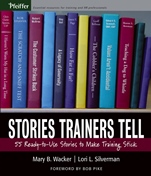
Stories Trainers Tell: 55 Ready–to–Use Stories to Make Training Stick
ISBN 9780787978426
Autor: Mary B. Wacker, Lori L. Silverman, Bob Pike
Wydawca: Wiley
Dostępność: 3-6 tygodni
Cena: 254,10 zł
Przed złożeniem zamówienia prosimy o kontakt mailowy celem potwierdzenia ceny.
ISBN13: |
9780787978426 |
ISBN10: |
0787978426 |
Autor: |
Mary B. Wacker, Lori L. Silverman, Bob Pike |
Oprawa: |
Paperback |
Rok Wydania: |
2005-03-11 |
Ilość stron: |
432 |
Wymiary: |
234x191 |
Tematy: |
KM |
Make challenging concepts more memorable, even unforgettable!
"Stories Trainers Tell is full of fun, entertaining, and useful stories that help bring any training alive. Use it and watch people smile and learn!"
––Ken Blanchard, coauthor, The One Minute Manager® and Whale Done!(TM)
Telling stories is a powerful way to make a point, especially when the stories are compelling, well–constructed, and poignant. This book captures thought–provoking stories contributed by trainers, nationally known speakers, consultants, business leaders, educators, and professional storytellers that help make challenging ideas and abstract concepts stick.
The stories are organized around major organizational development and training themes, such as leadership, diversity, teamwork, performance and coaching, and customer service. Accompanying each story are tips, debriefing questions, key points, and a follow–up activity to maximize its impact and learning potential.
Includes a free CD–ROM with narrative readings of each story!
Contributors include: Merrill Anderson, Jean Barbazette, Joe Barnes, Paula Bartholome, Chip Bell, Geoff Bellman, William Austin Boone, Sharon L. Bowman, Karen D. L. Byrson, Chris Clarke–Epstein, Hortencia Delgadillo, Larry English, Marcy Fisher, Suzann Gardner, Joan Gillman, Steve Hanamura, Lunell Haught, Sandra Hoskins, Katherine M. Hudson, David Hutchens, Joan Lloyd, Kate Lutz, Robert McIlree, Maureen G. Mulvaney, Kathy A. Nielsen, Clare Novak, Julie O′Mara, Laura V. Page, Jonathan M. Preston, John Renesch, Shelley R. Robbins, Marcia Ruben, Sheriene Saadati, Edward E. Scannell, L.G. Shanklin–Flowers, Bob Shaver, Doug Stevenson, Ed Tate, Sivasailam ′Thiagi′ Thiagarajan, and David Zach.
Spis treści:
Foreword.
Preface.
Acknowledgments.
Introduction.
SECTION ONE: Using Stories in Training.
ONE. What Makes a Story a Training Story
?
TWO. Where Do Stories Come From?
THREE. How to Craft a Story.
FOUR. Incorporating Stories into Training.
FIVE. Tips on Storytelling.
SIX. Legal and Ethical Use of Stories.
SECTION TWO: The Stories.
Table II.1: Story Information.
Table II.2: Stories by Training Topic.
SEVEN. Appreciating Differences.
"A World Without Blacks" by William Austin Boone (1): This story speaks to the universality of the creative spirit.
"Look at Me!" by Steve Hanamura (2): There are cultural differences surrounding respect.
"When in Egypt, Do What?" by Clare Novak (3): While traveling in other countries, our expectations shape our experiences.
"Catching an Unconscious Bias" by Julie O’Mara (4): When we least expect it, our biases can appear center stage.
"I Never Noticed You Were Black" by LG Shanklin–Flowe rs (5): Unconscious judgements can block our appreciation of others.
"The Scratch–and–Sniff Test" by Bob Shaver (6): First impressions play a key role in life.
EIGHT. Communication and Feedback.
"Are You Listening?" by Sharon L. Bowman (7): People talk and listen in different ways.
"If You’re Not Asked, Keep Your Mouth Shut?" by Chris Clarke–Epstein, CSP (8): What makes it difficult for us to give feedback?
"The House Guest" by Lunell Haught, Ph.D. (9): The inferences we make can impact the viewpoint we have about a situation.
"How Far Is Far?" by Laura V. Page (10): Lack of shared meaning can send you down a very long road.
"A Fish Tale" by John Renesch (11): Sometimes situations are not what they seem to be.
NINE. Customer Service.
"It’s the Little Things That Count" by Joe Barnes (12): Our smile is our personal signature.
"Ladies and Gentlemen Serving Ladies and Gentlemen" by Chip Bell (13): How well does your organization define its expectations?
"I Was Aching for a Fight" by Marcy Fisher (14): How do you prepare for the possibility of confrontation?
"The
Customer Strikes Back" by Robert McIlree (15): Never doubt the creativity and perseverance of well–intentioned customers.
"You Don’t Qualify for the Senior Discount" by Laura V. Page (16): How do you know if you can trust a customer?
"Sorry,We Can’t Do It" by Shelley R. Robbins, Ph.D. (17): An organization’s culture can influence service—both internally and externally.
"The Taxi Driver" by Sivasailam "Thiagi" Thiagarajan (18): When do you heed the warnings of others about getting good service?
TEN. Influence and Motivation.
"The Cobbler’s Children" by Geoff Bellman (19): How important is influence in creating organizational change?
"I Haven’t Worn My Hat in a Long Time" by Chris Clarke–Epstein, CSP (20): Sometimes leaders think they know best about motivating employees.
"The Volunteer Job" by Joan Gillman (21): What might motivate us to open ourselves up to opportunity?
"Missing a Golden Opportunity" by Jonathan M. Preston (22): What is the real purpose of a sales representative in the field?
"Upstaged by a Rookie" by Jonathan M. Preston (23): How do you influence a more senior and seasoned colleague?
"Who Called This Meeting?" by Shelley R. Robbins, Ph.D. (24): People’s true motivations on the job can undermine a goal.
ELEVEN. Leadership.
"A Culture Rooted in Gunpowder" by Merrill Anderson, Ph.D. (25): Where does an organization’s culture come from?
"Expecting Too Little" by Paula Bartholome (26): A leader’s response to what we expect can sometimes surprise us.
"The Bamboo Years" by Katherine M. Hudson (27): When is the best time to invest in the organization’s growth?
"The Worth of a Contribution" by Kathy A. Nielsen (28): What factors help to determine one’s top work priority?
"Fostering Full Potential" by LG Shanklin–Flowers (29): What is the leader’s role when someone has been earmarked for dismissal?
TWELVE. Living Our
Values.
"A Legacy of Generosity" by Chip Bell (30): Our early life experiences help shape our values around giving.
"Time Brings Perspective" by Geoff Bellman (31): Our values can help us sort out the "stuff" that gets in the way of our work.
"In Search of Cappuccino . . .With a Little Chocolate on the Side" by Kate Lutz (32): Being a rebel and being a victim are flip sides of the same coin.
"Values Aren’t Accidental" by Edward E. Scannell, CMP, CSP (33): Our values are formed at an early age.
"A Nation’s Values Connect Us" by David Zach (34): Tragedy often allows us to reconnect with our deepest values.
THIRTEEN. Performance and Coaching.
"The Case of the Magician’s Assistant" by Hortencia Delgadillo (35): Your assumptions about someone’s ability to perform work can get you into hot water.
"The Roll of the Dice" by Sandra Hoskins, ISP, PMP (36): Resourcefulness is a key managerial skill.
"Isolate, Exaggerate, and Integrate" by Joan Lloyd (37): What exactly do athletic coaches do to improve someone’s performance?
"Thanks, I’ll Do It Myself" by Marcia Ruben (38): As leaders, our blind spots can have a powerful effect on employee behavior.
"The Forest for the Trees" by Sheriene Saadati (39): Our performance is only as good as the systems in which we work.
"Is He Qualified?" by Sheriene Saadati (40): What role can real–time coaching play in helping others to develop their skills?
FOURTEEN. Problem–Solving.
"For Lack of a System" by Larry P. English (41): There can be unintended negative consequences to the "perfect" solution.
"The Porcupine and the Snake" by Suzann Gardner (42): Surface issues or symptoms can mask the real problem.
"Viewing the Problem Through a Different Lens" by Sandra Hoskins, ISP, PMP (43): Lack of technology can be beneficial to solving a problem.
"The Disapproving Neighbor" by Kate Lutz (44): How much does our own perspective color our understandin
Koszyk
Książek w koszyku: 0 szt.
Wartość zakupów: 0,00 zł
Informacje


Kontakt
Gambit
Centrum Oprogramowania
i Szkoleń Sp. z o.o.
Al. Pokoju 29b/22-24
31-564 Kraków
Siedziba Księgarni
ul. Kordylewskiego 1
31-542 Kraków
+48 12 410 5991
+48 12 410 5987
+48 12 410 5989
Subskrypcje
Administratorem danych osobowych jest firma Gambit COiS Sp. z o.o. Na podany adres będzie wysyłany wyłącznie biuletyn informacyjny.
Autoryzacja płatności

Informacje na temat autoryzacji płatności poprzez PayU.

© Copyright 2012: GAMBIT COiS Sp. z o.o. Wszelkie prawa zastrzeżone.
Projekt i wykonanie: Alchemia Studio Reklamy