


Wydawcy
Katalog tematyczny
- Archeologia (109)
- Ekonomia, finanse, business (13704)
- Filozofia (1445)
- Historia (3040)
- Języki i językoznawstwo (2356)
- Lifestyle, hobby i rozrywka (475)
- Medycyna (9704)
- Nauki humanistyczne (4)
- Nauki o Ziemi i środowisku (2638)
- Nauki ścisłe (20412)
- Nauki społeczne (8486)
- Nauki techniczne (13450)
- Prawo (1696)
- Publikacje informacyjne i interdyscyplinarne (1288)
- Religia i wierzenia (917)
- Technika komputerowa (4067)
- Zdrowie, relacje międzyludzkie i rozwój osobisty (657)





Informacje szczegółowe o książce
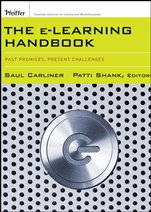
The e–Learning Handbook: Past Promises, Present Challenges
ISBN 9780787978310
Autor: Saul Carliner, Patti Shank
Wydawca: Wiley
Dostępność: 3-6 tygodni
Cena: 422,10 zł
Przed złożeniem zamówienia prosimy o kontakt mailowy celem potwierdzenia ceny.
ISBN13: |
9780787978310 |
ISBN10: |
0787978310 |
Autor: |
Saul Carliner, Patti Shank |
Oprawa: |
Hardback |
Rok Wydania: |
2008-05-23 |
Ilość stron: |
400 |
Wymiary: |
241x181 |
Tematy: |
KM |
The e–Learning Handbook
The e–Learning Handbook provides a critical reflection on the current state of e–learning with contributions from the world′s foremost e–learning experts and best–selling authors from academe and industry, including Margaret Driscoll, Brent Wilson, Lee Christopher, William Horton, L. Wayne Precht, Harvey Singh, Jim Everidge, Jane Bozarth, Pat Brogan, Patrick Parrish, Marc J. Rosenberg, Steve Forman, Pat McGee, M. David Merrill, Philip C. Abrami, Gretchen Lowerison, Roger C?té, Marie–Claude Lavoie, Thomas C. Reeves, Jan Herrington, Ron Oliver, and Patrick Lambe. The book offers a comprehensive and up–to–date assessment of the technological, design, economic, evaluation, research, economic, and philosophical issues underlying e–learning.?Each chapter includes a chart that summarizes the key take–away points, contains questions that are useful for guiding discussions, and offers suggestions of related links, books, papers, reports, and articles.
The e–Learning Handbook explores a range of topics such as the wide difference between the promised and actual uses of e–learning in industry and academe, the struggle to implement standards, the problems with learning objects, the drabness of actual e–learning courses, the problems with current instructional design models for e–learning, and the limitations of current methods for researching and evaluating e–learning. Each of the book′s six parts, examines e–learning from a different perspective, including technology, design, theory and research, and economics.
The e–Learning Handbook is a timely reference for all e–learning stakeholders and decision makers in for–profit, non–profit, governmental, and educational settings, and makes an excellent text for an advanced course analyzing e–learning.
Spis treści:
Preface.
Intr
oduction.
PART I: THE CONTEXT FOR E–LEARNING.
Chapter 1. Thinking Critically to Move e–Learning Forward (Patti Shank).
PART II: THE REALITY VERSUS THE HYPE OF E–LEARNING.
Chapter 2. Hype Versus Reality in the Boardroom: Why e–Learning Hasn’t Lived Up to Its Initial Projections for Penetrating the Corporate Environment (Margaret Driscoll).
Chapter 3. Hype Versus Reality on Campus: Why e–Learning Isn’t Likely to Replace a Professor Any Time Soon (Brent G. Wilson and Lee Christopher).
Chapter 4. Knowledge Management: From the Graveyard of Good Ideas (William Horton).
PART III: TECHNOLOGY ISSUES.
Chapter 5. Infrastructure for Learning: Options for Today or Screw–Ups for Tomorrow (Patti Shank, L. Wayne Precht, Harvey Singh, Jim Everidge, and Jane Bozarth).
Chapter 6. e–Learning Standards: A Framework for Enabling the Creation and Distribution of High–Quality, Cost–Effective Web–Delivered Instruction (Pat Brogan).
Chapter 7. Learning with Objects (Patrick Parrish).
Chapter 8. Web 2.0 and Beyond: The Changing Needs of Learners, New Tools, and Ways to Learn (Patti Shank).
Chapter 9. Locked Out: Bridging the Divide Between Training and Information Technology (Marc J. Rosenberg and Steve Foreman).
PART IV: DESIGN ISSUES.
Chapter 10. A Holistic Framework of Instructional Design for e–Learning (Saul Carliner).
Chapter 11. Converting e3–Learning to e3–Learning: An Alternative Instructional Design Method (M. David Merrill).
Chapter 12. Design with the Learning in Mind (Patricia McGee).
PART V: ISSUES OF THEORY AND RESEARCH.
Chapter 13. Revisiting Learning Theory for e–Learning (Gretchen Lowerison, Roger Côté, Philip C. Abrami, and Marie–Claude Lavoie).
Chapter 14. Design Research: A Better Approach to Improving Online Learning (Thomas C. Reeves, Jan Herrington, and Ron Oliver).<
br>PART VI: ECONOMIC ISSUES AND MOVING FORWARD.
Chapter 15. Is e–Learning Economically Viable? (Patrick Lambe).
Chapter 16. e–Learning: Today’s Challenge, Tomorrow’s Reality (Saul Carliner).
About the Editors.
About the Contributors.
Index.
Nota biograficzna:
Saul Carliner, Ph.D., is an associate professor in the graduate program in educational technology at Concordia University in Montreal. Among his numerous books is Advanced Web–Based Training Strategies from Pfeiffer.
Patti Shank, Ph.D., is the president of Learning Peaks LLC, an internationally known instructional design and instructional technology consulting firm. She is the editor of The Online Learning Idea Book and the coauthor of Making Sense of Online Learning, both from Pfeiffer.
Okładka tylna:
The e–Learning Handbook
The e–Learning Handbook provides a critical reflection on the current state of e–learning with contributions from the world′s foremost e–learning experts and best–selling authors from academe and industry, including Margaret Driscoll, Brent Wilson, Lee Christopher, William Horton, L. Wayne Precht, Harvey Singh, Jim Everidge, Jane Bozarth, Pat Brogan, Patrick Parrish, Marc J. Rosenberg, Steve Forman, Pat McGee, M. David Merrill, Philip C. Abrami, Gretchen Lowerison, Roger C?té, Marie–Claude Lavoie, Thomas C. Reeves, Jan Herrington, Ron Oliver, and Patrick Lambe. The book offers a comprehensive and up–to–date assessment of the technological, design, economic, evaluation, research, economic, and philosophical issues underlying e–learning.?Each chapter includes a chart that summarizes the key take–away points, contains questions that are useful for guiding discussions, and offers suggestions of related links, books, papers, reports, and articles.
The e–Learning Handbook explores a range of topics such as the
wide difference between the promised and actual uses of e–learning in industry and academe, the struggle to implement standards, the problems with learning objects, the drabness of actual e–learning courses, the problems with current instructional design models for e–learning, and the limitations of current methods for researching and evaluating e–learning. Each of the book′s six parts, examines e–learning from a different perspective, including technology, design, theory and research, and economics.
The e–Learning Handbook is a timely reference for all e–learning stakeholders and decision makers in for–profit, non–profit, governmental, and educational settings, and makes an excellent text for an advanced course analyzing e–learning.
Koszyk
Książek w koszyku: 0 szt.
Wartość zakupów: 0,00 zł
Informacje


Kontakt
Gambit
Centrum Oprogramowania
i Szkoleń Sp. z o.o.
Al. Pokoju 29b/22-24
31-564 Kraków
Siedziba Księgarni
ul. Kordylewskiego 1
31-542 Kraków
+48 12 410 5991
+48 12 410 5987
+48 12 410 5989
Subskrypcje
Administratorem danych osobowych jest firma Gambit COiS Sp. z o.o. Na podany adres będzie wysyłany wyłącznie biuletyn informacyjny.
Autoryzacja płatności

Informacje na temat autoryzacji płatności poprzez PayU.

© Copyright 2012: GAMBIT COiS Sp. z o.o. Wszelkie prawa zastrzeżone.
Projekt i wykonanie: Alchemia Studio Reklamy