


Wydawcy
Katalog tematyczny
- Archeologia (109)
- Ekonomia, finanse, business (13704)
- Filozofia (1445)
- Historia (3040)
- Języki i językoznawstwo (2356)
- Lifestyle, hobby i rozrywka (475)
- Medycyna (9704)
- Nauki humanistyczne (4)
- Nauki o Ziemi i środowisku (2638)
- Nauki ścisłe (20412)
- Nauki społeczne (8486)
- Edukacja (229)
- Kryminologia, opieka spełeczna (284)
- Obronność (10)
- Polityka (1389)
- Psychologia (777)
- Socjologia (410)
- Społeczeństwo i kultura (187)
- Nauki techniczne (13450)
- Prawo (1696)
- Publikacje informacyjne i interdyscyplinarne (1288)
- Religia i wierzenia (917)
- Technika komputerowa (4067)
- Zdrowie, relacje międzyludzkie i rozwój osobisty (657)





Informacje szczegółowe o książce
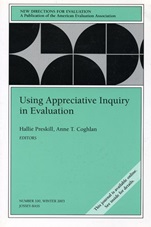
Using Appreciative Inquiry in Evaluation: New Directions for Evaluation, Number 100
ISBN 9780787972691
Autor: Hallie Preskill, Anne T. Coghlan
Wydawca: Wiley
Dostępność: 3-6 tygodni
Cena: 162,75 zł
Przed złożeniem zamówienia prosimy o kontakt mailowy celem potwierdzenia ceny.
ISBN13: |
9780787972691 |
ISBN10: |
078797269X |
Autor: |
Hallie Preskill, Anne T. Coghlan |
Oprawa: |
Paperback |
Rok Wydania: |
2004-01-05 |
Ilość stron: |
120 |
Wymiary: |
227x165 |
Tematy: |
JD |
This issue explores the potential role of Appreciative Inquiry, a process that searches for what is best in people and organizations, in evaluation. Contributors examine Appreciative Inquiry′s approach and impact on the use of evaluation processes and findings, the contextual factors or conditions that make its use in evaluation appropriate, and the challenges of using it.
Chapters also provide an overview of Appreciative Inquiry and how it fits within the landscape of evaluation practice, four case studies, and commentary and critique of specific points in this issue, as well as broader consideration of the possibilities that Appreciative Inquiry offers to evaluation practice.
By offering evaluators an approach and method for discovering and building on the positive aspects of a program, Appreciative Inquiry is an valuable resource for evaluators. This issue is an indispensable guide to that resource.
Spis treści:
SERIES EDITORS’ NOTES (Gary T. Henry, Jennifer C. Greene).
EDITORS’ NOTES (Hallie Preskill, Anne T. Coghlan).
1. An Overview of Appreciative Inquiry in Evaluation (Anne T. Coghlan, Hallie Preskill, Tessie Tzavaras Catsambas)
This chapter provides an overview of Appreciative Inquiry and a discussion of why and how it may be used in evaluation practice.
2. Appreciative Evaluation Within a Conflicted Educational Context (Sheila McNamee)
Appreciative Inquiry was used as part of a schoolwide curriculum reform evaluation process with one department’s staff that was having difficulties agreeing on its program’s philosophy and curricular changes.
3. Using Appreciative Inquiry to Guide an Evaluation of the International Women’s Media Foundation Africa Program (Tessie Tzavaras Catsambas, Laverne D. Webb)
This chapter examines the benefits and challenges of using Appreciative Inquiry processes to focus an evaluation and to design and conduct several data collection methods.
4. U
sing Appreciative Inquiry to Evaluate Project Activities of a Nongovernmental Organization Supporting Victims of Trauma in Sri Lanka (Mette Jacobsgaard)
Appreciative Inquiry was used to evaluate a program that serves victims of torture and trauma.
5. Incorporating Appreciative Inquiry Methods to Evaluate a Youth Development Program (Dawn Hanson Smart, Mariann Mann)
Using Appreciative Inquiry in conjunction with other evaluation methods helped to identify and confirm a program’s theory of change and its long–term expected outcomes. It also provided important information for improving the program.
6. Appreciating Appreciative Inquiry (Patricia J. Rogers, Dugan Fraser)
This chapter provides a critique of the four case studies in this volume and offers insights into the limitations of using Appreciative Inquiry in evaluation contexts.
7. Inquiry into Appreciative Evaluation (Michael Quinn Patton)
After comparing Appreciative Inquiry applications in organizational development and evaluation, this chapter focuses on how Appreciative Inquiry adds to the options available to evaluators when seeking to match their evaluation approach to the situation and needs of users.
INDEX.
Nota biograficzna:
HALLIE PRESKILL is professor of organizational learning and instructional technologies at the University of New Mexico.
ANNE T. COGHLAN is an independent evaluation consultant based in Dhaka, Bangladesh.
Koszyk
Książek w koszyku: 0 szt.
Wartość zakupów: 0,00 zł
Informacje


Kontakt
Gambit
Centrum Oprogramowania
i Szkoleń Sp. z o.o.
Al. Pokoju 29b/22-24
31-564 Kraków
Siedziba Księgarni
ul. Kordylewskiego 1
31-542 Kraków
+48 12 410 5991
+48 12 410 5987
+48 12 410 5989
Subskrypcje
Administratorem danych osobowych jest firma Gambit COiS Sp. z o.o. Na podany adres będzie wysyłany wyłącznie biuletyn informacyjny.
Autoryzacja płatności

Informacje na temat autoryzacji płatności poprzez PayU.

© Copyright 2012: GAMBIT COiS Sp. z o.o. Wszelkie prawa zastrzeżone.
Projekt i wykonanie: Alchemia Studio Reklamy