


Wydawcy
Katalog tematyczny
- Archeologia (109)
- Ekonomia, finanse, business (13704)
- Filozofia (1445)
- Historia (3040)
- Języki i językoznawstwo (2356)
- Lifestyle, hobby i rozrywka (475)
- Medycyna (9704)
- Nauki humanistyczne (4)
- Nauki o Ziemi i środowisku (2638)
- Nauki ścisłe (20412)
- Nauki społeczne (8486)
- Nauki techniczne (13450)
- Prawo (1696)
- Publikacje informacyjne i interdyscyplinarne (1288)
- Religia i wierzenia (917)
- Technika komputerowa (4067)
- Zdrowie, relacje międzyludzkie i rozwój osobisty (657)





Informacje szczegółowe o książce
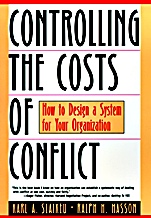
Controlling the Costs of Conflict: How to Design a System for Your Organization
ISBN 9780787943233
Autor: Karl A. Slaikeu, Ralph H. Hasson
Wydawca: Wiley
Dostępność: 3-6 tygodni
Cena: 274,05 zł
Przed złożeniem zamówienia prosimy o kontakt mailowy celem potwierdzenia ceny.
ISBN13: |
9780787943233 |
ISBN10: |
0787943231 |
Autor: |
Karl A. Slaikeu, Ralph H. Hasson |
Oprawa: |
Paperback |
Rok Wydania: |
1998-10-30 |
Ilość stron: |
256 |
Wymiary: |
227x158 |
Tematy: |
KM |
In an increasingly collaborative business environment, continued success often depends on the ability of individuals, teams, and organizations with mutual interests to work smoothly together. But as any manager knows, things do not always go as planned.
When the inevitable conflict arises, many companies resort to power plays, rush to litigation, or simply choose to ignore the problem–options that can cost a company dearly in more ways than one. Those costs can often be avoided, however, with the establishment of systems that promote collaboration and stop disagreements from becoming expensive disputes. Here, two experts offer four guiding principles for doing just that.
Written for non–experts in jargon–free language, Controlling the Costs of Conflict shows readers how to build the kinds of policies, procedures, and practices that can cut up to 80 percent of related legal expenses, slow turnover, strengthen long–term business relationships, reduce stress, and promote the success of an organization′s mission. Its clear and simple approach translates advanced concepts into practical how–tos, illustrating key points with real–world examples.
From choosing the best resolution option to early intervention to fostering collaborative strength, the guidelines found here apply equally to businesses, public agencies, religious institutions, schools, neighborhood associations, even nations. These principles will help organizations diagnose the weaknesses in their existing systems or build from scratch new systems that have the power to reduce the monetary, strategic, and emotional costs of conflict.
Spis treści:
Introduction.
The Hidden Culprit of High Costs: Weak Systems.
First Principle: Acknowledge Four Ways to Resolve Conflict.
Defining Four Options.
Weighing Costs and Risks of Each Method.
Choosing an Approach to Conflict Management.
The Preferred Path for Cost Control.
Sec
ond Principle: Create Options for Prevention and Early Intervention.
A Template for All Organizations.
Applying the Template: Real Stories.
Third Principle: Build Collaborative Strength Through Seven Checkpoints.
Seven Checkpoints.
Clarify Policy.
Define Roles and Responsibilities.
Revise Documents.
Establish Selection Criteria.
Provide Education and Training.
Strengthen Support Systems.
Evaluate the System.
Fourth Principle: Use the Mediation Model to Build Cosensus Among Decision Makers and Users.
Assumptions About Change.
Phase One: Draft a Blueprint.
Phase Two: Implement the Plan.
Phase Three: Review the System Annually.
Conclusion.
Conclusion: A Vision for Your Organization.
Resource A: Glossary.
Resource B: Ombudsman Code of Ethics and Standard Practices.
Resource C: Skills Courses.
Nota biograficzna:
KARL A. SLAIKEU is president of Chorda Conflict Management, a consulting and training company that specializes in conflict management systems. He has taught in the psychology departments of the University of South Carolina at Columbia and the University of Texas at Austin, and is the author of When Push Comes to Shove: A Practical Guide to Mediating Disputes (Jossey–Bass, 1996). RALPH H. HASSON is vice president of Chorda Conflict Management. He also serves in the Graduate School of Business at the University of Texas at Austin, where he teaches negotiation.
Okładka tylna:
In an increasingly collaborative business environment, continued success often depends on the ability of individuals, teams, and organizations with mutual interests to work smoothly together. But as any manager knows, things do not always go as planned.
When the inevitable conflict arises, many companies resort to power plays, rush to litigation, or simply choose to ignore the problem–options that can cost a company dearly in more ways than one. Those costs can often be avoided,
however, with the establishment of systems that promote collaboration and stop disagreements from becoming expensive disputes. Here, two experts offer four guiding principles for doing just that.
Written for non–experts in jargon–free language, Controlling the Costs of Conflict shows readers how to build the kinds of policies, procedures, and practices that can cut up to 80 percent of related legal expenses, slow turnover, strengthen long–term business relationships, reduce stress, and promote the success of an organization′s mission. Its clear and simple approach translates advanced concepts into practical how–tos, illustrating key points with real–world examples.
From choosing the best resolution option to early intervention to fostering collaborative strength, the guidelines found here apply equally to businesses, public agencies, religious institutions, schools, neighborhood associations, even nations. These principles will help organizations diagnose the weaknesses in their existing systems or build from scratch new systems that have the power to reduce the monetary, strategic, and emotional costs of conflict.
Koszyk
Książek w koszyku: 0 szt.
Wartość zakupów: 0,00 zł
Informacje


Kontakt
Gambit
Centrum Oprogramowania
i Szkoleń Sp. z o.o.
Al. Pokoju 29b/22-24
31-564 Kraków
Siedziba Księgarni
ul. Kordylewskiego 1
31-542 Kraków
+48 12 410 5991
+48 12 410 5987
+48 12 410 5989
Subskrypcje
Administratorem danych osobowych jest firma Gambit COiS Sp. z o.o. Na podany adres będzie wysyłany wyłącznie biuletyn informacyjny.
Autoryzacja płatności

Informacje na temat autoryzacji płatności poprzez PayU.

© Copyright 2012: GAMBIT COiS Sp. z o.o. Wszelkie prawa zastrzeżone.
Projekt i wykonanie: Alchemia Studio Reklamy