


Wydawcy
Katalog tematyczny
- Archeologia (109)
- Ekonomia, finanse, business (13704)
- Filozofia (1445)
- Historia (3040)
- Języki i językoznawstwo (2356)
- Lifestyle, hobby i rozrywka (475)
- Medycyna (9704)
- Nauki humanistyczne (4)
- Nauki o Ziemi i środowisku (2638)
- Nauki ścisłe (20412)
- Nauki społeczne (8486)
- Nauki techniczne (13450)
- Prawo (1696)
- Publikacje informacyjne i interdyscyplinarne (1288)
- Religia i wierzenia (917)
- Technika komputerowa (4067)
- Zdrowie, relacje międzyludzkie i rozwój osobisty (657)





Informacje szczegółowe o książce
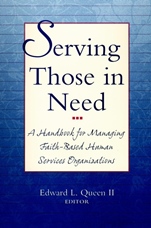
Serving Those in Need: A Handbook for Managing Faith–Based Human Services Organizations
ISBN 9780787942960
Autor: Edward L. Queen II
Wydawca: Wiley
Dostępność: 3-6 tygodni
Cena: 254,10 zł
Przed złożeniem zamówienia prosimy o kontakt mailowy celem potwierdzenia ceny.
ISBN13: |
9780787942960 |
ISBN10: |
0787942960 |
Autor: |
Edward L. Queen II |
Oprawa: |
Hardback |
Rok Wydania: |
2000-05-15 |
Ilość stron: |
320 |
Wymiary: |
236x157 |
Tematy: |
HR |
With decreasing public funds available for welfare and social services, today′s faith–based organizations are emerging as the real providers of essential human services. But many nonprofits are finding themselves inadequately prepared to assume roles formerly handled by state and national governments. How do the leaders of these religious organizations best respond to the particular needs of the local community? How do they maintain high–quality service despite new financial pressures? And how do they retain their organizations′ distinctive religious character amid the onslaught of new clients and demands? Serving Those in Need is a much–needed source of advice on these issues from both researchers and service providers in the field. It offers the practical, essential guidance leaders need to prepare for the rapidly increasing demands for their service. Based on the recognition that religious organizations bring a special dimension to the provision of services, this unique handbook offers proven models for delivering a range of services and shows how to assess the need for services, build the organization′s capacity, and ensure adequate financial support for meeting those needs. It includes extensive lists of references, supporting agencies, and sources of additional information, plus checklists of what to do–and what not to do. Stories and illustrations drawn from real situations demonstrate the difficulties, struggles, and successes other service providers have experienced, reminding readers that they are not alone. Human and social service organizations that are founded on a faith commitment provide an unquantifiable added value to service delivery. From their beginnings, all faith communities have viewed the support of the poor and unprotected as a fundamental responsibility. Moreover, religious institutions are particularly trusted by the communities they serve. Driven by higher motives, they can accomplish things that other agencies cannot because their religious dimension earns people′s confidence. It is only by maintaining this distinctiveness that faith–based organizations can truly realize their highest potential. Serving Those in Need helps such organizations build on their qualitatively different nature. Taken as a whole, this handbook focuses on building community. And that is ultimately what religious organizations are about. Back Cover] [head] Practical and Essential Guidance for Faith–Based Service Providers "One of the burdens of being a religiously driven organization is that any failings or weaknesses play into the hands of those who may look askance at the message .Those who undertake to deliver human and social services have assumed a tremendous burden and responsibility. In doing this work from a religious perspective, they have added another layer of burden. However, if it is truly from a deep–seated faith commitment, then perhaps to speak of a burden is inappropriate. One could argue easily that such an activity is not something one can refuse, but is an integral part of the divine imperative. If such is the case, if one truly feels that one′s activity is part of the Lord′s work, then the magnitude of the obligation increases even more. For one finds oneself not only under the judgment of law and public opinion, but of the God whom one serves. One must, therefore, strive to hear God say, ′Well done, my good and faithful servant.′" —Edward L. Queen II, from the Introduction Given the increased pressures and higher demand on social–service organizations, faith–based providers must find ways to increase their effectiveness while maintaining their religious distinctiveness. Serving Those in Need provides practical answers for those engaged in the delivery of human and social services. The editor and contributors draw from their deep commitment to faith, from a sense that religion plays a powerfully important role in people′s lives and in our public life. For those who view service to others as a means of realizing their faith, this book will be tremendously useful.
Introduction, The Meaning of Faith–Based Human Services (Edward Queen). PREPARING FOR SERVICE. 1. Religion and the Emerging Context of Service Delivery (Edward Queen). 2. Congregations and Social Ministry–Preparation and Development (Carl Dudley). 3. Congregations and Communities Working Together (John Kretzmann). CAPACITY BUILDING. 4 .Building and Sustaining Lay Leadership: Boards and Mission (James B. Lemler). 5. Funding the Dream (Sara Ann Robertson). 6. Stakeholder Analysis as a Tool for Faith–Based Organizations (Mary Tschirhart & Eric Knueve). 7. Developing Financial Accountability and Controls (John Zietlow). 8. Volunteerism and Organized Religion (Ram A. Cnaan & Gaynor I. Yancey). 9. Finding Help and Advice at the School Next Door: Working with Academic Institutions (Art Farnsley). 10. Money with (Some) Strings (Stephen Monsma). 11. Working with Foundations (Edward Queen). BEYOND BASIC NEEDS. 12. Community–Based Economic Development (Eric Clay & Elliott Wright). 13. The Role of Local Congregations in Facilitating the Delivery of Health Care Services (Sandra Burgener). 14. Religion in the `Hood: Faith–based Initiatives with High Risk Youth (Harold Dean Trulear).
EDWARD L. QUEEN currently directs the Islamic Society of North America′s fellowships in nonprofit management and governance. He previously served as director of the religion and philanthropy project at the Indiana University Center on Philanthropy and as a program officer at Lilly Endowment, Inc.
"With government at all levels initiating collaborations with religious organizations, there could hardly be a more timely or useful book for board members and volunteers of faith–based social service providers. This important volume highlights the challenges such providers face and offers specific, useful advice for meeting those challenges while remaining true to the provider′s religious mission." (Sheila Suess Kennedy, assistant professor, law and public policy, Indiana University–Purdue University at Indianapolis) "While this book deals primarily with Christian organizations, the principles used by faith–based organizations are essentially the same. Anyone involved with the management or leadership of a Muslim nonprofit organization should read this book." (Shariq A. Siddiqui, director, community development and fundraising, Islamic Society of North America)
Koszyk
Książek w koszyku: 0 szt.
Wartość zakupów: 0,00 zł
Informacje


Kontakt
Gambit
Centrum Oprogramowania
i Szkoleń Sp. z o.o.
Al. Pokoju 29b/22-24
31-564 Kraków
Siedziba Księgarni
ul. Kordylewskiego 1
31-542 Kraków
+48 12 410 5991
+48 12 410 5987
+48 12 410 5989
Subskrypcje
Administratorem danych osobowych jest firma Gambit COiS Sp. z o.o. Na podany adres będzie wysyłany wyłącznie biuletyn informacyjny.
Autoryzacja płatności

Informacje na temat autoryzacji płatności poprzez PayU.

© Copyright 2012: GAMBIT COiS Sp. z o.o. Wszelkie prawa zastrzeżone.
Projekt i wykonanie: Alchemia Studio Reklamy