


Wydawcy
Katalog tematyczny
- Archeologia (109)
- Ekonomia, finanse, business (13704)
- Filozofia (1445)
- Historia (3040)
- Języki i językoznawstwo (2356)
- Lifestyle, hobby i rozrywka (475)
- Medycyna (9704)
- Nauki humanistyczne (4)
- Nauki o Ziemi i środowisku (2638)
- Nauki ścisłe (20412)
- Nauki społeczne (8486)
- Nauki techniczne (13450)
- Budownictwo lądowe (1045)
- Chemia przemysłowa (2258)
- Elektronika i telekomunikacja (3287)
- Energetyka (1122)
- Inne nauki stosowane (363)
- Inżynieria biochemiczna (507)
- Inżynieria transportu (232)
- Mechanika i materiały (3316)
- Nauka o środowisku (321)
- Rolnictwo (507)
- Technika, ogólnie (475)
- Prawo (1696)
- Publikacje informacyjne i interdyscyplinarne (1288)
- Religia i wierzenia (917)
- Technika komputerowa (4067)
- Zdrowie, relacje międzyludzkie i rozwój osobisty (657)





Informacje szczegółowe o książce
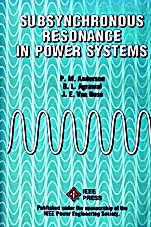
Subsynchronous Resonance in Power Systems
ISBN 9780780353503
Autor: Paul M. Anderson, Basant L. Agrawal, J. E. Van Ness
Wydawca: Wiley
Dostępność: 3-6 tygodni
Cena: 707,70 zł
Przed złożeniem zamówienia prosimy o kontakt mailowy celem potwierdzenia ceny.
ISBN13: |
9780780353503 |
ISBN10: |
0780353501 |
Autor: |
Paul M. Anderson, Basant L. Agrawal, J. E. Van Ness |
Oprawa: |
Paperback |
Rok Wydania: |
1999-01-19 |
Ilość stron: |
288 |
Wymiary: |
231x166 |
Tematy: |
TJ |
Spis treści:
Preface.
PART 1: INTRODUCTION.
Chapter 1: Introduction.
1.1 Definition of SSR.
1.2 Power System Modeling.
1.3 Introduction to SSR.
1.3.1 Types of SSR Interactions.
1.3.2 Analytical Tools.
1.4 Eigenvalue Analysis.
1.4.1 Advantages of Eigenvalue Computation.
1.4.2 Disadvantages of Eigenvalue Calculation.
1.5 Conclusions.
1.6 Purpose, Scope, and Assumptions.
1.7 Guidelines for Using This Book.
1.8 SSR References.
1.8.1 General References.
1.8.2 SSR References.
1.8.3 Eigenvalue/Eigenvector Analysis References.
1.9 References for Chapter 1.
PART 2: SYSTEM MODELING.
Chapter 2: The Generator Model.
2.1 The Synchronous Machine Structure.
2.2 The Machine Circuit Inductances.
2.2.1 Stator Self Inductances.
2.2.2 Stator Mutual Inductances.
2.2.3 Rotor Self Inductances.
2.2.4 Rotor Mutual Inductances.
2.2.5 Stator–to–Rotor Mutual Inductances.
2.3 Park′s Transformation.
2.4 The Voltage Equations.
2.5 The Power and Torque Equations.
2.6 Normalization of the Equations.
2.7 Analysis of the Direct Axis Equations.
2.8 Analysis of the Quadrature Axis Equations.
2.9 Summary of Machine Equations.
2.10 Machine–Network Interface Equations.
2.11 Linear State–Space Machine Equations.
2.12 Excitation Systems.
2.13 Synchronous Machine Saturation.
2.13.1 Parameter Sensitivity to Saturation.
2.13.2 Saturation in SSR Studies.
2.14 References for Chapter 2.
Chapter 3: The Network Model.
3.1 An Introductory Example.
3.2 The Degenerate Network.
3.3 The Order of Complexity of the Network.
3.4 Finding the Network State Equations.
3.5 Transforming the State Equations.
3.6 Generator Frequency Transformation.
3.7 Modulation of the 60 Hz Network Response.
3.8 References for Chapter 3.
Chapter 4: The Turbine–Generator Shaft Model.
4.1 Definitions
and Conventions.
4.2 The Shaft Torque Equations.
4.3 The Shaft Power Equations.
4.4 Normalization of the Shaft Equations.
4.5 The Incremental Shaft Equations.
4.6 The Turbine Model.
4.7 The Complete Turbine and Shaft Model.
4.8 References for Chapter 4.
PART 3: SYSTEM PARAMETERS.
Chapter 5: Synchronous Generator Model Parameters.
5.1 Conventional Stability Data.
5.1.1 Approximations Involved in Parameter Computation.
5.2 Measured Data from Field Tests.
5.2.1 Standstill Frequency Response (SSFR) Tests.
5.2.2 Generator Tests Performed Under Load.
5.2.2.1 The On–Line Frequency Response Test.
5.2.2.2 Load Rejection Test.
5.2.2.3 Off–Line Frequency Domain Analysis of Disturbances.
5.2.3 Other Test Methods.
5.2.3.1 The Short Circuit Test.
5.2.3.2 Trajectory Sensitivity Based Identification.
5.3 Parameter Fitting from Test Results.
5.4 Sample Test Results.
5.5 Frequency Dependent R and X Data.
5.6 Other Sources of Data.
5.7 Summary.
5.8 References for Chapter 5.
Chapter 6: Turbine–Generator Shaft Model Parameters.
6.1 The Shaft Spring–Mass Model.
6.1.1 Neglecting the Shaft Damping.
6.1.2 Approximate Damping Calculations.
6.1.2.1 Model Adjustment.
6.1.2.2 Model Adjustment for Damping.
6.1.2.3 Model Adjustment for Frequencies.
6.1.2.4 Iterative Solution of the Inertia Adjustment Equations.
6.2 The Modal Model.
6.3 Field Tests for Frequencies and Damping.
6.4 Damping Tests.
6.4.1 Transient Method.
6.4.2 Steady–State Method.
6.4.3 Speed Signal Processing.
6.4.4 Other Methods.
6.4.5 Other Factors.
6.5 References for Chapter 6.
PART 4: SYSTEM ANALYSIS.
Chapter 7: Eigen Analysis.
7.1 State–Space Form of System Equations.
7.2 Solution of the State Equations.
7.3 Finding Eigenvalues and Eigenvectors.
7.4 References for Chapter 7.
Chapter 8: SSR Eigenvalue Analy
sis.
8.1 The IEEE First Benchmark Model.
8.1.1 The FBM Network Model.
8.1.2 The FBM Synchronous Generator Model.
8.1.3 The FBM Shaft Model.
8.2 The IEEE Second Benchmark Model.
8.2.1 Second Benchmark Model—System #1.
8.2.2 Second Benchmark Model—System #2.
8.2.3 SBM Generator, Circuit, and Shaft Data.
8.2.4 Computed Results for the Second Benchmark Models.
8.3 The CORPALS Benchmark Model.
8.3.1 The CORPALS Network Model.
8.3.2 The CORPALS Machine Models.
8.3.3 The CORPALS Eigenvalues.
8.4 An Example of SSR Eigenvalue Analysis.
8.4.1 The Spring–Mass Model.
8.4.2 The System Eigenvalues.
8.4.3 Computation of Net Modal Damping.
8.5 References for Chapter 8.
Index.
About the Authors.
Koszyk
Książek w koszyku: 0 szt.
Wartość zakupów: 0,00 zł
Informacje


Kontakt
Gambit
Centrum Oprogramowania
i Szkoleń Sp. z o.o.
Al. Pokoju 29b/22-24
31-564 Kraków
Siedziba Księgarni
ul. Kordylewskiego 1
31-542 Kraków
+48 12 410 5991
+48 12 410 5987
+48 12 410 5989
Subskrypcje
Administratorem danych osobowych jest firma Gambit COiS Sp. z o.o. Na podany adres będzie wysyłany wyłącznie biuletyn informacyjny.
Autoryzacja płatności

Informacje na temat autoryzacji płatności poprzez PayU.

© Copyright 2012: GAMBIT COiS Sp. z o.o. Wszelkie prawa zastrzeżone.
Projekt i wykonanie: Alchemia Studio Reklamy