


Wydawcy
Katalog tematyczny
- Archeologia (109)
- Ekonomia, finanse, business (13704)
- Filozofia (1445)
- Historia (3040)
- Języki i językoznawstwo (2356)
- Lifestyle, hobby i rozrywka (475)
- Medycyna (9704)
- Nauki humanistyczne (4)
- Nauki o Ziemi i środowisku (2638)
- Nauki ścisłe (20412)
- Nauki społeczne (8486)
- Edukacja (229)
- Kryminologia, opieka spełeczna (284)
- Obronność (10)
- Polityka (1389)
- Psychologia (777)
- Socjologia (410)
- Społeczeństwo i kultura (187)
- Nauki techniczne (13450)
- Prawo (1696)
- Publikacje informacyjne i interdyscyplinarne (1288)
- Religia i wierzenia (917)
- Technika komputerowa (4067)
- Zdrowie, relacje międzyludzkie i rozwój osobisty (657)





Informacje szczegółowe o książce
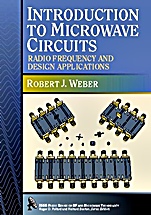
Introduction to Microwave Circuits: Radio Frequency and Design Applications
ISBN 9780780347045
Autor: Robert J. Weber
Wydawca: Wiley
Dostępność: 3-6 tygodni
Cena: 899,85 zł
Przed złożeniem zamówienia prosimy o kontakt mailowy celem potwierdzenia ceny.
ISBN13: |
9780780347045 |
ISBN10: |
0780347048 |
Autor: |
Robert J. Weber |
Oprawa: |
Hardback |
Rok Wydania: |
2001-01-09 |
Ilość stron: |
448 |
Wymiary: |
261x184 |
Tematy: |
JD |
Electrical Engineering Introduction to Microwave Circuits Radio Frequency and Design Applications A volume in the IEEE Press Series on RF and Microwave Technology Roger D. Pollard and Richard Booton, Series Editors Do you want to design a wireless transmitter or receiver for hand–held telephones or local area networks? Have you wondered why the printed circuit wires on high–frequency circuits don′t always run in a straight line? This valuable text will answer all of your questions regarding component parasitics and circuit characterization for rf/microwave amplifier, oscillator, and filter circuit design and analysis. You will understand why capacitors act as inductors and vice versa and why amplifiers work like oscillators, while oscillators for local area networks work more like local area heaters. Application of the information in Introduction to Microwave Circuits will reduce design cycle time and costs, markedly increasing the probability of first–time success in printed circuit or monolithic microwave integrated circuits (MMIC) microwave circuit design. Several approaches are taken into consideration, such as the effects of currents on the ground plane, bypass and coupling capacitors, and nonlinear effects in linear circuits. Featured topics include:
∗ Incorporation of component parasitics in the design cycle
∗ Closed form solution to oscillator design
∗ Odd mode stability analysis
∗ Scattering parameter analysis methods–mixed mode circuits and load pull techniques
∗ PIN diode analysis for high–power switching applications
An integrated design example of a 1.25 GHz amplifier, oscillator, and filter printed circuit is also included,which could be useful in printed circuit board designs from tens of megahertz to tens of gigahertz. Introduction to Microwave Circuits provides the tools necessary to analyze or synthesize microwave circuits. This text is an essential reference for u
ndergraduate students, microwave engineers, and administrators. Also, it will assist experienced designers in other fields to meet the current rapid expansion of communication system applications and work effectively in microwave circuit design.
Spis treści:
Preface.
Acknowledgments.
Microwave Circuits.
Models, Modeling, and Characterization.
S–Parameter Measurement Methods.
Multiport and Differential–Mode Scattering Parameters.
Stability, Stabilization, and Gain.
Matching Networks, Attenuators, and Phase Shifters.
RF/Microwave Power Generation Considerations.
Resonators and Oscillators.
Microwave Filter Design.
Noise Considerations for Microwave Circuits.
Detection and Mixing.
Microwave Components.
Pulsed Microwave Circuit Analysis.
Nonlinear Effects in Microwave Circuits.
Amplifier, Oscillator, and Filter Circuit Design Examples.
Appendix A: An Approximate Formula for the Characteristic Impedance of a Microstrip Line.
Appendix B: Some Complex Variable Facts.
Appendix C: Matric Multiplication.
Appendix D: Resistor, Capacitor, and Inductor Component Modeling.
Appendix E: Chip Resistor Sizes––Nominal Sizes Only.
Appendix F: S Parameters (Scattering Parameters––Current Referenced).
Appendix G: Modeling Using an Equivalent Mechanical Model.
Bibliography.
Index.
About the Author.
Nota biograficzna:
About the Author Robert J. Weber began his prolific career in the Solid State Research Laboratory at the Collins Radio Company, later a part of Rockwell International. For 25 years, he worked on advanced development and applied research in the one– to ten–gigahertz frequency range and received several distinguished awards for his valuable contributions to the field. Presently, Dr. Weber is involved in ongoing experimental research in integrating microwave circuits with other devices such as MEMS, chemical sensors
, and electro–optics. Also, he teaches microwave circuit design and fiber–optics communications at the Department of Electrical and Computer Engineering, Iowa State University. Dr. Weber is an IEEE Fellow.
Okładka tylna:
Electrical Engineering Introduction to Microwave Circuits Radio Frequency and Design Applications A volume in the IEEE Press Series on RF and Microwave Technology Roger D. Pollard and Richard Booton, Series Editors Do you want to design a wireless transmitter or receiver for hand–held telephones or local area networks? Have you wondered why the printed circuit wires on high–frequency circuits don′t always run in a straight line? This valuable text will answer all of your questions regarding component parasitics and circuit characterization for rf/microwave amplifier, oscillator, and filter circuit design and analysis. You will understand why capacitors act as inductors and vice versa and why amplifiers work like oscillators, while oscillators for local area networks work more like local area heaters. Application of the information in Introduction to Microwave Circuits will reduce design cycle time and costs, markedly increasing the probability of first–time success in printed circuit or monolithic microwave integrated circuits (MMIC) microwave circuit design. Several approaches are taken into consideration, such as the effects of currents on the ground plane, bypass and coupling capacitors, and nonlinear effects in linear circuits. Featured topics include:
∗ Incorporation of component parasitics in the design cycle
∗ Closed form solution to oscillator design
∗ Odd mode stability analysis
∗ Scattering parameter analysis methods–mixed mode circuits and load pull techniques
∗ PIN diode analysis for high–power switching applications
An integrated design example of a 1.25 GHz amplifier, oscillator, and filter printed circuit is also incl
uded,which could be useful in printed circuit board designs from tens of megahertz to tens of gigahertz. Introduction to Microwave Circuits provides the tools necessary to analyze or synthesize microwave circuits. This text is an essential reference for undergraduate students, microwave engineers, and administrators. Also, it will assist experienced designers in other fields to meet the current rapid expansion of communication system applications and work effectively in microwave circuit design.
Koszyk
Książek w koszyku: 0 szt.
Wartość zakupów: 0,00 zł
Informacje


Kontakt
Gambit
Centrum Oprogramowania
i Szkoleń Sp. z o.o.
Al. Pokoju 29b/22-24
31-564 Kraków
Siedziba Księgarni
ul. Kordylewskiego 1
31-542 Kraków
+48 12 410 5991
+48 12 410 5987
+48 12 410 5989
Subskrypcje
Administratorem danych osobowych jest firma Gambit COiS Sp. z o.o. Na podany adres będzie wysyłany wyłącznie biuletyn informacyjny.
Autoryzacja płatności

Informacje na temat autoryzacji płatności poprzez PayU.

© Copyright 2012: GAMBIT COiS Sp. z o.o. Wszelkie prawa zastrzeżone.
Projekt i wykonanie: Alchemia Studio Reklamy