


Wydawcy
Katalog tematyczny
- Archeologia (109)
- Ekonomia, finanse, business (13704)
- Filozofia (1445)
- Historia (3040)
- Języki i językoznawstwo (2356)
- Lifestyle, hobby i rozrywka (475)
- Medycyna (9704)
- Nauki humanistyczne (4)
- Nauki o Ziemi i środowisku (2638)
- Nauki ścisłe (20412)
- Nauki społeczne (8486)
- Nauki techniczne (13450)
- Budownictwo lądowe (1045)
- Chemia przemysłowa (2258)
- Elektronika i telekomunikacja (3287)
- Energetyka (1122)
- Inne nauki stosowane (363)
- Inżynieria biochemiczna (507)
- Inżynieria transportu (232)
- Mechanika i materiały (3316)
- Nauka o środowisku (321)
- Rolnictwo (507)
- Technika, ogólnie (475)
- Prawo (1696)
- Publikacje informacyjne i interdyscyplinarne (1288)
- Religia i wierzenia (917)
- Technika komputerowa (4067)
- Zdrowie, relacje międzyludzkie i rozwój osobisty (657)





Informacje szczegółowe o książce
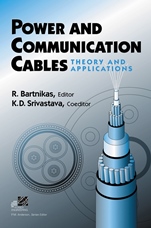
Power and Communication Cables: Theory and Applications
ISBN 9780780311961
Autor: Ray Bartnikas, K. D. Srivastava
Wydawca: Wiley
Dostępność: 3-6 tygodni
Cena: 979,65 zł
Przed złożeniem zamówienia prosimy o kontakt mailowy celem potwierdzenia ceny.
ISBN13: |
9780780311961 |
ISBN10: |
0780311965 |
Autor: |
Ray Bartnikas, K. D. Srivastava |
Oprawa: |
Hardback |
Rok Wydania: |
2003-01-30 |
Ilość stron: |
880 |
Wymiary: |
259x185 |
Tematy: |
TJ |
Power and communication cables are frequently installed adjacent to each other, and hybrid cables that contain both power conductors and communication lines are increasingly popular. Power and Communication Cables is a convenient, single–source volume written for utility maintenance engineers, cable production and design engineers, and students to expand their knowledge of both types of cables in the power and communications fields. With contributions from leaders in the field, this book presents a detailed treatment of solid–liquid, polymeric, compressed gas, and cryogenic cables used in power transmission and distribution. In the area of communication, the contributors address the use of metallic conductor multipair and coaxial cables, as well as optical fiber cables.
Power and Communication Cables provides in–depth discussion of the design, manufacture, testing, installation, and operation of power and communication cables. You will find essential information on the properties of materials and learn how they influence cable characteristics. Moreover, this interdisciplinary reference provides theoretical and practical insights into various aspects of cable engineering in both power and communication systems.
Spis treści:
PREFACE.
ACKNOWLEDGMENTS.
CHAPTER 1: CABLES: A CHRONOLOGICAL PERSPECTIVE (R. Bartnikas).
1.1 Preliminary Remarks.
1.2 Power Cables.
1.3 Communication Cables.
CHAPTER 2: CHARACTERISTICS OF CABLE MATERIALS (R. Bartnikas).
2.1 Introduction.
2.2 Metallic Conductors.
2.3 Conductor and Insulation Semiconducting Shields.
2.4 Insulation.
2.5 Materials for Protective Coverings.
2.6 Armoring Materials.
2.7 Coverings for Corrosion Protection.
2.8 Conclusion.
2.9 Glossary of Cable Materials Technology.
CHAPTER 3: DESIGN AND MANUFACTURE OF EXTRUDED SOLID–DIELECTRIC POWER DISTRIBUTION CABLES (H. D. Campbell and L J. H
iivala).
3.1 Introduction.
3.2 Design Fundamentals.
3.3 Design Considerations.
3.4 Design Objectives.
3.5 Solid–Dielectric Insulation Techniques.
3.6 Related Tests.
CHAPTER 4: EXTRUDED SOLID–DIELECTRIC POWER TRANSMISSION CABLES (L J. Hiivala).
4.1 Introduction.
4.2 Design and Construction.
4.3 Manufacturing Methods.
4.4 Testing.
4.5 Accessories.
4.6 Concluding Remarks.
CHAPTER 5: DESIGN AND MANUFACTURE OF OIL–IMPREGNATED PAPER INSULATED POWER DISTRIBUTION CABLES (W. K. Rybczynski).
5.1 Brief History of Development.
5.2 Elements of Solid–Type Oil–Paper Cable Design.
5.3 Cable Manufacture.
5.4 Tests.
5.5 Electrical Characteristics.
5.6 Conclusion.
CHAPTER 6: LOW–PRESSURE OIL–FILLED POWER TRANSMISSION CABLES (W. K. Rybczynski).
6.1 Introduction.
6.2 Elements of Oil–Filled Cable Design.
6.3 Cable Manufacture.
6.4 Tests.
6.5 Electrical Characteristics.
6.6 Principles of Oil Feeding.
6.7 Notes on Sheath Bonding.
6.8 Limitations of LPOF Cables.
6.9 Self–Contained High–Pressure Oil–Filled Cables.
6.10 Self Contained Oil–Filled Cables for dc Application.
CHAPTER 7: HIGH–PRESSURE OIL–FILLED PIPE–TYPE POWER TRANSMISSION CABLES (W. K. Rybczynski).
7.1 Introduction.
7.2 Principles of Operation.
7.3 Elements of Cable Design.
7.4 Cable Manufacture.
7.5 Tests.
7.6 Electrical Characteristics.
7.7 Principles of Oil Feeding.
7.8 Cathodic Protection.
7.9 Limitations of HPOFPT Cables.
7.10 Development of HPOFPT Cable for Higher Voltages in the United States.
7.11 Gas–Type Cables.
7.12 Gas Compression EHV Cables.
7.13 Concluding Remarks.
CHAPTER 8: VOLTAGE BREAKDOWN AND OTHER ELECTRICAL TESTS ON POWER CABLES (H. D. Campbell).
8.1 Introduction.
8.2 Altern
ating–Current Overvoltage Test.
8.3 Direct–Current Overvoltage Test.
8.4 Voltage Testing of Production Lengths.
8.5 Tests on Specimens.
8.6 Impulse Tests.
CHAPTER 9: DISSIPATION FACTOR, PARTIAL–DISCHARGE, AND ELECTRICAL AGING TESTS ON POWER CABLES (R. Bartnikas).
9.1 Introduction.
9.2 Dissipation Factor of a Cable.
9.3 Bridge Techniques for the Measurement of tan δ.
9.4 Partial–Discharge Characteristics.
9.5 Partial–Discharge Measurements.
9.6 Partial–Discharge Site Location.
9.7 Discharge Pulse Pattern Studies.
9.8 Electrical Aging Mechanisms.
9.9 Accelerated Electrical Aging Tests.
CHAPTER 10: FIELD TESTS AND ACCESSORIES FOR POLYMERIC POWER DISTRIBUTION CABLES (H. H. Campbell and W. T. Starr).
10.1 Introduction.
10.2 Alternating–Current Overvoltage Test.
10.3 Dissipation Factor (Power Factor) Test.
10.4 Insulation Resistance Test.
10.5 Partial–Discharge Test.
10.6 Direct–Current Overvoltage Test.
10.7 Direct–Current Test Procedures.
10.8 Interpretation of Test Results.
10.9 Question of Test Levels.
10.10 Direct Stress versus Alternating Stress Considerations.
10.11 Practical Test Levels.
10.12 Joints and Terminations.
10.13 Some Current Practices.
CHAPTER 11: POWER CABLE SYSTEMS (G. Ludasi).
11.1 Introduction.
11.2 Comparison of Overhead Lines and Cables.
11.3 Radial Power Systems.
11.4 Looped Systems.
11.5 Current–Carrying Capacity: Rating Equations.
11.6 Calculation of Losses.
11.7 Thermal Resistance of Cables.
11.8 Cyclic Loading.
11.9 Short–Term Overloading.
11.10 Fault Currents.
11.11 Cable System Economics.
11.12 Choice of System Voltage.
11.13 Cable Selection and Installation Methods.
11.14 Cable Pulling.
11.15 Choice of Cable Route and Manhole Location.
CHAPTER 12: CRYOGENIC AND COMPRESSED GAS
INSULATED POWER CABLES (K. D. Srivastava).
12.1 Introduction.
12.2 Compressed Gas Insulated Transmission Line System.
12.3 Cryoresistive Cables.
12.4 Superconductive Cables.
12.5 Economic Considerations.
CHAPTER 13: UNDERWATER POWER CABLES (R. T. Traut).
13.1 Introduction.
13.2 Underwater Power Cable Design.
13.3 Power Transmission Requirements.
13.4 Armor and External Protection Design.
13.5 Underwater Power Cable Manufacture.
13.6 Cable Transport.
13.7 Underwater Power Cable Installation.
CHAPTER 14: HIGH–VOLTAGE DIRECT–CURRENT CABLES (C. Doench and K. D. Srivastava).
14.1 Introduction.
14.2 Electrical Behavior of DC Cables.
14.3 Transient Electric Stresses on HVDC Cables.
14.4 Design of HVDC Cables.
14.5 Selection of Materials.
14.6 Direct–Current Cable Accessories.
14.7 Testing of DC Cables.
14.8 Emerging Trends in HVDC Cable Technology.
CHAPTER 15: TELEPHONE CABLES (R. Bartnikas).
15.1 Historical Background.
15.2 Transmission Parameters of Copper Conductor Telephone Cables.
15.3 Digital Transmission.
15.4 Characteristics of Metallic Conductor Telephone Cables.
15.4.1 Twisted–Wire Multipair Cables.
15.5 Electrical Characteristics of Coaxial Cables.
15.6 Metallic Conductor Telephone Cable Design and Manufacture.
15.7 Coaxial Cable Design and Construction.
15.8 Video Pair Cable Design and Construction.
15.9 Optical Fiber Telephone Cables.
CHAPTER 16: UNDERSEA COAXIAL COMMUNICATION CABLES (R. T. Traut).
16.1 Introduction.
16.2 Undersea Cable Telecommunications.
16.3 Undersea Coaxial Cable Design.
CHAPTER 17: TERRESTRIAL AND UNDERWATER OPTICAL FIBER CABLES (W. F. Wright).
17.1 Introduction.
17.2 Historical Perspective.
17.3 Optical Fiber Characteristics.
17.4 Introduction to Fiber–Optic Cables.
17.5 Introduct
Koszyk
Książek w koszyku: 0 szt.
Wartość zakupów: 0,00 zł
Informacje


Kontakt
Gambit
Centrum Oprogramowania
i Szkoleń Sp. z o.o.
Al. Pokoju 29b/22-24
31-564 Kraków
Siedziba Księgarni
ul. Kordylewskiego 1
31-542 Kraków
+48 12 410 5991
+48 12 410 5987
+48 12 410 5989
Subskrypcje
Administratorem danych osobowych jest firma Gambit COiS Sp. z o.o. Na podany adres będzie wysyłany wyłącznie biuletyn informacyjny.
Autoryzacja płatności

Informacje na temat autoryzacji płatności poprzez PayU.

© Copyright 2012: GAMBIT COiS Sp. z o.o. Wszelkie prawa zastrzeżone.
Projekt i wykonanie: Alchemia Studio Reklamy