


Wydawcy
Katalog tematyczny
- Archeologia (109)
- Ekonomia, finanse, business (13704)
- Filozofia (1445)
- Historia (3040)
- Języki i językoznawstwo (2356)
- Lifestyle, hobby i rozrywka (475)
- Medycyna (9704)
- Nauki humanistyczne (4)
- Nauki o Ziemi i środowisku (2638)
- Nauki ścisłe (20412)
- Nauki społeczne (8486)
- Edukacja (229)
- Kryminologia, opieka spełeczna (284)
- Obronność (10)
- Polityka (1389)
- Psychologia (777)
- Socjologia (410)
- Społeczeństwo i kultura (187)
- Nauki techniczne (13450)
- Prawo (1696)
- Publikacje informacyjne i interdyscyplinarne (1288)
- Religia i wierzenia (917)
- Technika komputerowa (4067)
- Zdrowie, relacje międzyludzkie i rozwój osobisty (657)





Informacje szczegółowe o książce
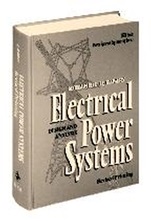
Electrical Power Systems: Design and Analysis
ISBN 9780780311404
Autor: Mohamed E. El–Hawary
Wydawca: Wiley
Dostępność: 3-6 tygodni
Cena: 942,90 zł
Przed złożeniem zamówienia prosimy o kontakt mailowy celem potwierdzenia ceny.
ISBN13: |
9780780311404 |
ISBN10: |
078031140X |
Autor: |
Mohamed E. El–Hawary |
Oprawa: |
Hardback |
Rok Wydania: |
1995-02-23 |
Ilość stron: |
808 |
Wymiary: |
243x194 |
Tematy: |
JD |
Electrical Engineering / Power Systems Electrical Power Systems Design and Analysis, Revised Printing IEEE Power Systems Engineering Series Paul M. Anderson, Series Editor
This comprehensive textbook introduces electrical engineers to the most relevant concepts and techniques in electrical power system engineering today. With an emphasis on practical motivations for choosing the best design and analysis approaches, Electrical Power Systems carefully integrates theory–and application. Key features include:over 500 illustrations and diagramsclearly developed procedures and application examplesimportant mathematical detailscoverage of both alternating and direct currentan additional set of solved problems at the end of each chapteran historical overview of the development of electrical power systems
Learn about power flow, fault analysis, high–voltage direct transmission systems, electrical power system protection, economic considerations, and more from this step–by–step introduction to power system engineering. This book will be useful to both power engineering students and professional power engineers. Also in the IEEE Power Systems Engineering Series…
Power System Stability Volumes I, II, & III by Edward Wilson Kimbark An IEEE Press Classic Reissue • 1995 • Softcover in slipcased set • 1008 pp IEEE Order No. PP5600 • ISBN 0–7803–1135–3
Analysis of Electric Machinery by Paul C. Krause and Oleg Wasynczuk, Purdue University, and Scott D. Sudhoff, University of Missouri at Rolla 1994 • Hardcover • 584 pp • IEEE Order No. PC4556 • ISBN 0–7803–1101–9
About the Series…
The IEEE Power Systems Engineering Series is devoted to providing comprehensive coverage of the field, including the design, operation, and analysis of power systems. Created expressly for use by
power system engineers and engineering students, this series offers extensive complementary coverage of both theory and practical applications. IEEE Order No. PC5606
Spis treści:
Preface.
Chapter I Introduction.
1.1 The Development of Electric Power Systems.
1.2 Outline of the Text.
Chapter II Some Basic Principles.
2.1 Introduction.
2.2 Power Concepts.
2.3 Three Phase Systems.
2.4 Power System Representation.
Chapter III Power Generation and the Synchronous Machine.
3.1 Introduction.
3.2 The Synchronous Machine: Preliminaries.
3.3 Fields in a Synchronous Machine.
3.4 A Simple Equivalent Circuit.
3.5 Open–Circuit and Short–Circuit Characteristics.
3.6 Principal Steady–State Characteristics.
3.7 Power–Angle Characteristics and the Infinite Bus Concept.
3.8 Static Stability Limit Curves.
3.9 Accounting for Saliency.
3.10 Salient–Pole Machine Power Angle Characteristics.
Chapter IV The Transmission Subsystem.
4.1 Introduction.
4.2 Electric Transmission Line Parameters.
4.3 Line Inductance.
4.4 Line Capacitance.
4.5 Two–Port Networks.
4.6 Transmission Line Models.
Chapter V The Load Subsystem.
5.1 Introduction.
5.2 General Theory of Transformer Operation.
5.3 Transformer Connections.
5.4 Three–Phase Induction Motors.
Chapter VI Analysis of Interconnected Systems.
6.1 Introduction.
6.2 Reduction of Interconnected Systems.
6.3 The Per Unit System.
6.4 Network Nodal Admittance Formulation.
6.5 The General Form of the Load–Flow Equations.
6.6 The Load–Flow Problem.
6.7 Getting Started.
6.8 Newton–Raphson Method.
6.9 The Newton–Raphson Method for Load–Flow Solution.
Chapter VII High–Voltage Direct–Current Transmission.
7.1 Introduction.
7.2 Main Applications of HVDC.
7
.3 HVDC Converters.
7.4 Classifications of Direct–Current Links.
7.5 Some Advantages of HVDC Transmission.
7.6 Some Economic Considerations.
7.7 Converter Circuits: Configurations and Properties.
7.8 Analysis of the Three–Phase Bridge Converter.
7.9 Inversion in Three–Phase Bridge Converter.
7.10 HVDC Link and Converter Control Characteristics.
7.11 Analysis of HVDC Link Performance.
Chapter VIII Faults on Electric Energy Systems.
8.1 Introduction.
8.2 Transients During a Balanced Fault.
8.3 The Method of Symmetrical Components.
8.4 Sequence Networks.
8.5 Line–to–Ground Fault.
8.6 Double Line–to–Ground Fault.
8.7 Line–to–Line Fault.
8.8 The Balanced Three–Phase Fault.
Chapter IX System Protection.
9.1 Introduction.
9.2 Productive Relays.
9.3 The X–R Diagram.
9.4 Relay Comparators.
9.5 Generator Protection.
9.6 Transformer Protection.
9.7 Bus Bar Protection.
9.8 Transmission Line Overcurrent Protection.
9.9 Pilot–Wire Feeder Protection.
9.10 Distance Protection.
9.11 Power Line Carrier Protection.
9.12 Computer Relaying.
Chapter X Power System Stability.
10.1 Introduction.
10.2 The Swing Equation.
10.3 Electric Power Relations.
10.4 Concepts in Transient Stability.
10.5 A Method for Stability Assessment.
10.6 Improving System Stability.
Chapter XI Optimal Operation of Electric Power Systems.
11.1 Introduction.
11.2 Modeling of Fuel Costs for Thermal Generation.
11.3 Optimal Operation of an All–Thermal System: Equal Incremental Cost Loading.
11.4 Accounting for Transmission Losses.
11.5 Optimal Operation of an All–Thermal System, Including Losses.
11.6 Optimal Operation of Hydrothermal Systems.
Some Solved Problems.
Problems.
Index.
Okładka tylna:
Electrical Engineering / Power Systems Elec
trical Power Systems Design and Analysis, Revised Printing IEEE Power Systems Engineering Series Paul M. Anderson, Series Editor
This comprehensive textbook introduces electrical engineers to the most relevant concepts and techniques in electrical power system engineering today. With an emphasis on practical motivations for choosing the best design and analysis approaches, Electrical Power Systems carefully integrates theory–and application. Key features include:over 500 illustrations and diagramsclearly developed procedures and application examplesimportant mathematical detailscoverage of both alternating and direct currentan additional set of solved problems at the end of each chapteran historical overview of the development of electrical power systems
Learn about power flow, fault analysis, high–voltage direct transmission systems, electrical power system protection, economic considerations, and more from this step–by–step introduction to power system engineering. This book will be useful to both power engineering students and professional power engineers. Also in the IEEE Power Systems Engineering Series…
Power System Stability Volumes I, II, & III by Edward Wilson Kimbark An IEEE Press Classic Reissue • 1995 • Softcover in slipcased set • 1008 pp IEEE Order No. PP5600 • ISBN 0–7803–1135–3
Analysis of Electric Machinery by Paul C. Krause and Oleg Wasynczuk, Purdue University, and Scott D. Sudhoff, University of Missouri at Rolla 1994 • Hardcover • 584 pp • IEEE Order No. PC4556 • ISBN 0–7803–1101–9
About the Series…
The IEEE Power Systems Engineering Series is devoted to providing comprehensive coverage of the field, including the design, operation, and analysis of power systems. Created expressly for use by power system engineers and engineering stud
Koszyk
Książek w koszyku: 0 szt.
Wartość zakupów: 0,00 zł
Informacje


Kontakt
Gambit
Centrum Oprogramowania
i Szkoleń Sp. z o.o.
Al. Pokoju 29b/22-24
31-564 Kraków
Siedziba Księgarni
ul. Kordylewskiego 1
31-542 Kraków
+48 12 410 5991
+48 12 410 5987
+48 12 410 5989
Subskrypcje
Administratorem danych osobowych jest firma Gambit COiS Sp. z o.o. Na podany adres będzie wysyłany wyłącznie biuletyn informacyjny.
Autoryzacja płatności

Informacje na temat autoryzacji płatności poprzez PayU.

© Copyright 2012: GAMBIT COiS Sp. z o.o. Wszelkie prawa zastrzeżone.
Projekt i wykonanie: Alchemia Studio Reklamy