


Wydawcy
Katalog tematyczny
- Archeologia (109)
- Ekonomia, finanse, business (13704)
- Filozofia (1445)
- Historia (3040)
- Języki i językoznawstwo (2356)
- Lifestyle, hobby i rozrywka (475)
- Medycyna (9704)
- Nauki humanistyczne (4)
- Nauki o Ziemi i środowisku (2638)
- Nauki ścisłe (20412)
- Nauki społeczne (8486)
- Nauki techniczne (13450)
- Prawo (1696)
- Publikacje informacyjne i interdyscyplinarne (1288)
- Religia i wierzenia (917)
- Technika komputerowa (4067)
- Zdrowie, relacje międzyludzkie i rozwój osobisty (657)





Informacje szczegółowe o książce
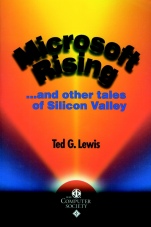
Microsoft Rising: ...and other tales of Silicon Valley
ISBN 9780769502007
Autor: Ted G. Lewis
Wydawca: Wiley
Dostępność: 3-6 tygodni
Cena: 405,30 zł
Przed złożeniem zamówienia prosimy o kontakt mailowy celem potwierdzenia ceny.
ISBN13: |
9780769502007 |
ISBN10: |
0769502008 |
Autor: |
Ted G. Lewis |
Oprawa: |
Paperback |
Rok Wydania: |
2000-01-27 |
Ilość stron: |
340 |
Wymiary: |
224x158 |
Tematy: |
KM |
This is the story of Microsoft® and how it rose to become the first monopoly of the information Age. The text is assembled from Ted Lewis′s columns published in IEEE Computer (1994–1998), IEEE Internet Computing, and Scientific American. Microsoft Rising is a tale of great, emotion, and techno–marketing hype in one of the fastest growing, mainline industries of the world. It is an eye witness account to the changing computer industry and the story of Silicon Valley and how it works, a revisionist history of computing, circa 1990–2000. Microsoft Rising is ultimately about Microsoft′s domination of the computer industry.
This book reports the author′s personal history through the early 1990′s to the end of the decade. These stories often try to predict or explain the chaos of Silicon Valley. Lewis analyzes the industry and shows how high–technology industry is constantly changing in turmoil and upheaval. He also examines the art of software development and deals with innovation and the emergence of techno–society. The book does not promise any answers, but rather concludes this short journey into the recent past with a number of provoking ideas about the future of hi–tech.
Spis treści:
Preface.
PART 1: The Valley of the Kings: Inside the Computer Industry.
Chapter 1: Reversals of Fortune (EIC Message, Computer, August 1994).
Chapter 2: The Tombs of Tech (EIC Message, Computer, November 1994).
Chapter 3: Operating System Roulette (Binary Critic, Computer, February 1995).
Chapter 4: Silly Valley (Binary Critic, Computer, June 1995).
Chapter 5: A Monopoly Is Born (Binary Critic, Computer, August 1995).
Chapter 6: Ellison′s Folly (Binary Critic, Computer, February 1996).
Chapter 7: How Hits Happen (Binary Critic, Computer, July 1997).
Chapter 8: The Techno Treadmill (Wired Wired World, IEEE Internet Comput
ing, September––October 1997).
Chapter 9: The Rise of Strategy (Binary Critic, Computer, September 1997).
Chapter 10: The End of the Dream (Binary Critic, Computer, January 1998); (Cyber View, Scientific American, February 1998); (In the News, IEEE Software, January––February 1998).
PART 2: The Rise of the Internet.
Chapter 11: The Latest Dance Craze: Browsing (EIC Message, Computer, September 1994); (Binary Critic, Computer, April 1995).
Chapter 12: Rumble in Telecommunications (Binary Critic, Computer, May 1995).
Chapter 13: NetGain or NetLoss? (Binary Critic, Computer, July 1996).
Chapter 14: A Bad Dream (Binary Critic, Computer, November 1996).
Chapter 15: Revolution in Telecommunications (Wired Wired World, IEEE Internet Computing, May––June 1997).
Chapter 16: Everything Is Going IP (Wired Wired World, IEEE Internet Computing, November––December 1997).
Chapter 17: Who Owns the Internet? (Wired Wired World, IEEE Internet Computing, January––February 1998).
Chapter 18: The United Nations of Cyberspace (Wired Wired World, IEEE Internet Computing, March––April 1998).
Chapter 19: The Year I Shoot My TV (Binary Critic, Computer, January 1997).
Chapter 20: The Internet: From Here to Ubiquity (Internet Watch, Computer, October 1997).
PART 3: Street Rumble in Software City.
Chapter 21: The Dark Side of Objects (EIC Message, Computer, December 1994).
Chapter 22: The Big Software Chill (Binary Critic, Computer, March 1996); (Binary Critic, Computer, August 1996).
Chapter 23: Tiny Beans (Binary Critic, Computer, September 1996); (Binary Critic, Computer, March 1997); (Binary Critic, Computer, March 1998).
Chapter 24: The Trouble with Programmers (Binary Critic, Computer, April 1998); (Binary Critic, Computer, July 1998).
PART 4: When Radical Is Chic.
Chapter 25: Innovation and the Next Big Thing (EIC Message, Computer, October 1994).
Chapt
er 26: FutureBusiness (Binary Critic, Computer, November 1995).
Chapter 27: Learning Curves and Strategy (Binary Critic, Computer, December 1995); (Binary Critic, Computer, January 1996).
Chapter 28: The Limits of Innovation (Binary Critic, Computer, April 1996).
Chapter 29: The Borg (Binary Critic, Computer, May 1997).
PART 5: Techno–Society.
Chapter 30: The Age of Information (Binary Critic, Computer, September 1995); (Binary Critic, Computer, October 1995).
Chapter 31: Tribalism (Binary Critic, Computer, November 1997).
Chapter 32: Privacy (Technology News, Computer, June 1998); (Cyber View, Scientific American, November 1997).
Chapter 33: Technology and the Productivity Paradox (Binary Critic, Computer, May 1998).
EPILOGUE: What to Do About Microsoft (Binary Critic, Computer, September 1998).
Nota biograficzna:
Ted Lewis is CEO, and President of Daimler Chrysler Research & Technology Center, North America, in Palo Alto, CA. Before that he was Professor of Computer Science at the Naval Postgraduate School, Monterey, CA. Prior to 1993, he was a Professor of Computer Science at Oregon State University and Director of OACIS––a University–Industry Research Center created to transfer technology from research into products.
Lewis holds advanced degrees in Mathematics (BS), and Computer Science (MS, Ph.D.), and has over 30 years of experience with computers, starting with vacuum tube machines. More recently, he has designed e–commerce systems, web–zines, web–enabled databases, re–engineered large–scale enterprise systems, implemented video, teleconferencing systems for distance learning, defined software products for information appliances, performed technology and marketing assessments of network appliances, and advised clients on product definitions for World Wide Web Products.
He has extensive experience in the technical publishing industry, having served as t
he Editor–in–Chief of IEEE Software magazine 1987–1990, Computer magazine 1993–1994, Editorial Board member of IEEE Spectrum magazine 1990–1998, and was elected to the Governing Board of the Computer Society, twice. Widely read in the computer industry, Lewis writes the Binary Critic column for IEEE Computer magazine, and has written the Wired Wired World column for IEEE Internet Computing. He is also an occasional contributor to Scientific American, Upside, and other trade periodicals. He has been a guest of PBS Tech Nation, Ann On–line, Business Commerce Daily, Entrepreneur Magazine, Fast Company, and a number of Silicon Valley TV and radio stations.
Okładka tylna:
This is the story of Microsoft® and how it rose to become the first monopoly of the information Age. The text is assembled from Ted Lewis′s columns published in IEEE Computer (1994–1998), IEEE Internet Computing, and Scientific American. Microsoft Rising is a tale of great, emotion, and techno–marketing hype in one of the fastest growing, mainline industries of the world. It is an eye witness account to the changing computer industry and the story of Silicon Valley and how it works, a revisionist history of computing, circa 1990–2000. Microsoft Rising is ultimately about Microsoft′s domination of the computer industry.
This book reports the author′s personal history through the early 1990′s to the end of the decade. These stories often try to predict or explain the chaos of Silicon Valley. Lewis analyzes the industry and shows how high–technology industry is constantly changing in turmoil and upheaval. He also examines the art of software development and deals with innovation and the emergence of techno–society. The book does not promise any answers, but rather concludes this short journey into the recent past with a number of provoking ide
Koszyk
Książek w koszyku: 0 szt.
Wartość zakupów: 0,00 zł
Informacje


Kontakt
Gambit
Centrum Oprogramowania
i Szkoleń Sp. z o.o.
Al. Pokoju 29b/22-24
31-564 Kraków
Siedziba Księgarni
ul. Kordylewskiego 1
31-542 Kraków
+48 12 410 5991
+48 12 410 5987
+48 12 410 5989
Subskrypcje
Administratorem danych osobowych jest firma Gambit COiS Sp. z o.o. Na podany adres będzie wysyłany wyłącznie biuletyn informacyjny.
Autoryzacja płatności

Informacje na temat autoryzacji płatności poprzez PayU.

© Copyright 2012: GAMBIT COiS Sp. z o.o. Wszelkie prawa zastrzeżone.
Projekt i wykonanie: Alchemia Studio Reklamy