


Wydawcy
Katalog tematyczny
- Archeologia (109)
- Ekonomia, finanse, business (13704)
- Filozofia (1445)
- Historia (3040)
- Języki i językoznawstwo (2356)
- Lifestyle, hobby i rozrywka (475)
- Medycyna (9704)
- Nauki humanistyczne (4)
- Nauki o Ziemi i środowisku (2638)
- Nauki ścisłe (20412)
- Nauki społeczne (8486)
- Nauki techniczne (13450)
- Prawo (1696)
- Publikacje informacyjne i interdyscyplinarne (1288)
- Religia i wierzenia (917)
- Technika komputerowa (4067)
- Zdrowie, relacje międzyludzkie i rozwój osobisty (657)





Informacje szczegółowe o książce
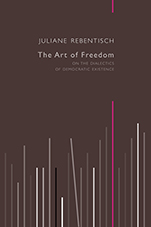
The Art of Freedom: On the Dialectics of Democratic Existence
ISBN 9780745682136
Autor: Juliane Rebentisch
Wydawca: Wiley
Dostępność: 3-6 tygodni
Cena: 148,05 zł
Przed złożeniem zamówienia prosimy o kontakt mailowy celem potwierdzenia ceny.
ISBN13: |
9780745682136 |
ISBN10: |
0745682138 |
Autor: |
Juliane Rebentisch |
Oprawa: |
Paperback |
Rok Wydania: |
2016-05-06 |
Ilość stron: |
320 |
The concept of democratic freedom refers to more than the kind of freedom embodied by political institutions and procedures. Democratic freedom can only be properly understood if it is grasped as the expression of a culture of freedom that encompasses an entire form of life. Juliane Rebentisch s systematic and historical approach demonstrates that we can learn a great deal about the democratic culture of freedom from its philosophical critics. From Plato to Carl Schmitt, the critique of democratic culture has always been articulated as a critique of its aaestheticization . Rebentisch defends various phenomena of aestheticization D from the irony typical of democratic citizens to the theatricality of the political D as constitutive elements of democratic culture and the notion of freedom at the heart of its ethical and political self-conception. This work will be of particular interest to students of Political Theory, Philosophy and Aesthetics.
Author Biography: Juliane Rebentisch is Professor of Philosophy and Aesthetics at Offenbach University of Art and Design
Introduction: Aestheticization D An Apologia Part I: An Antique Diagnosis of a Crisis 1. The Provocative Beauty of Democracy: Plato I. Freedom and Indeterminacy 2. The Slavery of the Tyrant 3. The Unstable Democrat 4. Clear-sighted, Processual and Totalized Weakness of Will 5. Weakness of Will or the Freedom from Oneself 6. The Unfree Opportunist 7. Many Jobs and Much Trespassing 8. The Occurrence of an Inner Nature or the Freedom Toward Self 9. Democrats and Theatre Types 10. Theatrocracy: The Fearlessly Judging Multitude 11. Masses and Mimesis 12. Self-Difference and Perfection Part II: The Ethical-Political Right of Irony 2. The Morality of Irony: Hegel 1. The Beginning of Morality in Socratic Irony 2. Socrates Divisive Work 3. Irony and the Practice of Truth 4. Hegel s Critique of Kant 5. A Socratic Reformulation of the Moral Principle 6. Critique of the Romantics 7. Abstract and Subjective Freedom 8. Evil and the Natural Will 9. The Dialectic of Freedom 10. A Less Rigorous Concept of Self-Determination 11. Conflicts with and in Morality 12. Hegel s Expulsion of Subjective Freedom from Ethical Life 13. The Riddle of Socratic Virtue and the Historicity of the Good 3. The Ethics of Aesthetic Existence: Kierkegaard 1. The Negative Freedom of Socratic Irony and its Romantic Superseding 2. Self-Enhancement and Forgetfulness-of-Self 3. The Impotent Seducer 4. The Helmeted Will and its Desperation in the Face of the Aesthetic 5. Repentance and Duty: The Freedom to Choose What One Already Is 6. One Sexism for Another 7. The Love of Divorced Society Ladies 8. Aesthetic and Aristocratic Exception 9. Common sinners 10. The Leap of Faith 11. Repetitions 4. Sovereignty in Romanticism: Schmitt 1. Aestheticization and Neutralization 2. A Look at an Orange 3. Alien Power 4. The Other in the Own and Decision 5. Political Anthropology 6. Schmitt and Kierkegaard 7. Political Theology 8. Concrete Life and Decision 9. Schmitt s Rousseauism 10. Politics as a Critique of Politics Part III: Democracy and Aestheticization 5. The Spectacle of Democracy: Rousseau 1. The Irony of the Actor 2. The Public Expression of Indeterminacy 3. The Actress and Her Parodies 4. The Golden Mean 5. Thy Magic Powers Reunite What Custom s Sword Has Divided : The Feast of the Brothers 6. All Brothers are also Men: The Problem of Male Self-Difference 7. The Two Paradoxes of the Social Contract 8. The Sovereignty of the Legislator and the Judgment of the Common Man 9. Another Kind of Equality 10. A Politicizable Boundary 11. The Two Bodies of the People 12. Representation and the Coding of Contingency 6. The Anaestheticization of the Political in Fascism: Benjamin 1. Charisma versus Ratio 2. Politicizing Art 3. Astonishment, Not Sympathy 4. The Look of the Stranger 5. Alienation 6. Adaptability and Revolution 7. Charisma and Democracy 8. Political Theatre 9. Post-Democracy and the Anaesthetizing of the Political: A Look Forward Notes Acknowledgements Origins of the Text Index
Koszyk
Książek w koszyku: 0 szt.
Wartość zakupów: 0,00 zł
Informacje


Kontakt
Gambit
Centrum Oprogramowania
i Szkoleń Sp. z o.o.
Al. Pokoju 29b/22-24
31-564 Kraków
Siedziba Księgarni
ul. Kordylewskiego 1
31-542 Kraków
+48 12 410 5991
+48 12 410 5987
+48 12 410 5989
Subskrypcje
Administratorem danych osobowych jest firma Gambit COiS Sp. z o.o. Na podany adres będzie wysyłany wyłącznie biuletyn informacyjny.
Autoryzacja płatności

Informacje na temat autoryzacji płatności poprzez PayU.

© Copyright 2012: GAMBIT COiS Sp. z o.o. Wszelkie prawa zastrzeżone.
Projekt i wykonanie: Alchemia Studio Reklamy