


Wydawcy
Katalog tematyczny
- Archeologia (109)
- Ekonomia, finanse, business (13704)
- Filozofia (1445)
- Historia (3040)
- Języki i językoznawstwo (2356)
- Lifestyle, hobby i rozrywka (475)
- Medycyna (9704)
- Nauki humanistyczne (4)
- Nauki o Ziemi i środowisku (2638)
- Nauki ścisłe (20412)
- Nauki społeczne (8486)
- Nauki techniczne (13450)
- Prawo (1696)
- Publikacje informacyjne i interdyscyplinarne (1288)
- Religia i wierzenia (917)
- Technika komputerowa (4067)
- Zdrowie, relacje międzyludzkie i rozwój osobisty (657)





Informacje szczegółowe o książce
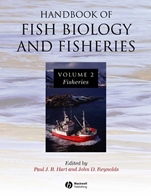
Handbook of Fish Biology and Fisheries, Volume 2: Fisheries
ISBN 9780632064823
Autor: Paul J. B. Hart, John D. Reynolds
Wydawca: Wiley
Dostępność: 3-6 tygodni
Cena: 954,45 zł
Przed złożeniem zamówienia prosimy o kontakt mailowy celem potwierdzenia ceny.
ISBN13: |
9780632064823 |
ISBN10: |
063206482X |
Autor: |
Paul J. B. Hart, John D. Reynolds |
Oprawa: |
Hardback |
Rok Wydania: |
2002-10-03 |
Ilość stron: |
428 |
Wymiary: |
254x178 |
Tematy: |
KNAF |
Recent decades have witnessed strong declines in fish stocks around the globe, amid growing concerns about the impact of fisheries on marine and freshwater biodiversity. Fisheries biologists and managers are therefore increasingly asking about aspects of ecology, behaviour, evolution and biodiversity that were traditionally studied by people working in very separate fields. This has highlighted the need to work more closely together, in order to help ensure future success both in management and conservation.
The Handbook of Fish Biology and Fisheries has been written by an international team of scientists and practitioners, to provide an overview of the biology of freshwater and marine fish species together with the science that supports fisheries management and conservation.
This volume, subtitled Fisheries, focuses on a wide range of topics, including the history of fisheries science, methods of capture, marketing, economics, major models used in stock assessments and forecasting, ecosystem impacts, marine protected areas and conservation. It builds on material in Volume 1, Fish Biology, which ranges from phylogenetics and biogeography to physiology, recruitment, life histories, genetics, foraging, reproductive behaviour and community ecology.
Together, these books present the state of the art in our understanding of fish biology and fisheries and will serve as valuable references for undergraduates and graduates looking for a comprehensive source on a wide variety of topics in fisheries science. They will also be useful to researchers who need up–to–date reviews of topics that impinge on their fields, and decision makers who need to appreciate the scientific background for management and conservation of aquatic ecosystems.
Spis treści:
1. The Human Dimension Of Fisheries Science: (P. J. B. Hart And J. D. Reynolds).
2. Fish Capture Devices In Industrial And Artisanal Fisheries And Their Influenc
e On Management (O. A. Misund, J. Kolding and P. Freon).
3. Marketing Fish (J. A. Young And J. F. Muir).
4. A History Of Fisheries And Their Science And Management (T. D. Smith).
5. Gathering Data For Resource Monitoring And Fisheries Management (D. Evans and R. Grainger).
6. Surplus Production Models (J. T. Schnute And L. Richards).
7. Dynamic Pool Models I: Interpreting The Past Using Virtual Population Analysis (J. G. Shepherd And J. G. Pope).
8. Dynamic Pool Models II: Short–Term And Long–Term Forecasts Of Catch And Biomass (J. G. Shepherd And J. G. Pope).
9. A Bumpy Old Road: Size–Based Methods In Fisheries Assessment (T. J. Pitcher).
10. Ecosystem Models (D. Pauly And V. Christensen).
11. Individual–Based Models (G. Huse, J. Giske And A. G. V. Salvanes).
12. The Economics Of Fisheries (R. Hannesson).
13. Choosing The Best Model For Fisheries Assessment (P. Sparre And P. J. B. Hart).
14. Marine Protected Areas, Fish And Fisheries (N. V. C. Polunin).
15. Exploitation And Other Threats To Fish Conservation (J. D. Reynolds, N. K. Dulvy And C. M. Roberts).
16. Ecosystem Effects Of Fishing (M. J. Kaiser And S. Jennings).
17. Recreational Fishing (I. G. Cowx)
Nota biograficzna:
Paul J.B. Hart is a Reader in the Department of Biology, University of Leicester, UK. His research focuses on the role of trophic ecology and competition in fish speciation and on the management of commercial marine fisheries. His publications include a co–authored textbook Fisheries Ecology (1982) and he has co–edited The Impact of Species Changes in African Lakes (1995) and Reinventing Fisheries Management (1998). He is co–editor of the review journal, Fish and Fisheries (Blackwell Science) and he is a past President of the Fisheries Society of the British Isles.
John D. Reynolds is a Professor of Evolutionary Ecology at the University of East
Anglia, UK. His research examines the evolution of reproductive behaviour and life histories, with an emphasis on conservation of marine and freshwater fishes. He has co–authored a textbook, Marine Fisheries Ecology (2001), has co–edited Conservation of Exploited Species (2001) and is co–editor of the journal, Animal Conservation. He was awarded the FSBI medal of the Fisheries Society of the British Isles in 2000.
Okładka tylna:
Recent decades have witnessed strong declines in fish stocks around the globe, amid growing concerns about the impact of fisheries on marine and freshwater biodiversity. Fisheries biologists and managers are therefore increasingly asking about aspects of ecology, behaviour, evolution and biodiversity that were traditionally studied by people working in very separate fields. This has highlighted the need to work more closely together, in order to help ensure future success both in management and conservation.
The Handbook of Fish Biology and Fisheries has been written by an international team of scientists and practitioners, to provide an overview of the biology of freshwater and marine fish species together with the science that supports fisheries management and conservation.
This volume, subtitled Fisheries, focuses on a wide range of topics, including the history of fisheries science, methods of capture, marketing, economics, major models used in stock assessments and forecasting, ecosystem impacts, marine protected areas and conservation. It builds on material in Volume 1, Fish Biology, which ranges from phylogenetics and biogeography to physiology, recruitment, life histories, genetics, foraging, reproductive behaviour and community ecology.
Together, these books present the state of the art in our understanding of fish biology and fisheries and will serve as valuable references for undergraduates and graduates looking for a comprehensive sourc
e on a wide variety of topics in fisheries science. They will also be useful to researchers who need up–to–date reviews of topics that impinge on their fields, and decision makers who need to appreciate the scientific background for management and conservation of aquatic ecosystems.
Koszyk
Książek w koszyku: 0 szt.
Wartość zakupów: 0,00 zł
Informacje


Kontakt
Gambit
Centrum Oprogramowania
i Szkoleń Sp. z o.o.
Al. Pokoju 29b/22-24
31-564 Kraków
Siedziba Księgarni
ul. Kordylewskiego 1
31-542 Kraków
+48 12 410 5991
+48 12 410 5987
+48 12 410 5989
Subskrypcje
Administratorem danych osobowych jest firma Gambit COiS Sp. z o.o. Na podany adres będzie wysyłany wyłącznie biuletyn informacyjny.
Autoryzacja płatności

Informacje na temat autoryzacji płatności poprzez PayU.

© Copyright 2012: GAMBIT COiS Sp. z o.o. Wszelkie prawa zastrzeżone.
Projekt i wykonanie: Alchemia Studio Reklamy