


Wydawcy
Katalog tematyczny
- Archeologia (109)
- Ekonomia, finanse, business (13704)
- Filozofia (1445)
- Historia (3040)
- Języki i językoznawstwo (2356)
- Lifestyle, hobby i rozrywka (475)
- Medycyna (9704)
- Nauki humanistyczne (4)
- Nauki o Ziemi i środowisku (2638)
- Nauki ścisłe (20412)
- Nauki społeczne (8486)
- Nauki techniczne (13450)
- Budownictwo lądowe (1045)
- Chemia przemysłowa (2258)
- Elektronika i telekomunikacja (3287)
- Energetyka (1122)
- Inne nauki stosowane (363)
- Inżynieria biochemiczna (507)
- Inżynieria transportu (232)
- Mechanika i materiały (3316)
- Nauka o środowisku (321)
- Rolnictwo (507)
- Technika, ogólnie (475)
- Prawo (1696)
- Publikacje informacyjne i interdyscyplinarne (1288)
- Religia i wierzenia (917)
- Technika komputerowa (4067)
- Zdrowie, relacje międzyludzkie i rozwój osobisty (657)





Informacje szczegółowe o książce
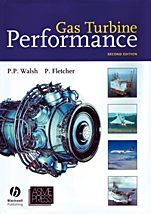
Gas Turbine Performance
ISBN 9780632064342
Autor: Philip P. Walsh, Paul Fletcher
Wydawca: Wiley
Dostępność: 3-6 tygodni
Cena: 631,05 zł
Przed złożeniem zamówienia prosimy o kontakt mailowy celem potwierdzenia ceny.
ISBN13: |
9780632064342 |
ISBN10: |
063206434X |
Autor: |
Philip P. Walsh, Paul Fletcher |
Oprawa: |
Hardback |
Rok Wydania: |
2004-03-15 |
Numer Wydania: |
2nd Edition |
Ilość stron: |
664 |
Wymiary: |
270x179 |
Tematy: |
TG |
This book provides a practical guide to the fundamentals of performance, including the requirements of all major applications: power generation, mechanical drive, automotive, marine and aircraft installations. The new edition includes two additional chapters on performance issues of engines in–service and on the techno–economic issues that determine whether a gas turbine project will be profitable.
Spis treści:
1 Gas Turbine Engine Applications.
1.0 Introduction.
1.1 Comparison of gas turbine and high speed diesel engines.
1.2 Power generation applications.
1.3 Industrial mechanical drive applications.
1.4 Automotive applications.
1.5 Marine applications.
1.6 Aircraft applications – propulsion requirements.
1.7 Shaft powered aircraft – turboprops and turboshafts.
1.8 Thrust propelled aircraft – turbofans, turbojets and ramjets.
1.9 Auxiliary power units (APUs).
Formulae.
Sample calculations.
Charts.
References.
2 The Operational Envelope.
2.0 Introduction.
2.1 The environmental envelope.
2.2 Installation pressure losses.
2.3 The flight envelope.
Formulae.
Sample calculations.
Charts.
References.
3 Properties and Charts for Dry Air, Combustion Products and other Working Fluids.
3.0 Introduction.
3.1 Description of fundamental gas properties.
3.2 Description of key thermodynamic parameters.
3.3 Composition of dry air an combustion products.
3.4 The use of CP and gamma, or specific enthalpy and entropy, in calculations.
3.5 Data base for fundamental and thermodynamic gas properties.
3.6 Charts showing interrelationships of key thermodynamic parameters.
Formulae.
Sample calculations.
Charts.
References.
4 Dimensionless, Quasidimensionless, Referred and Scaling Parameter Group.
4.0 Introduction.
4.1 The importance of parameter groups.
4.2 Tables of parameter groups and descrip
tion.
4.3 Examples of applications.
4.4 Second–order effects – steady state performance.
4.5 Second–order effects – engines scaling.
4.6 Second–order effects – transient performance.
4.7 Why components and engines adhere to the parameter group relationships.
Sample calculations.
Charts.
References.
5 Gas Turbine Engine Components.
5.0 Introduction.
5.1 Axial compressors – design point performance and basic sizing.
5.2 Axial flow – off design performance.
5.3 Centrifugal compressors – design point performance and basic sizing.
5.4 Centrifugal compressors – off design performance.
5.5 Fans – design point performance and basic sizing.
5.6 Fans – off design performance.
5.7 Combustors – design point performance and basic sizing.
5.8 Combustors – off design performance.
5.9 Axial flow turbines – design point performance and basic sizing guidelines.
5.10 Axial flow turbines – off design performance.
5.11 Radial turbines – design.
5.12 Radial turbines – off design performance.
5.13 Ducts – design.
5.14 Ducts – off design performance.
5.15 Air systems, turbines NGV and blade cooling – design point performance.
5.16 Air systems – off design performance.
5.17 Mechanical losses – design point performance and basic sizing.
5.18 Mechanical losses – off design performance.
5.19 Mixers – design point performance and basic sizing.
5.20 Mixers – off design performance.
5.21 Afterburners – design point performance and basic sizing.
5.22 Afterburners – off design performance.
5.23 Heat exchangers – design point performance and basic sizing.
5.24 Heat exchangers – off design performance.
5.25 Alternators – design point performance.
5.26 Alternators – off design performance.
Formul
ae.
Sample calculations.
Charts.
References.
6 Design Point Performance and Engine Concept Design.
6.0 Introduction.
6.1 Design point and off design performance calculations.
6.2 Design point performance parameters.
6.3 Design point calculation and diagram.
6.4 Linearly scaling components and engines.
6.5 Design point exchange rates.
6.6 Ground rules for generic design point diagrams.
6.7 Open shaft power cycles: generic design point diagrams and exchange rates.
6.8 Combined heat and power: generic design point diagrams and exchange rates.
6.9 Closed cycles: generic design point diagrams and exchange rates.
6.10 Aircraft engines shaft power cycles: generic design point diagrams and exchange rates.
6.11 Aircraft engine thrust cycles: generic design point diagrams and exchange rates.
6.12 The engine concept design process.
6.13 Margins required when specifying target performance levels.
Formulae.
Sample calculations.
Charts.
References.
7 Off Design Performance.
7.0 Introduction.
7.1 Generic off design characteristics.
7.2 Off design performance modelling – methodology.
7.3 Off design performance modelling – flow diagrams and sample calculations.
7.4 Geometric variation: modelling and effects.
7.5 Engine scaling and different working fluids.
7.6 Off design matching: physical mechanisms.
7.7 Exchange rates.
7.8 Ratings and control.
Formulae.
Sample calculations.
Charts.
References.
8 Transient Performance.
8.0 Introduction.
8.1 The fundamental transient mechanism.
8.2 Transient performance manoeuvres.
8.3 Engine accel and decel requirements.
8.4 Transient performance phenomena.
8.5 Operability concerns.
8.6 Surge, rotating stall and locked stall – the events and their detection.
8.7 Surge margin requirements and the surge margin stack up.
8.8 Parameter groups and transient performance.
8.9 S
caling parameter groups and transient performance.
8.10 Control strategies during transient manoeuvres.
8.11 Transient performance and control models.
Formulae.
Sample calculations.
References.
9 Starting.
9.0 Introduction.
9.1 The fundamental starting process.
9.2 Start processes for major engine types and applications.
9.3 Engine start requirements.
9.4 The impact of ambient temperature and pressure.
9.5 Operability issues.
9.6 Starting and parameter groups.
9.7 Control Strategies and parameter groups.
9.8 Starter system variants and selection.
9.9 Start and control models.
Formulae.
Sample calculations.
References.
10 Windmilling.
10.0 Introduction.
10.1 Turbojet windmilling.
10.2 Turbofan windmilling.
10.3 Turboprop windmilling.
10.4 Industrial engine windmilling.
10.5 Marine engine windmilling.
10.6 The effect of ambient conditions.
10.7 Scaling an engine.
10.8 Windmill testing.
10.9 Windmill computer modelling.
Formulae.
Sample calculations.
Charts.
References.
11 Engine Performance Testing.
11.0 Introduction.
11.1 Types of engine test bed.
11.2 Measurements and instrumentation.
11.3 Test bed calibration.
11.4 Steady state development testing.
11.5 Transient development testing.
11.6 Application testing.
11.7 Production pass off.
11.8 Test data analysis.
Formulae.
Sample calculations.
References.
12 The Effects of Water – Liquid, Stream and Ice.
12.0 Introduction.
12.1 Gas properties.
12.2 Humidity.
12.3 Water injection.
12.4 Steam injection.
12.5 Condensation.
12.6 Rain and ice ingestion.
12.7 The thermodynamics of water.
12.8 Gas turbine performance modelling and test data analysis.
Formulae.
Sample calculations.
Charts.
References.
13 Fuel and Oil Properties and their Impact.
13.0 Introduction.
13.1 The combustion process and g
as turbine fuel types.
13.2 Data base of key fuel properties for performance calculations.
13.3 Synthesis exchange rates for primary fuel types.
13.4 Oil types and data base of key properties.
Formulae.
Sample calculations.
Charts.
References.
14 Performance of In–service Products.
15 Performance and the Economics of Gas Turbine Engines.
Appendix A: Station Numbering and Nomenclature.
A.0 Introduction.
A.1 International station numbering and nomenclature standards.
A.2 ARP 755A station numbering.
A.3 Nomenclature.
A.4 Customer deck requirements.
References.
Appendix B: Unit Conversions.
B.0 Introduction.
B.1 Acceleration.
B.2 Area.
B.3 Density.
B.4 Energy.
B.5 Force.
B.6 Fuel consumption.
B.7 Length.
B.8 Mass.
B.9 Moment of inertia.
B.10 Momentum – angular.
B.11 Momentum – linear.
B.12 Power.
B.13 Pressure.
B.14 Specific energy.
B.15 Specific fuel consumption (SFC)
Okładka tylna:
This book provides a practical guide to the fundamentals of performance, including the requirements of all major applications: power generation, mechanical drive, automotive, marine and aircraft installations. The new edition includes two additional chapters on performance issues of engines in–service and on the techno–economic issues that determine whether a gas turbine project will be profitable.
Koszyk
Książek w koszyku: 0 szt.
Wartość zakupów: 0,00 zł
Informacje


Kontakt
Gambit
Centrum Oprogramowania
i Szkoleń Sp. z o.o.
Al. Pokoju 29b/22-24
31-564 Kraków
Siedziba Księgarni
ul. Kordylewskiego 1
31-542 Kraków
+48 12 410 5991
+48 12 410 5987
+48 12 410 5989
Subskrypcje
Administratorem danych osobowych jest firma Gambit COiS Sp. z o.o. Na podany adres będzie wysyłany wyłącznie biuletyn informacyjny.
Autoryzacja płatności

Informacje na temat autoryzacji płatności poprzez PayU.

© Copyright 2012: GAMBIT COiS Sp. z o.o. Wszelkie prawa zastrzeżone.
Projekt i wykonanie: Alchemia Studio Reklamy