


Wydawcy
Katalog tematyczny
- Archeologia (109)
- Ekonomia, finanse, business (13704)
- Filozofia (1445)
- Historia (3040)
- Języki i językoznawstwo (2356)
- Lifestyle, hobby i rozrywka (475)
- Medycyna (9704)
- Nauki humanistyczne (4)
- Nauki o Ziemi i środowisku (2638)
- Nauki ścisłe (20412)
- Nauki społeczne (8486)
- Nauki techniczne (13450)
- Prawo (1696)
- Publikacje informacyjne i interdyscyplinarne (1288)
- Religia i wierzenia (917)
- Technika komputerowa (4067)
- Zdrowie, relacje międzyludzkie i rozwój osobisty (657)





Informacje szczegółowe o książce
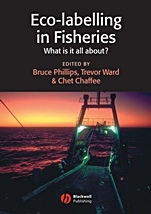
Eco–labelling in Fisheries: What is it all about?
ISBN 9780632064229
Autor: Bruce Phillips, Trevor Ward, Chet Chaffee
Wydawca: Wiley
Dostępność: 3-6 tygodni
Cena: 507,15 zł
Przed złożeniem zamówienia prosimy o kontakt mailowy celem potwierdzenia ceny.
ISBN13: |
9780632064229 |
ISBN10: |
0632064226 |
Autor: |
Bruce Phillips, Trevor Ward, Chet Chaffee |
Oprawa: |
Paperback |
Rok Wydania: |
2003-04-29 |
Ilość stron: |
208 |
Wymiary: |
244x178 |
Tematy: |
KNAF |
If the marine fishing industry is to survive into the future, innovative approaches are necessary. Recognising that market incentives have the potential to improve fisheries management, the Marine Stewardship Council (MSC) has been established to harness these incentives. The work of the MSC translates through from sustainable fishery management certification to labelling of fish and seafood products, allowing consumers to use their choice and buying power to select eco–labelled products from MSC certified fisheries.
This exciting new book covers all aspects of the new eco–labelling initiative developed under the sponsorship of the MSC. Contents include details of the MSC and its certification framework and implementation, dispute resolution, chain–of–custody assessment and community fisheries certification. Also included are important case studies of the MSC certified fisheries of Australia’s western rock lobster, Alaska salmon, Thames herring and New Zealand hoki.
Eco–Labelling in Fisheries is an essential purchase for all those involved in marine fisheries management throughout the world. Professionals and students in fisheries science, marine biology, ecology, conservation and environmental biology will find this book to be extremely valuable. Libraries in all universities and research establishments where these subjects are studied and taught should have multiple copies of this book on their shelves.
Spis treści:
Contributors.
Introduction – Bruce Phillips, Chet Chaffee, Trevor Ward and Mike Sutton.
Seafood Evaluation, Certification and Consumer Information – Chet Chaffee, Duncan Leadbitter and Edwin Aalders.
Introduction, Certification for seafood, Environmental information for seafood, Other certification programmes, Sustainable seafood programmes – an overview.
The Marine Stewardship Council (MSC) – Brendan May, Duncan Le
adbitter, Mike Sutton and Michael Weber.
Introduction, The problem, The theory of eco–labelling, Brief history of the MSC, The MSC standard, The expectations, The result – a broad–based standard, Overview of how the process works, Fishery assessment systems, The MSC fishery assessment system, Experience to date, Current directions, Some issues of concern for the MSC board, staff and committees, Promoting the brand, Overcoming the Challenges, Paying for the change, Conclusions.
Introduction to the MSC Certification.
A: The Process of Certification – Chet Chaffee.
Introduction, Fishery certification, Chain–of–custody certification.
B: Principle 1 – Stocks – Louis Botsford.
The guiding principles and criteria, Approach to assessment, Potential problems, future directions.
C: Principle 2 – Effects of Fishing on the Ecosystem – Trevor Ward.
The guiding principles and criteria, Approach to assessment, Resolving issues, Fishery impacts, Assessment and evaluation, Monitoring systems, Stakeholder engagement.
D: Principle 3– Management Systems – Bruce Phillips.
The guiding principles and criteria, Approach to assessment, Specific criteria, The situation at 2002.
Implementing the MSC Programme Process – Chet Chaffee, Bruce Phillips and Trevor Ward.
Introduction, MSC pre–assessment, MSC full assessment and certification.
The MSC Certification Framework.
Dispute Resolution and the MSC – Duncan Leadbitter and Trevor Ward.
Introduction, Historical background, The dispute procedure, The New Zealand hoki dispute, Conclusions.
MSC Chain–of–Custody Certification – Peter Scott.
Introduction, Who is the typical MSC chain–of–custody certification client?, Where does the chain–of–custody certification
take place?, The MSC chain–of–custody certification process, The MSC chain–of–custody standard requirements, How long does the chain–of–custody certification last?, How much does the chain–of–custody certification cost?.
Case Study 1: The Western Rock Lobster.
A: The Fishery and Its Assessment – Bruce Phillips, Trevor Ward, Chet Chaffee.
Introduction, The Western Australian management system, Stock assessment, The MSC assessment, Environmental issues, Learning outcomes from the assessment process.
B: What Certification has Meant to the Department of Fisheries and Industry – Peter Rogers, Ross Gould & Brett McCallum.
The initial assessment process, Maintaining certification, Costs of certification, Benefits from certification, Conclusions.
C: The WWF Perspective – Katherine Short.
Introduction, The role of the WWF and the MSC, Supporter and promoter of the MSC, Facilitator of stakeholder involvement, Commentator and monitor of fishery assessments and implementation of certification requirements, Summary overview.
D: An Unsatisfactory Encounter with the MSC – a Conservation Perspective – David Sutton.
Case Study 2: The Alaska Salmon.
A: The Commercial Fisheries – Chet Chaffee.
Historic production of the salmon fishery, Alaska salmon management, The MSC assessment, Environmental issues, Stakeholder concerns, Outcomes from the assessment process.
B: Fishery Perspective – Robert Bosworth.
Introduction, Alaska and the MSC, The MSC assessment, The salmon eco–label.
Case Study 3: The Thames Herring Drift–net Fishery– Paul Medley and Paul Nichols.
Introduction, Stock, Fishing activity, Post–harvest handling and distribution, Fishery management, Stock assessment, Stakholder co–operation, Monitoring, c
ontrol, surveillance and enforcement, Environmental issues, The MSC assessment, Conclusion.
Case Study 4: The New Zealand Hoki.
A: The Fishery – Edwin Aalders, Jo Akroyd and Trevor Ward.
Introduction, The New Zealand fishery–management system, MSC principles and current fishery–management practice, Challenges and experiences, Disupte resolution.
B: The WWF Perspective – Katherine Short.
Introduction, Environmental NGO and New Zealand fishing politics, WWF′s role and the MSC, Dispute resolution, Public perception, Conclusion.
Community–based Certification: A Route to Sustainable Fisheries – Julia Novy–Hildesley and Katherine Short.
Introduction, WWF′s approach to certification of community fisheries, WWF′s proposed methodology for community–based certification, Who is involved in community–based certification?, Motivation for certification in community–based fisheries, Benefits associated with certification in community–based fisheries, Obstacles to certification in community–based fisheries, Community–based certification in practice: a profile of the Seri′s people Jaiba fishery, Mexico, The next steps for community–based certification, Conclusions.
Is Eco–Labelling Working?.
A: An Overview – Volker Kuntzsch.
Introduction, Implementation, Where are we now?, The next steps.
B: Is Eco–labelling Working – for Marine Ecosystems, WWF and the MSC? – Katherine Short.
Introduction, Arresting the decline, Improving marine ecosystems, Conclusions.
Conclusions – Trevor Ward, Bruce Phillips and Chet Chaffee.
Introduction, The incentives, The outcomes, The issues.
References.
Index
Nota biograficzna:
Bruce Phillips is at the Department of Environmental Biology, Curtin Un
Koszyk
Książek w koszyku: 0 szt.
Wartość zakupów: 0,00 zł
Informacje


Kontakt
Gambit
Centrum Oprogramowania
i Szkoleń Sp. z o.o.
Al. Pokoju 29b/22-24
31-564 Kraków
Siedziba Księgarni
ul. Kordylewskiego 1
31-542 Kraków
+48 12 410 5991
+48 12 410 5987
+48 12 410 5989
Subskrypcje
Administratorem danych osobowych jest firma Gambit COiS Sp. z o.o. Na podany adres będzie wysyłany wyłącznie biuletyn informacyjny.
Autoryzacja płatności

Informacje na temat autoryzacji płatności poprzez PayU.

© Copyright 2012: GAMBIT COiS Sp. z o.o. Wszelkie prawa zastrzeżone.
Projekt i wykonanie: Alchemia Studio Reklamy