


Wydawcy
Katalog tematyczny
- Archeologia (109)
- Ekonomia, finanse, business (13704)
- Filozofia (1445)
- Historia (3040)
- Języki i językoznawstwo (2356)
- Lifestyle, hobby i rozrywka (475)
- Medycyna (9704)
- Nauki humanistyczne (4)
- Nauki o Ziemi i środowisku (2638)
- Nauki ścisłe (20412)
- Nauki społeczne (8486)
- Nauki techniczne (13450)
- Budownictwo lądowe (1045)
- Chemia przemysłowa (2258)
- Elektronika i telekomunikacja (3287)
- Energetyka (1122)
- Inne nauki stosowane (363)
- Inżynieria biochemiczna (507)
- Inżynieria transportu (232)
- Mechanika i materiały (3316)
- Nauka o środowisku (321)
- Rolnictwo (507)
- Technika, ogólnie (475)
- Prawo (1696)
- Publikacje informacyjne i interdyscyplinarne (1288)
- Religia i wierzenia (917)
- Technika komputerowa (4067)
- Zdrowie, relacje międzyludzkie i rozwój osobisty (657)





Informacje szczegółowe o książce
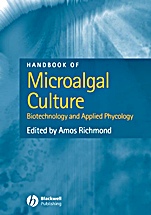
Handbook of Microalgal Culture: Biotechnology and Applied Phycology
ISBN 9780632059539
Autor: Amos Richmond
Wydawca: Wiley
Dostępność: 3-6 tygodni
Cena: 1 702,05 zł
Przed złożeniem zamówienia prosimy o kontakt mailowy celem potwierdzenia ceny.
ISBN13: |
9780632059539 |
ISBN10: |
0632059532 |
Autor: |
Amos Richmond |
Oprawa: |
Hardback |
Rok Wydania: |
2003-11-25 |
Ilość stron: |
588 |
Wymiary: |
262x177 |
Tematy: |
TV |
Handbook of Microalgal Culture is truly a landmark publication, drawing on some 50 years of worldwide experience in microalgal mass culture. This important book comprises comprehensive reviews of the current available information on microalgal culture, written by 40 contributing authors from around the globe.
The book is divided into four parts, with Part I detailing biological and environmental aspects of microalgae with reference to microalgal biotechnology and Part II looking in depth at major theories and techniques of mass cultivation. Part III comprises chapters on the economic applications of microalgae, including coverage of industrial production, the use of microalgae in human and animal nutrition and in aquaculture, in nitrogen fixation, hydrogen and methane production, and in bioremediation of polluted water. Finally, Part IV looks at new frontiers and includes chapters on genetic engineering, microalgae as platforms for recombinant proteins, bioactive chemicals, heterotrophic production, microalgae as gene–delivery systems for expressing mosquitocidal toxins and the enhancement of marine productivity for climate stabilization and food security.
Handbook of Microalgal Culture is an essential purchase for all phycologists and also those researching aquatic systems, aquaculture and plant sciences. There is also much of great use to researchers and those involved in product formulation within pharmaceutical, nutrition and food companies. Libraries in all universities and research establishments teaching and researching in chemistry, biological and pharmaceutical sciences, food sciences and nutrition, and aquaculture will need copies of this book on their shelves.
Spis treści:
List of Contributors.
Preface.
Acknowledgements..
Part I: The Microalgae: With Reference to Mass– Cultivation.
1. The Microalgal cell (Luisa Tomaselli).
2. Photosynthesis in Microalgae (Jiri Masojidek, Michael
Koblizek and Giuseppe Torzillo).
3. Basic Culturing Techniques (Uuan–Kun Lee and Hui Shen).
4. Environmental Effects on Cell Composition (Qiang Hu).
5. Environmental Effects on Cell Composition (Qiang Hu).
Part II: Mass Cultivation of Microalgae.
6. Algal Nutrition.
Mineral Nutrition (Johan U. Grobbelaaqr).
7. Algal Nutrition.
Heterotrpic Carbon Nutrition (Yuah–Kun Lee).
8. Biological Principles of Mass Cultivation (Amos Richmond).
9. Mass Production of Microalgae: Photobioreactors (Mario R. Tredici).
10. Downstream Processing of Cell–mass and Products (E. Molina Grima, F.G. Fernandez and A. Robles Medina).
Part III: Economic Applications of Microalgae.
11. Industrial Production of Microalgal Cell–mass and Secondary Products – Major Industrial Species.
Chlorella (Hiroaki Iwamoto).
12. Industrial Production of Microalgal Cell–mass and Secondary Producgts – Major industrial species.
Arthrospira (Spirulina) Platensis (Qiang Hu).
13. Industrial Production of Microalal Cell–mass and Secondary Produts – Major Industrial Species.
Dunaliella (Ami Ben–Amotz).
14. Industrial Production of Microalgal cell–mass and Secondary Produts – Major Industrial Species.
Dunaliella (Ami Ben–Amotz).
15. Industrial Production of Microalgal Cell–mass and Secondary Products – Species of High Potential.
Porphyridium sp (Shoshana Arad and Amos Richmond).
16. Industrial Production of Microalgal Cell–mass and Secondary Products – Species of High Potential Mass Cultivation of Nannochloropsis in Closed System (Graxiella Chini Zittelli, Liliana Rodolfi and Mario R. Tredici).
17. Industrial Production of Microalgal Cell–mass and Secondary Products – species of High Potential.
Nostoc (Han Danxiang, Bi Yonghong and Hu Zhengyu).
18. Microalgae in Human and Animal Nutrition ( Wolfgang Becker).
19.
Microalgae for Aquaculture.
The Current Global Situation and Future Trends (Arnaud Muller–Feuga).
20. Microalgae for Aquaculture (Oded Zmora and Amos Richmond).
21. Microalgae for Aquaculture (Wofgang Becker).
22. N2–fixing Cyanobacteria as Biofertilizers in Rice Fields (Pierre Roger).
23. Hydrogen and Methane Production by Microalgae (John R. Benemann).
24. Water Pollution and Bioremediation by Microalgae (Susan Blackburn).
25. Water Pollution and Bioremediation by Microalgae (Aharon Abelioich).
26. Water Pollution and Bioremediation by Microalgae (Carl J. Soeder).
27. Water Pollution and Bioremediation by Microalgae (Carl J. Soeder).
Part IV: New Frontiers.
28. Targeted Genetic Modification of Cyanobacteria: New Biotechnological Applications (Wim F. J. Vermaas).
29. Microalgae as Platforms for Recombinant Proteins (Qingfang He).
30. Bioactive Chemicals in Microalgae (Olav M. Skulberg).
31. Heterotrphic Production o fMarine Algae for Aquaculture (Moti Harel and Allen R. Place).
32. N2–fixing Cyanobacteria as a Gene Delivery System for Expressing Mosquitocidal Toxins of Bacillus (Sammy Boussiba and Arieh Zaritsky).
33. The Enhancmenbt of Marine Productivity for Climate Stabilizaiton and Food Security (Ian S.F.Jones).
Index.
Nota biograficzna:
Amos Richmond is at the Blaustein Institute for Desert Research, Ben–Gurion University of the Negev, Israel.
Okładka tylna:
Handbook of Microalgal Culture is truly a landmark publication, drawing on some 50 years of worldwide experience in microalgal mass culture. This important book comprises comprehensive reviews of the current available information on microalgal culture, written by 40 contributing authors from around the globe.
The book is divided into four parts, with Part I detailing biological and environmental aspects of microalgae with reference to microalgal biotechnology and Part I
I looking in depth at major theories and techniques of mass cultivation. Part III comprises chapters on the economic applications of microalgae, including coverage of industrial production, the use of microalgae in human and animal nutrition and in aquaculture, in nitrogen fixation, hydrogen and methane production, and in bioremediation of polluted water. Finally, Part IV looks at new frontiers and includes chapters on genetic engineering, microalgae as platforms for recombinant proteins, bioactive chemicals, heterotrophic production, microalgae as gene–delivery systems for expressing mosquitocidal toxins and the enhancement of marine productivity for climate stabilization and food security.
Handbook of Microalgal Culture is an essential purchase for all phycologists and also those researching aquatic systems, aquaculture and plant sciences. There is also much of great use to researchers and those involved in product formulation within pharmaceutical, nutrition and food companies. Libraries in all universities and research establishments teaching and researching in chemistry, biological and pharmaceutical sciences, food sciences and nutrition, and aquaculture will need copies of this book on their shelves.
Koszyk
Książek w koszyku: 0 szt.
Wartość zakupów: 0,00 zł
Informacje


Kontakt
Gambit
Centrum Oprogramowania
i Szkoleń Sp. z o.o.
Al. Pokoju 29b/22-24
31-564 Kraków
Siedziba Księgarni
ul. Kordylewskiego 1
31-542 Kraków
+48 12 410 5991
+48 12 410 5987
+48 12 410 5989
Subskrypcje
Administratorem danych osobowych jest firma Gambit COiS Sp. z o.o. Na podany adres będzie wysyłany wyłącznie biuletyn informacyjny.
Autoryzacja płatności

Informacje na temat autoryzacji płatności poprzez PayU.

© Copyright 2012: GAMBIT COiS Sp. z o.o. Wszelkie prawa zastrzeżone.
Projekt i wykonanie: Alchemia Studio Reklamy