


Wydawcy
Katalog tematyczny
- Archeologia (109)
- Ekonomia, finanse, business (13704)
- Filozofia (1445)
- Historia (3040)
- Języki i językoznawstwo (2356)
- Lifestyle, hobby i rozrywka (475)
- Medycyna (9704)
- Nauki humanistyczne (4)
- Nauki o Ziemi i środowisku (2638)
- Nauki ścisłe (20412)
- Nauki społeczne (8486)
- Nauki techniczne (13450)
- Budownictwo lądowe (1045)
- Budownictwo komunikacyjne (9)
- Hydraulika (33)
- Konstrukcje budowlane (95)
- Mechanika konstrukcji (182)
- Przemysł budowlany (7)
- Chemia przemysłowa (2258)
- Elektronika i telekomunikacja (3287)
- Energetyka (1122)
- Inne nauki stosowane (363)
- Inżynieria biochemiczna (507)
- Inżynieria transportu (232)
- Mechanika i materiały (3316)
- Nauka o środowisku (321)
- Rolnictwo (507)
- Technika, ogólnie (475)
- Prawo (1696)
- Publikacje informacyjne i interdyscyplinarne (1288)
- Religia i wierzenia (917)
- Technika komputerowa (4067)
- Zdrowie, relacje międzyludzkie i rozwój osobisty (657)





Informacje szczegółowe o książce
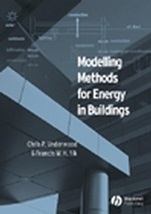
Modelling Methods for Energy in Buildings
ISBN 9780632059362
Autor: Chris Underwood, Francis Yik
Wydawca: Wiley
Dostępność: 3-6 tygodni
Cena: 718,20 zł
Przed złożeniem zamówienia prosimy o kontakt mailowy celem potwierdzenia ceny.
ISBN13: |
9780632059362 |
ISBN10: |
0632059362 |
Autor: |
Chris Underwood, Francis Yik |
Oprawa: |
Hardback |
Rok Wydania: |
2004-10-21 |
Ilość stron: |
306 |
Wymiary: |
254x170 |
Tematy: |
TN |
Buildings consume between 40% and 60% of all energy use in most developed economies – and an increasing proportion in developing and emerging ones. Climate change mitigation and sustainable practices are now at the top of political and technical agendas worldwide.
There is an urgent need for improved knowledge of the principles involved in the modeling of energy in buildings to both build confidence amongst designers and to offer a broad perspective of the potential of new technologies.
Modelling Methods for Energy in Buildings reviews the various state–of–the–art methods for modeling energy exchange and fluid flow problems in buildings – whether they be the ‘high tech’ commercial buildings in the centre of our cities or the simpler and often naturally–ventilated buildings and residential habitats that surround them.
By providing comprehensive guidance for those engaged in the physical science of energy in buildings – building physicists, architectural scientists, building and building services engineers, HVAC engineers and building technologists – the book will:
Offer the specialist knowledge, understanding and confidence needed for the applications of this developing field of modeling
Bridge the theory/practice gap and enable practitioners to understand what goes on behind commercial program codes
Provide procedures and ‘recipes’ for researchers, students and practitioners engaged in modeling.
Spis treści:
Preface.
Chapter 1 Heat Transfer in Building Elements.
1.1 Heat and mass transfer processes in buildings.
1.2 Heat transfer through external walls and roofs.
1.3 Analytical methods for solving the one–dimensional transient heat conduction equation.
1.4 Lumped capacitance methods.
1.5 Heat transfer through glazing.
Chapter 2 Modelling Heat Transfer in Building Envelope
s.
2.1 Finite Difference Method – A Numerical Method for Solving the Heat Conduction Equation.
2.2 Heat Transfer in Building Spaces.
2.3 Synthesis of Heat Transfer Methods.
2.4 Latent Loads and Room Moisture Content Balance.
Chapter 3 Mass Transfer, Air Movement and Ventilation.
Chapter 4 Steady–State Plant Modelling.
4.1 Model Formulations for Plant.
4.2 Mathematical Models of Air–conditioning Equipment using Equation–fitting.
4.3 A Detailed Steady–state Cooling and Dehumidifying Coil Model.
4.4 Modelling Distribution Networks.
4.5 Modelling Air–conditioning Systems.
Chapter 5 Modelling Control Systems.
5.1 Distributed System Modelling.
5.2 Modelling Control Elements.
5.3 Modelling Control Algorithms.
5.4 Solution Schemes.
Chapter 6 Modeling in Practice I.
6.1 Developments in General.
6.2 Internal Ventilation Problems6.3 Wind Flow Around Buildings.
6.4 Applications to Plant.
6.5 Applications to Control and Fault Detection.
Chapter 7 Modeling in Practice II.
7.1 Interrelationships Between Methodologies.
7.2 Tools and Their Integration.
7.3 Validation and Verification.
References.
Appendix A.
Appendix B.
Index
Nota biograficzna:
Chris Underwood is Reader in Building Services Engineering at the University of Northumbria and Francis Yik is Professor of Building Engineering at the Hong Kong Polytechnic University. Both have extensive experience of the development and application of modeling to energy and fluid flow problems in buildings and have published widely on subjects ranging from ‘smart’ control of building systems to wind flow around high–rise buildings.
Okładka tylna:
Buildings consume between 40% and 60% of all energy use in most developed economies – and an increasing proportion in developing and emerging ones. Climate
change mitigation and sustainable practices are now at the top of political and technical agendas worldwide.
There is an urgent need for improved knowledge of the principles involved in the modeling of energy in buildings to both build confidence amongst designers and to offer a broad perspective of the potential of new technologies.
Modelling Methods for Energy in Buildings reviews the various state–of–the–art methods for modeling energy exchange and fluid flow problems in buildings – whether they be the ‘high tech’ commercial buildings in the centre of our cities or the simpler and often naturally–ventilated buildings and residential habitats that surround them.
By providing comprehensive guidance for those engaged in the physical science of energy in buildings – building physicists, architectural scientists, building and building services engineers, HVAC engineers and building technologists – the book will:
Offer the specialist knowledge, understanding and confidence needed for the applications of this developing field of modeling
Bridge the theory/practice gap and enable practitioners to understand what goes on behind commercial program codes
Provide procedures and ‘recipes’ for researchers, students and practitioners engaged in modeling.
Koszyk
Książek w koszyku: 0 szt.
Wartość zakupów: 0,00 zł
Informacje


Kontakt
Gambit
Centrum Oprogramowania
i Szkoleń Sp. z o.o.
Al. Pokoju 29b/22-24
31-564 Kraków
Siedziba Księgarni
ul. Kordylewskiego 1
31-542 Kraków
+48 12 410 5991
+48 12 410 5987
+48 12 410 5989
Subskrypcje
Administratorem danych osobowych jest firma Gambit COiS Sp. z o.o. Na podany adres będzie wysyłany wyłącznie biuletyn informacyjny.
Autoryzacja płatności

Informacje na temat autoryzacji płatności poprzez PayU.

© Copyright 2012: GAMBIT COiS Sp. z o.o. Wszelkie prawa zastrzeżone.
Projekt i wykonanie: Alchemia Studio Reklamy