


Wydawcy
Katalog tematyczny
- Archeologia (109)
- Ekonomia, finanse, business (13704)
- Filozofia (1445)
- Historia (3040)
- Języki i językoznawstwo (2356)
- Lifestyle, hobby i rozrywka (475)
- Medycyna (9704)
- Nauki humanistyczne (4)
- Nauki o Ziemi i środowisku (2638)
- Nauki ścisłe (20412)
- Nauki społeczne (8486)
- Nauki techniczne (13450)
- Prawo (1696)
- Publikacje informacyjne i interdyscyplinarne (1288)
- Religia i wierzenia (917)
- Technika komputerowa (4067)
- Zdrowie, relacje międzyludzkie i rozwój osobisty (657)






Informacje szczegółowe o książce
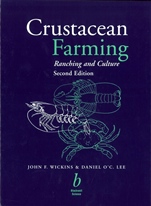
Crustacean Farming: Ranching and Culture
ISBN 9780632054640
Autor: John F. Wickins, Daniel OC. Lee
Wydawca: Wiley
Dostępność: 3-6 tygodni
Cena: 1 206,45 zł
Przed złożeniem zamówienia prosimy o kontakt mailowy celem potwierdzenia ceny.
ISBN13: |
9780632054640 |
ISBN10: |
0632054646 |
Autor: |
John F. Wickins, Daniel OC. Lee |
Oprawa: |
Hardback |
Rok Wydania: |
2002-01-22 |
Numer Wydania: |
2nd Edition |
Ilość stron: |
464 |
Wymiary: |
256x191 |
Tematy: |
KNAF |
This second edition of the extremely well–received book, Crustacean Farming deals with all cultivated crustaceans of commercial significance: Shrimp, prawns, crayfish, lobsters, crabs, and spiny lobsters, and examines the criteria by which farming proposals are assessed. Characteristics and production methods of farmed and candidate crustacean species are described in detail, distinguishing profitable opportunities from high–risk proposals. Coverage extends right from broodstock acquisition and management, through the operation of hatcheries, nurseries and on–growing units to key aspects of processing and marketing. New to this edition are ranching and re–stocking operations, together with the culture of ornamental shrimp and small crustaceans used as live food in fish and shellfish hatcheries, plus updated sections on crustacean diseases, genetics and nutrition.
Examples of investment and operating costs of the different culture options are compared and an analysis of current trends in world crustacean markets is presented to assist in economic and financial appraisal. Special consideration is given to the place of crustacean farming within the economies of developing nations in relation to social and environmental impact in order to promote awareness of the wider implications of global developments.
The consequences of recent research and technical developments are considered, together with concerns over genetic and animal welfare issues. Specific areas where further advances in technology are needed to improve the reliability or productivity of farming systems are highlighted. This important book is a vital tool and reference work for all those involved with crustacean for all those involved with crustacean farming worldwide.
Spis treści:
Acknowledgements.
Introduction: History, Objectives, Current status, Advances and constraints.
Biology: Terminology, Disease, Genetics;.
Marke
ts: Marketing crustaceans, World crustacean markets.
Candidates for cultivation: Location, Broodstock, Larvae, Post–larvae and juveniles, On–growing, Comparison of species.
On–growing options: Tropical climates, Warm temperate and Mediterranean climates, Temperate climates, Polyculture, Production of soft shelled crustaceans.
Hatchery supported fisheries, ranching and habitat modification.
Site selection: Country or region, Locality, Modifications to an existing facility.
Techniques: Species and groups: Penaeid shrimp, Macrobrachium.
Other caridean shrimps and prawns, Crayfish: USA, Europe, Australia, Clawed lobsters, Spiny lobsters, Crabs, Non–decapod crustaceans.
Techniques: General, Materials: Pond design and construction, Pond management, Water treatment methods, Water quality tolerance, Monitoring water quality, Humane slaughter, Food preparation and storage, Disease diagnosis, transmission, prevention and control, Genetics, Hatchery supported fisheries, ranching and habitat modification.
Project implementation and management: Conceptual phase, Validation phase, Detailed planning phase, Implementation phase, Food safety and HACCP, Management.
Economics: Finance, Investment appraisal, Risk, Intensification, Costs.
Impact of crustacean aquaculture: Social impact, Ecological impact, Environmental impact, Institutional interactions.
The future for Crustacean farming: Introduction; Disease Management; Domestication; Reproduction; Nutrition; Effluents and environmental impacts; Stock enhancement; Production technologies; Ornamental shrimp; Non–decapod crustaceans.
Appendix 1:Summary of biological data and examples of typical culture performance.
Appendix 2:Shrimp counts.
Appendix 3:Glossary. .
Index
Nota biograficzna:
John Wickins graduated in zoology at Southampton Universi
ty in 1966. He then led research programmes on crustacean biology. Culture, recirculation systems and artificial habitats at the Conwy Laboratory of the Centre for Fisheries, Environment and Aquaculture Science (formerly Ministry of Agriculture, Fisheries and Food) until the laboratory was closed in December 1999. Before taking early retirement, he was an honorary lecturer at the Institute of Aquaculture, University of Stirling, and travelled widely on short–term advisory and assessment mission related to crustacean aquaculture.
Belfast–born Dan Lee became involved in commercial crustacean aquaculture in South America, initially as a biologist in Semacua, the first penaeid shrimp hatchery in Ecuador, and later as designer and technical manager of another Ecuadorian hatchery, Macrobio. Originally a graduate in zoology and marine biology at the University of Wales, Bangor, he returned to North Wales after five years and then worked on a series of shrimp hatchery and farm projects in Asia and Africa in the roles of research assistant, consultant and manger. He went on to gain MSc in project analysis, finance and investment at the University of York and remains active in commercial shrimp farming, currently from a base in the Caribbean.
Okładka tylna:
This second edition of the extremely well–received book, Crustacean Farming deals with all cultivated crustaceans of commercial significance: Shrimp, prawns, crayfish, lobsters, crabs, and spiny lobsters, and examines the criteria by which farming proposals are assessed. Characteristics and production methods of farmed and candidate crustacean species are described in detail, distinguishing profitable opportunities from high–risk proposals. Coverage extends right from broodstock acquisition and management, through the operation of hatcheries, nurseries and on–growing units to key aspects of processing and marketing. New to this edition are ranching and r
e–stocking operations, together with the culture of ornamental shrimp and small crustaceans used as live food in fish and shellfish hatcheries, plus updated sections on crustacean diseases, genetics and nutrition.
Examples of investment and operating costs of the different culture options are compared and an analysis of current trends in world crustacean markets is presented to assist in economic and financial appraisal. Special consideration is given to the place of crustacean farming within the economies of developing nations in relation to social and environmental impact in order to promote awareness of the wider implications of global developments.
The consequences of recent research and technical developments are considered, together with concerns over genetic and animal welfare issues. Specific areas where further advances in technology are needed to improve the reliability or productivity of farming systems are highlighted. This important book is a vital tool and reference work for all those involved with crustacean for all those involved with crustacean farming worldwide.
Koszyk
Książek w koszyku: 0 szt.
Wartość zakupów: 0,00 zł
Informacje


Kontakt
Gambit
Centrum Oprogramowania
i Szkoleń Sp. z o.o.
Al. Pokoju 29b/22-24
31-564 Kraków
Siedziba Księgarni
ul. Kordylewskiego 1
31-542 Kraków
+48 12 410 5991
+48 12 410 5987
+48 12 410 5989
Subskrypcje
Administratorem danych osobowych jest firma Gambit COiS Sp. z o.o. Na podany adres będzie wysyłany wyłącznie biuletyn informacyjny.
Autoryzacja płatności

Informacje na temat autoryzacji płatności poprzez PayU.

© Copyright 2012: GAMBIT COiS Sp. z o.o. Wszelkie prawa zastrzeżone.
Projekt i wykonanie: Alchemia Studio Reklamy