


Wydawcy
Katalog tematyczny
- Archeologia (109)
- Ekonomia, finanse, business (13704)
- Filozofia (1445)
- Historia (3040)
- Języki i językoznawstwo (2356)
- Lifestyle, hobby i rozrywka (475)
- Medycyna (9704)
- Nauki humanistyczne (4)
- Nauki o Ziemi i środowisku (2638)
- Nauki ścisłe (20412)
- Nauki społeczne (8486)
- Nauki techniczne (13450)
- Prawo (1696)
- Publikacje informacyjne i interdyscyplinarne (1288)
- Religia i wierzenia (917)
- Technika komputerowa (4067)
- Zdrowie, relacje międzyludzkie i rozwój osobisty (657)





Informacje szczegółowe o książce
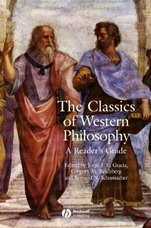
The Classics of Western Philosophy: A Readers Guide
ISBN 9780631236115
Autor: Jorge J. E. Gracia, Gregory M. Reichberg, Bernard N. Schumacher
Wydawca: Wiley
Dostępność: 3-6 tygodni
Cena: 221,55 zł
Przed złożeniem zamówienia prosimy o kontakt mailowy celem potwierdzenia ceny.
ISBN13: |
9780631236115 |
ISBN10: |
0631236112 |
Autor: |
Jorge J. E. Gracia, Gregory M. Reichberg, Bernard N. Schumacher |
Oprawa: |
Paperback |
Rok Wydania: |
2002-12-30 |
Ilość stron: |
634 |
Wymiary: |
241x180 |
Tematy: |
HP |
The Classics of Western Philosophy brings together 61 newly–commissioned essays on classic texts ranging from Ancient Greece to the twentieth century. Surveying the history of philosophy, the book focuses on historical texts rather than historical figures and covers the entire range of classics in a single volume.Accessible to a general readership, the contributions provide lively and well–substantiated expositions of the main arguments of each classic work, and highlight the significance of the work for the broader philosophical tradition. Each essay includes current references to a select bibliography of major articles and books. Engaging and authoritative, this volume is essential reading for anyone interested in the great works of Western philosophy.
Notes on Contributors. Preface. 1. Pre–Socratics, Fragments (c. 600–440 BC): The Birth of Philosophical Investigation. (T. M. Robinson). 2. Plato, Phaedo (c. 385 BC): The Soul′s Mediation Between Corporeality and the Good (Kenneth Dorter). 3. Plato, Republic (c. 380 BC): The Psycho–politics of Justice. (C. D. C. Reeve). 4. Aristotle, Metaphysics (367–323 BC): Substance, Form, and God. (Michael J. Loux). 5. Aristotle, Nicomachean Ethics (367–323 BC): A Sort of Political Science. (T. H. Irwin). 6. Lucretius, De rerum natura (c. 99–55 BC): Breaking the Shackles of Religion (David Sedley). 7. Plotinus, Enneads (250–270): A Philosophy for Crossing Boundaries. (Dominic J. O′Meara). 8. Augustine, On Free Choice of the Will (388–395): Evil, God′s Foreknowledge, and Human Free Will. (Gareth B. Matthews). 9. Augustine, Confessions (c. 400): Real–life Philosophy. (Scott MacDonald). 10. Boethius, The Consolation of Philosophy (c. 525): How Far Can Philosophy Console? (John Marenbon). 11. Anselm of Canterbury, Proslogion (c. 1078): On Thinking of That–than–which–a–Greater–Cannot–Be–Thought. (Jasper Hopkins). 12. Averroës, The Incoherence of “The Incoherence” (c. 1180): The Incoherence of the Philosophers. (Deborah L. Black). 13. Maimonides, The Guide of the Perplexed (c. 1190): The Perplexities of the Guide. (Alfred L. Ivry). 14. Thomas Aquinas, On Being and Essence (ante 1256): Toward a Metaphysics of Existence. (Jorge J. E. Gracia). 15. Thomas Aquinas, Summa theologiae (c. 1273): Christian Wisdom Explained Philosophically. (James F. Ross). 16. John Duns Scotus, Questions on the Metaphysics of Aristotle (c. 1300): A New Direction for Metaphysics. (Timothy B. Noone). 17. William of Ockham, Summa Logicae (c. 1324): Nominalism in Thought and Language. (Claude Panaccio). 18. Nicolas of Cusa, On Learned Ignorance (c. 1440): Byzantine Light en route to a Distant Shore. (Peter Casarella). 19. Niccolò Machiavelli, The Prince (1513): Politics as the Pursuit of Power. Bjørn Thommessen). 20. Francisco de Vitoria, De Indis and De iure belli relectiones (1557): Philosophy Meets War. (Gregory M. Reichberg). 21. Francisco Suárez, Metaphysical Disputations (1597): From the Middle Ages to Modernity. (Jorge J. E. Gracia). 22. Francis Bacon, New Organon (1620): The Politics and Philosophy of Experimental Science. (Robert K. Faulkner). 23. René Descartes, Meditations on First Philosophy (1641): Thought, Existence, and the Project of Science. (Emily R. Grosholz). 24. Thomas Hobbes, Leviathan (1651): The Right of Nature and the Problem of Civil War. (Henrik Syse). 25. Benedict de Spinoza, Ethics (1677): The Metaphysics of Blessedness. (Don Garrett). 26. John Locke, Essay Concerning Human Understanding (1690): An Empirical View of Knowledge and Reality. (Vere Chappell). 27. George Berkeley, Three Dialogues (1713): Idealism, Skepticism, Common Sense. (George Pappas). 28. G. W. Leibniz, Monadology (1714): What There Is in the Final Analysis. (Robert Sleigh). 29. Giambattista Vico, The New Science (1730/1744): The Common Nature of Nations. (Donald Phillip Verene). 30. David Hume, Treatise of Human Nature (1740): A Genial Skepticism, an Ethical Naturalism. (Fred Wilson). 31. Baron de Montesquieu, The Spirit of Laws (1748): From Political Philosophy to Political Science. (David W. Carrithers). 32. Jean–Jacques Rousseau, Of the Social Contract (1762): Transforming Natural Man into Citizen. (Richard Velkley). 33. Immanuel Kant, The Critique of Pure Reason (1781): A Lawful Revolution and a Coming of Age in Metaphysics. (Allen W. Wood). 34. Immanuel Kant, Groundwork of the Metaphysics of Morals (1785): Duty and Autonomy. (Andrews Reath). 35. Friedrich Schiller, The Aesthetic Education of Man in a Series of Letters (1795): The Play of Beauty as Means and End. (Daniel O. Dahlstrom). 36. G. W. F. Hegel, Phenomenology of Spirit (1795): Thinking Philosophically Without Begging the Question. (Stephen Houlgate). 37. Karl Marx, The Economic and Philosophical Manuscripts of 1844: Radical Criticism and Humanistic Vision. (William McBride). 38. Søren Kierkegaard, Concluding Unscientific Postscript to Philosophical Fragments (1846): Making Things Difficult for the System and for Christendom. (Merold Westphal). 39. John Stuart Mill, On Liberty (1859): The Rational Foundations of Individual Freedom. (G. W. Smith). 40. Friedrich Nietzsche, Beyond Good and Evil (1886): Prelude to a Philosophy of the Future. (Richard Schacht). 41. Gottlob Frege, “Über Sinn und Bedeutung” (1892): A Fundamental Distinction. (Michael Dummett). 42. Edmund Husserl, Logical Investigations (1900–1901): From Logic through Ontology to Phenomenology. (David Woodruff Smith). 43. William James, Varieties of Religious Experience (1902): Dimensions of Concrete Experience: Sandra B. Rosenthal (Loyola University at New Orleans). 44. G. E. Moore, Principia Ethica (1903): Ethical Analysis and Aesthetic Ideals. (Thomas Baldwin). 45. Charles Sanders Peirce, 1903 Harvard Lectures on Pragmatism: The Practice of Inquiry. (Vincent Colapietro). 46. Bertrand Russell, “On Denoting” (1905) and “Mathematical Logic as Based on the Theory Of Types” (1908): Metaphysics to Logic and Back. (Stewart Shapiro). 47. Henri Bergson, Creative Evolution (1907): Analysis and Life. (F.C.T. Moore). 48. Ludwig Wittgenstein, Tractatus Logico–philosophicus (1921): The Essence of Representation. (Hans–Johann Glock). 49. John Dewey, Experience and Nature (1925): What You See Is What You Get. (John McDermott). 50. Martin Heidegger, Being and Time (1927): Authentic Temporal Existence. (Bernard N. Schumacher). 51. Alfred North Whitehead, Process and Reality (1929): Scientific Revolutions and the Search for Covariant Metaphysical Principles. (George R. Lucas, Jr.). 52. Karl Popper, The Logic of Scientific Discovery (1934): Not Logic But Decision Procedure (Mariam Thalos). 53. Jean–Paul Sartre, Being and Nothingness (1943): The Prodigious Power of the Negative. (Thomas R. Flynn). 54. Maurice Merleau–Ponty, Phenomenology of Perception (1945): How is the Third–person Perspective Possible? (Stephen Priest). 55. R. G. Collingwood, The Idea of History (1946): History as the Science of Mind. (Jonathan Rée). 56. Gilbert Ryle, The Concept Of Mind (1949): A Method and a Theory. (Laird Addis). 57. Ludwig Wittgenstein, Philosophical Investigations (1953): Clarity versus Pretension. (Newton Garver). 58. P. F. Strawson, Individuals: An Essay in Descriptive Metaphysics (1959): The Rehabilitation of Metaphysics. (David Bell). 59. W. V. Quine, Word and Object (1960): The Metaphysics of Meaning. (Randall Dipert). 60. J. L. Austin, How to Do Things with Words (1962): An Active View of Language. (Nicholas Fotion). 61. Thomas S. Kuhn, The Structure of Scientific Revolutions (1962): “Relativism” Hits the Headlines. (Endre Begby). Name Index. Subject Index.
Jorge J. E. Gracia is Samuel P. Capen Chair and Distinguished Professor of Philosophy at the State University of New York at Buffalo. He is author of several books, including Hispanic/Latino Identity (Blackwell, 2000) and How Can We Know What God Means? (2001). He is editor, with Timothy B. Noone, of A Companion to Philosophy in the Middle Ages (Blackwell, 2003). Gregory M. Reichberg is Senior Research Fellow at the International Peace Research Institute, Oslo (PRIO) and associate editor of the Journal of Military Ethics . He has published widely on the ethics of war and peace, and on topics in Thomistic philosophy. Bernard N. Schumacher is Privatdocent of Philosophy at the University of Fribourg, Switzerland. He is the author of Une philosophie de l’espérance (2000) and Auseinandersetzung mit dem Tode (2003). He is also the editor of several books, including Penser l’homme et la science (1996).
‘This volume provides a strong statement of the continuing case that the classics of Western thought ought to be read and reflected upon as a component of the well–examined life. It also expands what counts as a classic, bringing the list up through to the 1960s, thus providing a thoughtful, pointed, and, above all, useful window into the development of Western thought over its whole history.’ James Turner Johnson, Rutgers University ‘This impressive collection of essays – many by some of the best–known philosophers writing today – provides a unique and first–rate introduction to Western philosophy from the time of the Pre–Socratics to the second half of the twentieth century. All the essays are clearly written, highly informative, and generous in their suggestions for further reading. ’ Brian Davies, Fordham University
Koszyk
Książek w koszyku: 0 szt.
Wartość zakupów: 0,00 zł
Informacje


Kontakt
Gambit
Centrum Oprogramowania
i Szkoleń Sp. z o.o.
Al. Pokoju 29b/22-24
31-564 Kraków
Siedziba Księgarni
ul. Kordylewskiego 1
31-542 Kraków
+48 12 410 5991
+48 12 410 5987
+48 12 410 5989
Subskrypcje
Administratorem danych osobowych jest firma Gambit COiS Sp. z o.o. Na podany adres będzie wysyłany wyłącznie biuletyn informacyjny.
Autoryzacja płatności

Informacje na temat autoryzacji płatności poprzez PayU.

© Copyright 2012: GAMBIT COiS Sp. z o.o. Wszelkie prawa zastrzeżone.
Projekt i wykonanie: Alchemia Studio Reklamy