


Wydawcy
Katalog tematyczny
- Archeologia (109)
- Ekonomia, finanse, business (13704)
- Filozofia (1445)
- Historia (3040)
- Języki i językoznawstwo (2356)
- Lifestyle, hobby i rozrywka (475)
- Medycyna (9704)
- Nauki humanistyczne (4)
- Nauki o Ziemi i środowisku (2638)
- Nauki ścisłe (20412)
- Nauki społeczne (8486)
- Nauki techniczne (13450)
- Prawo (1696)
- Publikacje informacyjne i interdyscyplinarne (1288)
- Bibliotekoznawstwo, informacja naukowa i muzealnictwo (433)
- Encyklopedie i leksykony (181)
- Informacja naukowa (88)
- Zagadnienia interdyscyplinarne (391)
- Religia i wierzenia (917)
- Technika komputerowa (4067)
- Zdrowie, relacje międzyludzkie i rozwój osobisty (657)






Informacje szczegółowe o książce
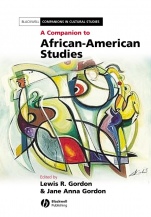
A Companion to African–American Studies
ISBN 9780631235163
Autor: Jane Anna Gordon, Lewis Gordon
Wydawca: Wiley
Dostępność: 3-6 tygodni
Cena: 910,35 zł
Przed złożeniem zamówienia prosimy o kontakt mailowy celem potwierdzenia ceny.
ISBN13: |
9780631235163 |
ISBN10: |
0631235167 |
Autor: |
Jane Anna Gordon, Lewis Gordon |
Oprawa: |
Hardback |
Rok Wydania: |
2005-12-23 |
Ilość stron: |
702 |
Wymiary: |
249x171 |
Tematy: |
GTS |
A Companion to African–American Studies is a groundbreaking reappraisal of the history and future of African–American studies. Each original essay by an expert scholar in the field covers its topic with authority and clarity. This book is a definitive intervention at a critical time in the history of race relations and in the academic field of race and ethnic studies. Bringing together a dazzling array of established and emergent voices, the
Companion opens with a series of reflections from those who waged pitched battles to establish African–American studies as a bona fide academic discipline. Students and scholars will find this to be an exciting and comprehensive overview, and an ideal resource for study and further research.
Notes on Contributors.
Preface and Acknowledgments.
Note on the Text.
Introduction: On Working through a Most Difficult Terrain. (Lewis R. Gordon and Jane Anna Gordon).
Part I: Stones That Former Builders Refused.
1. On My First Acquaintance with Black Studies: A Yale Story. (Houston Baker, Jr.).
2. Sustaining Africology: On the Creation and Development of a Discipline. (Molefi Kete Asante).
3. Dreams, Nightmares, and Realities: Afro–American Studies at Brown University, 1969–1986. (Rhett Jones).
4. Black Studies in the Whirlwind: A Retrospective View. (Charlotte Morgan–Cato).
5. From the Birth to a Mature Afro–American Studies at Harvard, 1969–2002. (Martin Kilson).
6. Black Studies and Ethnic Studies: The Crucible of Knowledge and Social Action. (Johnnella E. Butler).
7. A Debate on Activism in Black Studies.
(Henry Louis Gates, Jr. and Manning Marable).
8. Singing the Challenges: The Arts and Humanities as Collaborative Sites in African American Studies. (Herman Beavers).
9. On How We Mistook the Map for the Territory, and Re–Imprisoned Ourselves in Our Unbearable Wrongness of Being, of Desêtre: Black Studies Toward the Human Project. (Sylvia Wynter).
10. The New Auction Block: Blackness and the Marketplace. (Hazel V. Carby).
11. Black Studies, Black Professors, and the Struggles of Perception. (Nell Irvin Painter).
12. Autobiography of an Ex–White Man. (Robert Paul Wolff).
Part II: Such Fertile Fields. . ..
A The Blues Are Brewing . . . for a Humanistic Humanism.
13. Homage to Mistress Wheatley . (Rowan Ricardo Phillips).
14. Toni Cade Bambara′s Those Bones Are Not My Child: Placing the Humanities at the Core of Black Studies. (Joyce Ann Joyce).
15. Jazz Consciousness. (Paul Austerlitz).
B What Does It Mean to Be a Problem?.
16. Afro–American Studies and the Rise of African–American Philosophy. (Paget Henry).
17. Sociology and the African Diaspora Experience . (Tukufu Zuberi).
18. Suicide in Black and White: Theories and Statistics. (Alvin Poussaint and Amy Alexander).
19. Some Reflections on Challenges Posed to Social–Scientific Method by the Study of Race. (Jane Anna Gordon).
20. African–American Queer Studies . (David Ross Fryer).
21. Black Studies, Race, and Critical Race Theory: A Narrative Deconstruction of Law . (Clevis Headley).
C Having Hitherto Interpreted the World, the Point is to Change It.
22. Unthinkable History?: Some Reflections on the Haitian Revolution, Historiography, and Modernity on the Periphery. (Sibylle Fischer).
23. Historical Consciousness in the Relation of African–American Studies to Modernity. (Stefan M. Wheelock).
24. An Emerging Mosaic: Rewriting Postwar African–American History. (Peniel E. Joseph).
25. Reflections on African–American Political Thought: The Many Rivers of Freedom. (B. Anthony Bogues).
26. Politics of Knowledge: Black Policy Professionals in the Managerial Age. (Floyd Hayes, III).
D Not by Bread Alone.
27. From the Nile to the Niger: The Evolution of African Spiritual Concepts. (Charles Finch, III).
28. Three Rival Narratives of Black Religion. (William D. Hart).
29. Babel in the North: Black Migration, Moral Community, and the Ethics of Racial Authenticity. (Eddie S. Glaude, Jr).
30. Orienting Afro–American Judaism: A Critique of White Normativity in Literature on Black Jews in America. (Walter Isaac).
Part III: Creolization and the Geography of Reason.
31. Playing with the Dark: The Deployment of Blackness and Brownness in the Africana and Latino Literary Imaginations. (Claudia M. Milian Arias).
32. Africana Studies: The International Context and Boundaries. (Anani Dzidzienyo).
33. Africana Thought and African–Diasporic Studies. (Lewis R. Gordon).
Works Cited.
Index.
Lewis R. Gordon is the Laura Carnell University Professor of Philosophy and Religion and Director of the Institute for the Study of Race and Social Thought and the Center for Afro–Jewish Studies at Temple University and Ongoing Visiting Professor of Government and Philosophy at the University of the West Indies at Mona, Jamaica. He is the author of several books, including Her Majesty s Other Children (1997), which won the Gustavus Myers Outstanding Book Award for Advancing Human Rights, and Existentia Africana: Understanding Africana Existential Thought (2000).
Jane Anna Gordon teaches in the Department of Political Science at Temple University, where she is also an Associate Director of the Institute for the Study of Race and Social Thought. She is author of Why They Couldn t Wait: A Critique of the Black Jewish Conflict Over Community Control in Ocean Hill Brownsville, 1967 1971 (2001), and co–editor, with Lewis R. Gordon, of Not Only the Master s Tools: Theoretical Explorations in African–American Studies (2005).
An excellent resource edited with an excellent introduction by Lewis R. Gordon and Jane Anna Gordon, which includes articles by a wide range of scholars that document the development of black studies in the United States and outline the trajectories of the field in all its multi–genre richness. ( Year′s Work in English Studies, November 2008)
Koszyk
Książek w koszyku: 0 szt.
Wartość zakupów: 0,00 zł
Informacje


Kontakt
Gambit
Centrum Oprogramowania
i Szkoleń Sp. z o.o.
Al. Pokoju 29b/22-24
31-564 Kraków
Siedziba Księgarni
ul. Kordylewskiego 1
31-542 Kraków
+48 12 410 5991
+48 12 410 5987
+48 12 410 5989
Subskrypcje
Administratorem danych osobowych jest firma Gambit COiS Sp. z o.o. Na podany adres będzie wysyłany wyłącznie biuletyn informacyjny.
Autoryzacja płatności

Informacje na temat autoryzacji płatności poprzez PayU.

© Copyright 2012: GAMBIT COiS Sp. z o.o. Wszelkie prawa zastrzeżone.
Projekt i wykonanie: Alchemia Studio Reklamy