


Wydawcy
Katalog tematyczny
- Archeologia (109)
- Ekonomia, finanse, business (13704)
- Filozofia (1445)
- Historia (3040)
- Języki i językoznawstwo (2356)
- Lifestyle, hobby i rozrywka (475)
- Medycyna (9704)
- Nauki humanistyczne (4)
- Nauki o Ziemi i środowisku (2638)
- Nauki ścisłe (20412)
- Nauki społeczne (8486)
- Nauki techniczne (13450)
- Prawo (1696)
- Publikacje informacyjne i interdyscyplinarne (1288)
- Bibliotekoznawstwo, informacja naukowa i muzealnictwo (433)
- Encyklopedie i leksykony (181)
- Informacja naukowa (88)
- Zagadnienia interdyscyplinarne (391)
- Religia i wierzenia (917)
- Technika komputerowa (4067)
- Zdrowie, relacje międzyludzkie i rozwój osobisty (657)





Informacje szczegółowe o książce
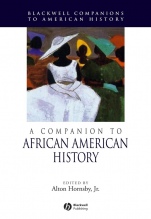
A Companion to African American History
ISBN 9780631230663
Autor: Alton Hornsby Jr.
Wydawca: Wiley
Dostępność: 3-6 tygodni
Cena: 910,35 zł
Przed złożeniem zamówienia prosimy o kontakt mailowy celem potwierdzenia ceny.
ISBN13: |
9780631230663 |
ISBN10: |
0631230661 |
Autor: |
Alton Hornsby Jr. |
Oprawa: |
Hardback |
Rok Wydania: |
2004-12-17 |
Ilość stron: |
578 |
Wymiary: |
250x181 |
Tematy: |
GTS |
A Companion to African American History is a collection of original and authoritative essays arranged thematically and topically, covering a wide range of subjects from the seventeenth century to the present day. From their origins in West Africa on the eve of slave trading, through slavery itself and its abolition in the turmoil of the Civil War, and then over the rest of the nineteenth century and into the twentieth, as they struggled for freedom, identity, and place, African Americans occupy a central role in their country’s history. This volume surveys the scholarly literature in African American history and provides a guide to the research, analyses, and various interpretations and perspectives that historians have developed over the past fifty years.
Each essay pays particular attention to geographical features as well as conceptual and methodological issues. In this volume, globalization, region, migration, gender, class, and social forces have been knitted into the broad cultural fabric of African American history. With this Companion, readers now have a complete source to the most recent theories and explanations for the changing contours of African American life.
Spis treści:
Notes on Contributors.
Acknowledgments.
INTRODUCTION.
PART I: AFRICAN AND OTHER ROOTS.
1. Life and Work in West Africa.
Augustine Konneh (Morehouse College).
2. Africans in Europe.
Maghan Keita (Villanova University).
3. The African and European Slave Trades.
Walter Rucker (Ohio State University).
4. Africans in the Caribbean and Latin America: The Post–Emancipation Diaspora.
Frederick. D. Opie (Marist College).
PART II: AFRICANS IN EARLY NORTH AMERICA.
5. Concepts of Race, Ethnicity and Nationality in Colonial America.
Jeffrey Elton Anderson (Middle Georgia College).
6. Not Chattel, Not Free:Legal and Political Status of Quasi
–Free Blacks.
Antonio F. Holland (Lincoln University) and Deborah Greene (Lincoln University).
7. Africans and Native Americans.
Tiya Miles (University of Michigan) and Barbara Krauthamer (New York University) PART III: IN THE HOUSE OF BONDAGE.
8. Origins and Institutionalization of Slavery.
Jason R. Young (State University of New York at Buffalo).
9. Labor in the Slave Community.
Frederick C. Knight (Colorado State University).
10. Spirituality and Socialization in the Slave Community.
Jason R. Young (State University of New York at Buffalo).
11. Rebels and Abolitionists.
Stanley Harrold (South Carolina State University).
PART IV: TRANSCULTURATION.
12. The Americanization of Africans and the Africanization of America.
Samuel T. Livingston (Morehouse College).
13. African Americans and an Atlantic World Culture.
Walter Rucker (Ohio State University).
PART V: THE CIVIL WAR, EMANCIPATION AND THEQUEST FOR FREEDOM.
14. African Americans and the American Civil War.
Oscar R. Williams, III (State University of New York at Albany)and Haywood “Woody” Farrar (Virginia Polytechnic Institute and State University).
15. Jim Crowed: Freedom Denied.
Charles McKinney (Duke University)and Rhonda Jones (Duke University).
PART VI: THE MATURATION OF AFRICAN AMERICAN COMMUNITIES AND THE EMERGENCE OF INDEPENDENT INSTITUTIONS.
16. Religious Institutions, Fraternal Organizations.
David H. Jackson, Jr. (Florida A&M University).
17. The Quest for “Book Learning”: African American Education in Slavery and Freedom.
ChristopherM.SpanUniversity of Illinois at Urbana–Champaign) and James.Anderson (University of Illinois, Urbana–Champaign).
18. The Growth of African American Cultural and Social Institutions.
David H. Jackson, Jr. (Florida A&M University).
19. African American Entrepreneurship in Slavery and Freedom.
Anne R. Hornsby (Spelman College).
20. The Black Press.
Shirley E. Thompson (University of Texas at Austin).
PART VII: AFRICAN AMERICANS AND WARS “FOR DEMOCRACY”.
21.The Black Soldier in the Two World Wars.
Haywood “Woody”Farrar (Virginia Polytechnic Institute and State University).
22.Identity, Patriotism and Protest on the Warttime Home Front.
Haywood “Woody” Farrar (Virginia Polytechnic Institute and State University).
PART VIII: GENDER AND CLASS.
23. Gender and Class in Post Emancipation Black Communities.
Angela M. Hornsby (University of Mississippi).
24. African American Women Since The Second World War: Perspectives on Gender and Race.
Delores. P. Aldridge (Emory University).
25. Striving For Place: Lesbian, Gay, Bisexual and Transgender People.
Juan Battle (City University of New York)and Natalie Bennett (University of Nebraska at Omaha).
PART IX: MIGRATION, RENAISSANCE AND NEW BEGINNINGS.
26. Exodus From the South.
Mark Andrew Huddle (St. Bonaventure University).
27. Development, Growth and Transformation in Education.
Abel A. Bartley (University of Akron).
28. Identity, Protest and Outreach in the Arts.
Julius E. Thompson (University of Missouri–Columbia) PART X: SEARCHING FOR PLACE.
29. Searching For A New Freedom.
Hasan Kwame Jeffries (Ohio State University).
30. “Race Rebels”: From Indigenous Insurgency to Hip–Hopamania.
Marcellus C. Barksdale (Morehouse College)with Samuel T. Livingston (Morehouse College).
31. Searching For Place: Nationalism, Separatism and Pan–Africanism.
Akinyele Umoja (Georgia State University).
Index
Nota biograficzna:
Alton Hornsby, Jr
is Fuller E. Callaway Professor of History at Morehouse College, and former editor of the Journal of Negro History. He is the author of Milestones in 20th Century Black History (1993), and Chronology of African American History (2nd edition, 1997).
Okładka tylna:
A Companion to African American History is a collection of original and authoritative essays arranged thematically and topically, covering a wide range of subjects from the seventeenth century to the present day. From their origins in West Africa on the eve of slave trading, through slavery itself and its abolition in the turmoil of the Civil War, and then over the rest of the nineteenth century and into the twentieth, as they struggled for freedom, identity, and place, African Americans occupy a central role in their country’s history. This volume surveys the scholarly literature in African American history and provides a guide to the research, analyses, and various interpretations and perspectives that historians have developed over the past fifty years.
Each essay pays particular attention to geographical features as well as conceptual and methodological issues. In this volume, globalization, region, migration, gender, class, and social forces have been knitted into the broad cultural fabric of African American history. With this Companion, readers now have a complete source to the most recent theories and explanations for the changing contours of African American life.
Koszyk
Książek w koszyku: 0 szt.
Wartość zakupów: 0,00 zł
Informacje


Kontakt
Gambit
Centrum Oprogramowania
i Szkoleń Sp. z o.o.
Al. Pokoju 29b/22-24
31-564 Kraków
Siedziba Księgarni
ul. Kordylewskiego 1
31-542 Kraków
+48 12 410 5991
+48 12 410 5987
+48 12 410 5989
Subskrypcje
Administratorem danych osobowych jest firma Gambit COiS Sp. z o.o. Na podany adres będzie wysyłany wyłącznie biuletyn informacyjny.
Autoryzacja płatności

Informacje na temat autoryzacji płatności poprzez PayU.

© Copyright 2012: GAMBIT COiS Sp. z o.o. Wszelkie prawa zastrzeżone.
Projekt i wykonanie: Alchemia Studio Reklamy