


Wydawcy
Katalog tematyczny
- Archeologia (109)
- Ekonomia, finanse, business (13704)
- Filozofia (1445)
- Historia (3040)
- Języki i językoznawstwo (2356)
- Lifestyle, hobby i rozrywka (475)
- Medycyna (9704)
- Nauki humanistyczne (4)
- Nauki o Ziemi i środowisku (2638)
- Nauki ścisłe (20412)
- Nauki społeczne (8486)
- Nauki techniczne (13450)
- Prawo (1696)
- Publikacje informacyjne i interdyscyplinarne (1288)
- Religia i wierzenia (917)
- Technika komputerowa (4067)
- Zdrowie, relacje międzyludzkie i rozwój osobisty (657)





Informacje szczegółowe o książce
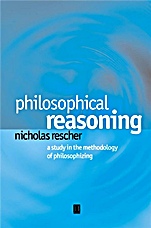
Philosophical Reasoning: A Study in the Methodology of Philosophizing
ISBN 9780631230175
Autor: Nicholas Rescher
Wydawca: Wiley
Dostępność: 3-6 tygodni
Cena: 609,00 zł
Przed złożeniem zamówienia prosimy o kontakt mailowy celem potwierdzenia ceny.
ISBN13: |
9780631230175 |
ISBN10: |
0631230173 |
Autor: |
Nicholas Rescher |
Oprawa: |
Hardback |
Rok Wydania: |
2001-08-24 |
Ilość stron: |
296 |
Wymiary: |
243x167 |
Tematy: |
HPGL |
This book is a study in the methodology of philosophical inquiry.Accordingly, it is a venture in metaphilosophy, perhaps the mostcontroversial of philosophical disciplines.
Philosophy is caught in a dilemma. On one hand, its omission asa legitimate venture in empirical inquiry requires its looking to"the big picture" and striving to counteract the fragmentedspecialization of other cognitive domains. On the other hand,philosophy does not and cannot avert division of labor. Thus, itremains committed to the quest for unity and coherence in ourunderstanding of the nature of things in a world where ourknowledge is exploding in scope and in complexity.
Philosophical Reasoning explores this difficult situationand clarifies its implications by expounding and defending thefollowing thesis: that systematization is the proper instrument ofphilosophical inquiry, and that the effective pursuit ofphilosophy′s mission calls for constructing a doctrinal system thatanswers our questions in a coherent and comprehensive manner.
Preface.
Introduction.
Part I: The Task of Philosophy:.
The Erotetic Nature of Philosophy: Philosophy as a CognitiveEnterprise.
The Need for Philosophy: Humans as Homo Quaerens.
Rationality is the Instrument of Philosophy.
Philosophy as Truth Estimation.
The Data of Philosophy.
Metaphilosophical Issues.
Part II: Philosophizing as an Erotetic Enterprise: TheDialectic of Question and Answer:.
Questions and their Presuppositions: Issues Regarding theLegitimacy of Questions.
Question Dynamics: Kant′s Principle of Question Propagation andthe Dialectical Exfoliation of Questions.
Philosophy as a Venture in Erotetic Dialectic.
Philosophical Assessment.
Part III: What′s on the Agenda?:.
Unexamined Issues and Agenda Formation.
The Recent Scene.
Metaphilosophy a Part of Philosophy Itself.
The Political Dimension: A Struggle for Ownership.
The Systemic Dimension.
Part IV: Philosophical Discourse:.
The Narrative Dimension of Philosophy.
The Method of Philosophy: Truth–Estimative Conjecture.
Ongoing Explanation.
Historical Unity of Philosophy.
The Data of Philosophy.
Part V: Interpreting Philosophical Texts:.
Setting the Stage: Deconstructionism.
Exegetical Interpretation.
Why Philosophical Texts Need Interpretation.
The Principle of Contextuality–Context Coherence as anInterpretative Standard.
The First Law.
The Second Law.
The Third Law.
The Fourth Law.
Part VI: Rhetoric And Rational Argumentation:.
Rhetoric Versus Argumentation: The General Situation.
An Uneasy Union.
The Special Case of Philosophy.
Philosophy′s Data: The Source of Plausibility.
Part VII: Philosophical Aporetics:.
The Pervasiveness of Apories.
Aporetic Antinomies Structure the Issues.
Part VIII: The Economic Dimension of PhilosophicalInquiry:.
Plausibility as a Guide to Issues of Precedence andPriority.
Cost Effectiveness as a Salient Aspect of Rationality.
Unacceptable Price Argumentation in Philosophy.
Part IX: The Impact of Distinctions:.
The Role of Distinctions.
Dialectic Development via Distinctions.
Developmental Dialectics.
Part X: Inference to the Best Explanation and itsProblems:.
Difficulties with Inference to the Best Explanation.
Best Systematization as a Viable Alternative.
Part XI: The Coherentist Criteriology of Truth as aPhilosophical Method:.
Coherentism in Philosophy.
How Context Helps via Local Appropriateness.
Philosophical Coherentism is Self Sustaining.
Part XII: Why Philosophizing Must Be Systematic: The HolisticNature of Philosophy:.
Externalities and Negative Side Effects.
Systematic Interconnectedness as a Consequence of AporeticComplexity.
Local Minimalism versus Global Optimalism.
Why Not Simply "Live With Inconsistency?" The Imperative ofCognitive Rationality.
The Methodological Rationale of Systematicity in Philosophy.
Part XIII: Systematization as an Instrument ofInquiry:.
Hierarchical Systematization: The Euclidean Model ofKnowledge.
Systematicity and the Impetus to Coherence: The NetworkModel.
On the Advantages of a Network Model.
The Pivotal Role of Data for a CoherentistTruth–Criteriology.
Coherentism′s Exploitation of the Parameters ofSystematicity.
Systematization as Truth Criterion: The Hegelian Inversion.
Part XIV: Developmental Dialectics and Complexity:.
Spencer′s Law: The Dynamics of Cognitive Complexity.
The Methodological Status of Simplicity–Preference:Systematicity, Economy, and the Principle of Least Effort.
Perennial Philosophy.
Rational Dialectic in Philosophy.
Part XV: Counterfactual Reasoning as a PhilosophicalInstrument:.
Historical Stagesetting.
Belief–Contravening Supposition: How Apories Arise inHypothetical Contexts.
The Centrality of Precedence (Right of Way).
Logic as Such Does Not Resolve Matters.
Reductio Ad Absurdum Argumentation.
Evidential Contexts.
The Situation in Philosophy.
An Overview.
Dispensing with "Possible Worlds".
Part XVI: Validating First Principles:.
First Principles.
Historical Postscript.
Part XVII: God′s Place in Philosophy (Non in PhilosophiaRecurrere est ad Deum):.
Two Opposed Intuitions.
Theistic vs. Naturalistic Questions.
The Closure of the Secular Realm.
Internal vs. External.
Philosophy and Theology.
Explanatory Economy in Philosophy.
Conclusion.
Part XVIII: Philosophy at the Turn of the Century: A Returnto Systems?:.
The Heritage of the 19th Century.
The Revolt Against System (System–Dismissive Antisystems).
The Shipwreck of Inter–Bellum Negativism.
The Burned Bridges.
The Rise of Particularism.
A Vision of Wholeness.
The New Order: A Revival of Systematic Philosophy.
The Contemporary Situation.
Nicholas Rescher is University Professor of Philosophy atthe University of Pittsburgh where he served for many years asDirector of the Center for Philosophy of Science. A Formerpresident of the American Philosophical Association, he is anhonorary member of Corpus Christi College, Oxford. He is the authorof more than eighty works ranging over many areas of philosophy andwas awarded the Alexander von Humboldt Prize for HumanisticScholarship in 1984.
" Philosophical Reasoning is a probing and commanding studyof the methodology of philosophical inquiry. It is an excellentbook on the difficult subject of how one should philosophize andwhat we can reasonably expect of philosophy, and a breath of freshair falling between the extremes of philosophy as natural scienceand philosophy as the purely a priori. A very intriguing,articulate and convincing story of the nature of an art Rescher haspracticed so well for so long for the benefit of so many. Istrongly recommend it." Robert Almeder, Georgia StateUniversity <!––end––>
"Philosophy aims at rationally constructed comprehensiveness,now more collectively/dialectically and lessindividually/reflectively than in the past. So argues NicolasRescher in this systematic defense of system. If philosophicalabout their practice, philosophers who pick up this book won′teasily put it down, even if in the end they disagree." ErnestSosa, Brown University
"What makes the book such a pleasure to read is that it combinesthe precision and thoroughness of a master philosopher with awriting style that makes for easy reading. This is a book whichboth novices and experts should read to help both understand thenature of their enterprise better." Philosophy in Review
Koszyk
Książek w koszyku: 0 szt.
Wartość zakupów: 0,00 zł
Informacje


Kontakt
Gambit
Centrum Oprogramowania
i Szkoleń Sp. z o.o.
Al. Pokoju 29b/22-24
31-564 Kraków
Siedziba Księgarni
ul. Kordylewskiego 1
31-542 Kraków
+48 12 410 5991
+48 12 410 5987
+48 12 410 5989
Subskrypcje
Administratorem danych osobowych jest firma Gambit COiS Sp. z o.o. Na podany adres będzie wysyłany wyłącznie biuletyn informacyjny.
Autoryzacja płatności

Informacje na temat autoryzacji płatności poprzez PayU.

© Copyright 2012: GAMBIT COiS Sp. z o.o. Wszelkie prawa zastrzeżone.
Projekt i wykonanie: Alchemia Studio Reklamy