


Wydawcy
Katalog tematyczny
- Archeologia (109)
- Ekonomia, finanse, business (13704)
- Filozofia (1445)
- Historia (3040)
- Języki i językoznawstwo (2356)
- Lifestyle, hobby i rozrywka (475)
- Medycyna (9704)
- Nauki humanistyczne (4)
- Nauki o Ziemi i środowisku (2638)
- Nauki ścisłe (20412)
- Nauki społeczne (8486)
- Nauki techniczne (13450)
- Prawo (1696)
- Publikacje informacyjne i interdyscyplinarne (1288)
- Religia i wierzenia (917)
- Technika komputerowa (4067)
- Zdrowie, relacje międzyludzkie i rozwój osobisty (657)





Informacje szczegółowe o książce
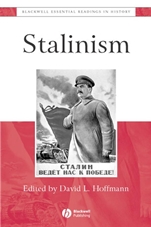
Stalinism: The Essential Readings
ISBN 9780631228912
Autor: David Hoffmann
Wydawca: Wiley
Dostępność: 3-6 tygodni
Cena: 232,05 zł
Przed złożeniem zamówienia prosimy o kontakt mailowy celem potwierdzenia ceny.
ISBN13: |
9780631228912 |
ISBN10: |
0631228918 |
Autor: |
David Hoffmann |
Oprawa: |
Paperback |
Rok Wydania: |
2002-11-22 |
Ilość stron: |
332 |
Wymiary: |
231x156 |
Tematy: |
HB |
This book comprises twelve essays on Stalinism by leading international historians, whose work presents a range of interpretations regarding Stalinism’s origins and consequences. In particular the essays address the following questions: why did the October Revolution of 1917 result not in a communist utopia but in the Stalinist dictatorship, with prison camps, bloody purges, and unprecedented state repression? was Stalin personally to blame or were these events the result of social forces, socialist ideology, or the international threat? how did Stalinism affect women and gender roles? what was Stalinist policy toward ethnic and national minorities? what impact did the Second World War have on Soviet society? The chapters include work by both eminent historians and younger scholars who have conducted research in the newly–opened Russian archives. These perspectives are brought together by the editor who provides a contextualizing chapter and introductions to the debates. The book provides students and teachers with a valuable overview of the scholarship on Stalinism and an understanding of the debates that have shaped the field of Soviet history.
Acknowledgements. Glossary. Introduction: Interpretations of Stalinism: David L. Hoffmann (The Ohio State University). Part I: The Origins of Stalinism:. 1. Stalin′s Role: Stalin and his Stalinism: Power and Authority in the Soviet Union, 1930–53: Ronald Grigor Suny. (University of Chicago). 2. Social Origins: Grappling with Stalinism: Moshe Lewin (University of Pennsylvania). 3. Socialist Ideology: The Soviet Tragedy: A History of Socialism in Russia: Martin Malia. 4. The Foreign Threat: The Objectives of the Great Terror, 1937–38: Oleg Khlevnyuk. 5. The Welfare State: Magnetic Mountain: Stalinism as a Civilization: Stephen Kotkin. 6. State Violence: State Violence as Technique: The Logic of Violence in Soviet Totalitarianism: Peter Holquist (Cornell University). Part II: The Consequences of Stalinism:. 7. Resistance and Conformity: Everyday Stalinism: Ordinary Life in Extraordinary Times: Sheila Fitzpatrick (University of Chicago). 8. Stalinist Subjectivity: Working, Struggling, Becoming: Stalin–Era Autobiographical Texts: Jochen Hellbeck (University of Giessen. 9. Women and Gender: Women in Soviet Society: Equality, Development, and Social Change: Gail Warshofsky Lapidus. 10. Ethnicity and Nationality: Nature and Nurture in a Socialist Utopia: Delineating the Soviet Socio–Ethnic Body in the Age of Socialism: Amir Weiner (Stanford University). 11. The Postwar Years: Russia after the War: Hopes, Illusions, and Disappointments: Elena Zubkova. Index.
David L. Hoffmann is Professor of History at Ohio State University where he teaches Russian History, including an upper–level course on Stalinism. His research focuses on the political, social, and cultural history of the Stalin era. He is author of Peasant Metropolis: Social Identities in Moscow, 1929–1941 (1994); Stalinist Values: The Cultural Norms of Soviet Modernity, 1917–1941 (2003). He is also the co–editor of Russian Modernity: Politics, Knowledge, Practices (2000), and the co–author of Cultivating the Masses: The Modern Social State in Russia, 1914–1941 (forthcoming).
"The often contentious scholarly arguments about the character of Stalinism are fully represented in this important volume assembled and introduced by Ohio State’s David Hoffmann. Perfect for the classroom, the essays in this book contain some of the best recent research and thinking about Stalin’s key role in Russian History." Norman Naimark, Stanford University <!––end––> "This is a collection of enormous value to anyone seeking to understand the causes and consequences of Stalin’s despotic transformation of Soviet society. It brings together some of the finest historical writing, including more recent scholarship, to reflect the diversity of interpretation of this grim but vitally important episode in twentieth–century history." Steve Smith, University of Essex "Soviet historical studies have been reanimated ... Students and teachers oof this period confront a proliferation of authorities and viewpoints. The strength of David Hoffmann′s collection is in its attempt to replect this variety of views." C ontinuity and Change "Brilliant and illuminating analyses. Hoffman provides a range of first–rate critiques of the regime from various angles." Journal of Genocide Research
Koszyk
Książek w koszyku: 0 szt.
Wartość zakupów: 0,00 zł
Informacje


Kontakt
Gambit
Centrum Oprogramowania
i Szkoleń Sp. z o.o.
Al. Pokoju 29b/22-24
31-564 Kraków
Siedziba Księgarni
ul. Kordylewskiego 1
31-542 Kraków
+48 12 410 5991
+48 12 410 5987
+48 12 410 5989
Subskrypcje
Administratorem danych osobowych jest firma Gambit COiS Sp. z o.o. Na podany adres będzie wysyłany wyłącznie biuletyn informacyjny.
Autoryzacja płatności

Informacje na temat autoryzacji płatności poprzez PayU.

© Copyright 2012: GAMBIT COiS Sp. z o.o. Wszelkie prawa zastrzeżone.
Projekt i wykonanie: Alchemia Studio Reklamy