


Wydawcy
Katalog tematyczny
- Archeologia (109)
- Ekonomia, finanse, business (13704)
- Filozofia (1445)
- Historia (3040)
- Języki i językoznawstwo (2356)
- Lifestyle, hobby i rozrywka (475)
- Medycyna (9704)
- Nauki humanistyczne (4)
- Nauki o Ziemi i środowisku (2638)
- Nauki ścisłe (20412)
- Nauki społeczne (8486)
- Edukacja (229)
- Kryminologia, opieka spełeczna (284)
- Obronność (10)
- Polityka (1389)
- Psychologia (777)
- Socjologia (410)
- Społeczeństwo i kultura (187)
- Nauki techniczne (13450)
- Prawo (1696)
- Publikacje informacyjne i interdyscyplinarne (1288)
- Religia i wierzenia (917)
- Technika komputerowa (4067)
- Zdrowie, relacje międzyludzkie i rozwój osobisty (657)





Informacje szczegółowe o książce
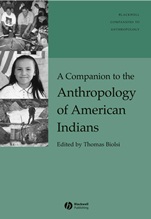
A Companion to the Anthropology of American Indians
ISBN 9780631226864
Autor: Thomas Biolsi
Wydawca: Wiley
Dostępność: 3-6 tygodni
Cena: 883,05 zł
Przed złożeniem zamówienia prosimy o kontakt mailowy celem potwierdzenia ceny.
ISBN13: |
9780631226864 |
ISBN10: |
0631226869 |
Autor: |
Thomas Biolsi |
Oprawa: |
Hardback |
Rok Wydania: |
2004-11-03 |
Ilość stron: |
592 |
Wymiary: |
262x191 |
Tematy: |
JB |
The status of American Indians has long been rooted in a view of Indians as members of indigenous polities with distinct cultures. Often, these cultures have been characterized by dominant colonial authorities as ‘savage’ or ‘primitive,’ and it is the discipline of anthropology that, willingly and wittingly, or not, helped to make the idea of ‘the primitive’ into a social reality. Consequently, the ‘tribal slot’ inhabited by American Indians – with both its benefits and its oppressions – is difficult to imagine without the discipline of anthropology.
A Companion to the Anthropology of American Indians contains 27 original contributions by leading scholars who work actively as researchers in American Indian communities, or on the topic of American Indians. The book summarizes the state of anthropological knowledge of Indian peoples, as well as the history that got us to this point.
Treated here is the full range of American Indian anthropology: from ecological and political–economic questions to topics concerning religion, language, and expressive culture. Each chapter provides definitive coverage of its topic while situating ethnographic and ethnohistorical data in a broader framework. This framework includes the linked histories of American Indians and anthropology, the role of continued native resistance in changing both the situation of Indian people and the content of anthropology, and the potential role of anthropology in an anti–colonial project that speaks to the pressing concerns of contemporary Indians.
Spis treści:
Synposis of Contents.
Notes on Contributors.
Introduction: What is the ′Anthropology′ of ′American Indians′?: Thomas Biolsi (University of California, Berkeley).
Part I: Environments and Populations:.
1. Political and Historical Ecologies: Kenneth M. Ames (Portland State University).
2. Histo
rical Demography: Russell Thornton (University of California, Los Angeles).
Part II: Political, Social, and Economic Organization:.
3. Women and Men: Martha C. Knack (University of Nevada, Las Vegas).
4. Politics: Loretta Fowler (University of Oklahoma).
5. Tribal or Native Law: Bruce Granville Miller (University of British Columbia).
6. Culture and Reservation Economies: Kathleen Pickering (Colorado State University).
Part III: Knowledge and Expressive Culture:.
7. Knowledge Systems: Eugene S. Hunn (University of Washington, Seattle).
8. Oral Traditions: Rodney Frey (University of Idaho).
9. Religion: Raymond Bucko (Creighton University).
10. Music: Luke Eric Lassiter (Marshall University).
11. Art: Rebecca J. Dobkins (Willamette University).
Part IV: Colonialism, Native Sovereignty, Law, and Policy:.
12. Political and Legal Status ("Lower 48" States): Thomas Biolsi (University of California, Berkeley).
13. Political and Legal Status (Alaska): Caroline L. Brown (University of Chicago).
14. Federal Indian Policy and Anthropology: George Pierre Castile (Whitman College).
15. Contemporary Globalization and Tribal Sovereignty: Randel D. Hanson (Arizona State University).
16. Treaty Rights: Larry Nesper (University of Wisconsin, Madison).
17. Education: Alice Littlefield (Central Michigan University, Mt. Pleasant).
Part V: Cultural Politics and the Colonial Situation:.
18. Representational Practices: Pauline Turner Strong (University of Texas, Austin).
19. The Politics of Native Culture: Kirk Dombrowski (John Jay College of Criminal Justice, CUNY).
20. Cultural Appropriation: Tressa Berman (Independent Curator; Affliated Scholar, Women’s Leadership Institute at Mills College; and Research Associate, California Academy of Sciences).
21. Community Healing and Cultural Citizenship: Renya K. Ramirez (University of California, Santa Cruz).
22. Native Hawai‘ians: C
ari Costanzo Kapur (Stanford University).
Part VI: Anthropological Method and Postcolonial Practice:.
23. Ethnography: Peter Whiteley (American Museum of Natural History, New York).
24. Beyond “Applied” Anthropology: Les W. Field (University of New Mexico).
25. Linguistic Anthropology: James Collins (University at Albany, SUNY).
26. Visual Anthropology: Harald E. L. Prins (Kansas State University).
27. Archaeology: Larry J. Zimmerman (Minnesota Historical Society).
Index
Nota biograficzna:
Thomas Biolsi is Professor of Native American Studies at the University of California at Berkeley. Among his publications are Deadliest Enemies: Law and Race Relations on and Off Rosebud Reservation (2007/2001), Indians and Anthropologists: Vine Deloria, Jr., and the Critique of Anthropology (edited with Larry Zimmerman, 1997), and Organizing the Lakota: The Political Economy of the New Deal on Pine Ridge and Rosebud Reservations (1992).
Okładka tylna:
The status of American Indians has long been rooted in a view of Indians as members of indigenous polities with distinct cultures. Often, these cultures have been characterized by dominant colonial authorities as ‘savage’ or ‘primitive,’ and it is the discipline of anthropology that, willingly and wittingly, or not, helped to make the idea of ‘the primitive’ into a social reality. Consequently, the ‘tribal slot’ inhabited by American Indians – with both its benefits and its oppressions – is difficult to imagine without the discipline of anthropology.
A Companion to the Anthropology of American Indians contains 27 original contributions by leading scholars who work actively as researchers in American Indian communities, or on the topic of American Indians. The book summarizes the state of anthropological knowledge of Indian peoples, as well as the history th
at got us to this point.
Treated here is the full range of American Indian anthropology: from ecological and political–economic questions to topics concerning religion, language, and expressive culture. Each chapter provides definitive coverage of its topic while situating ethnographic and ethnohistorical data in a broader framework. This framework includes the linked histories of American Indians and anthropology, the role of continued native resistance in changing both the situation of Indian people and the content of anthropology, and the potential role of anthropology in an anti–colonial project that speaks to the pressing concerns of contemporary Indians.
Koszyk
Książek w koszyku: 0 szt.
Wartość zakupów: 0,00 zł
Informacje


Kontakt
Gambit
Centrum Oprogramowania
i Szkoleń Sp. z o.o.
Al. Pokoju 29b/22-24
31-564 Kraków
Siedziba Księgarni
ul. Kordylewskiego 1
31-542 Kraków
+48 12 410 5991
+48 12 410 5987
+48 12 410 5989
Subskrypcje
Administratorem danych osobowych jest firma Gambit COiS Sp. z o.o. Na podany adres będzie wysyłany wyłącznie biuletyn informacyjny.
Autoryzacja płatności

Informacje na temat autoryzacji płatności poprzez PayU.

© Copyright 2012: GAMBIT COiS Sp. z o.o. Wszelkie prawa zastrzeżone.
Projekt i wykonanie: Alchemia Studio Reklamy