


Wydawcy
Katalog tematyczny
- Archeologia (109)
- Ekonomia, finanse, business (13704)
- Filozofia (1445)
- Historia (3040)
- Języki i językoznawstwo (2356)
- Lifestyle, hobby i rozrywka (475)
- Medycyna (9704)
- Nauki humanistyczne (4)
- Nauki o Ziemi i środowisku (2638)
- Nauki ścisłe (20412)
- Nauki społeczne (8486)
- Nauki techniczne (13450)
- Prawo (1696)
- Publikacje informacyjne i interdyscyplinarne (1288)
- Religia i wierzenia (917)
- Technika komputerowa (4067)
- Zdrowie, relacje międzyludzkie i rozwój osobisty (657)





Informacje szczegółowe o książce
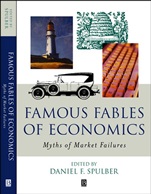
Famous Fables of Economics: Myths of Market Failures
ISBN 9780631226758
Autor: Daniel Spulber
Wydawca: Wiley
Dostępność: 3-6 tygodni
Cena: 284,55 zł
Przed złożeniem zamówienia prosimy o kontakt mailowy celem potwierdzenia ceny.
ISBN13: |
9780631226758 |
ISBN10: |
0631226753 |
Autor: |
Daniel Spulber |
Oprawa: |
Paperback |
Rok Wydania: |
2001-08-24 |
Ilość stron: |
320 |
Wymiary: |
254x177 |
Tematy: |
KC |
Famous Fables of Economics critiques some of our most cherished stories of market failure. Economists have used these colorful myths to justify a wide range of public policy interventions in the economy: public provision of goods and services, economic regulation of industry and antitrust actions against major corporations. Despite their blatant factual inaccuracies, the appeal of these fables to economic, law, and management academics continues undiminished – the fables are persistently repeated in countless classrooms, textbooks, and academic seminars.
Among the fables critiqued here are the lighthouse, the keyboard, the bees and the orchard, General Motors′ acquisition of Fisher Body, the Liberty Ships and the learning curve, predatory pricing and tulip mania. This provocative book explores the mythical nature of some of economists′ favorite stories and raises fundamental questions about the role of the government in society. It provides an intriguing look at economic thought that is accessible to general readers, students, professionals, and academics.These articles suggest that economic analysis of market efficiency should rely on systematic study of institutions and transaction costs rather than on casual anecdotes.
Spis treści:
Acknowledgements.
Introduction: Economic Fables and Public Policy: Daniel F. Spulber.
1. The Lighthouse in Economics: Ronald H. Coase.
2. The Voluntary Provision of Public Goods? The Turnpike Companies of Early America: Daniel B. Klein.
3. The Fable of the Bees: An Economic Investigation: Steven N. S. Cheung.
4. The Fable of the Keys: Stan J. Liebowitz, and Stephen E. Margolis.
5. Beta, Macintosh, and Other Fabulous Tales: Stan J. Liebowitz and Stephen E. Margolis.
6. Delivering Coal by Road and Rail in Britain: The Efficiency of the "Silly Little Bobtailed Wagons": Va Nee L. Van Vleck.
7. The Acquisition of Fisher Body by General Motors: Ronald H. Coase.
8.
The Fable of Fisher Body: Ramon Casadesus–Masanell and Daniel F. Spulber.
9. Sharecropping: Steven N. S. Cheung.
10. Predatory Price Cutting: The Standard Oil (N.J.) Case: John S. McGee.
11. Another Look at Alcoa: Raising Rivals′ Costs Does Not Improve the View: John E. Lopatka and Paul E. Godek.
12. How Much Did the Liberty Shipbuilders Learn? New Evidence for an Old Case Study: Peter Thompson.
13. Financial Legends: The Economist.
Index.
Nota biograficzna:
Daniel F. Spulber is the Elinor Hobbs Distinguished Professor of International Business and Professor of Management Strategy at the Kellogg Graduate School of Management, Northwestern University, where he has taught since 1990. Spulber is also Professor of Law at the Northwestern University Law School.
Okładka tylna:
Famous Fables of Economics critiques some of our most cherished stories of market failure. Economists have used these colorful myths to justify a wide range of public policy interventions in the economy: public provision of goods and services, economic regulation of industry and antitrust actions against major corporations. Despite their blatant factual inaccuracies, the appeal of these fables to economic, law, and management academics continues undiminished – the fables are persistently repeated in countless classrooms, textbooks, and academic seminars.
Among the fables critiqued here are the lighthouse, the keyboard, the bees and the orchard, General Motors′ acquisition of Fisher Body, the Liberty Ships and the learning curve, predatory pricing and tulip mania. This provocative book explores the mythical nature of some of economists′ favorite stories and raises fundamental questions about the role of the government in society. It provides an intriguing look at economic thought that is accessible to general readers, students, professionals, and academics.These articles suggest that
economic analysis of market efficiency should rely on systematic study of institutions and transaction costs rather than on casual anecdotes.
Koszyk
Książek w koszyku: 0 szt.
Wartość zakupów: 0,00 zł
Informacje


Kontakt
Gambit
Centrum Oprogramowania
i Szkoleń Sp. z o.o.
Al. Pokoju 29b/22-24
31-564 Kraków
Siedziba Księgarni
ul. Kordylewskiego 1
31-542 Kraków
+48 12 410 5991
+48 12 410 5987
+48 12 410 5989
Subskrypcje
Administratorem danych osobowych jest firma Gambit COiS Sp. z o.o. Na podany adres będzie wysyłany wyłącznie biuletyn informacyjny.
Autoryzacja płatności

Informacje na temat autoryzacji płatności poprzez PayU.

© Copyright 2012: GAMBIT COiS Sp. z o.o. Wszelkie prawa zastrzeżone.
Projekt i wykonanie: Alchemia Studio Reklamy