


Wydawcy
Katalog tematyczny
- Archeologia (109)
- Ekonomia, finanse, business (13704)
- Filozofia (1445)
- Historia (3040)
- Języki i językoznawstwo (2356)
- Lifestyle, hobby i rozrywka (475)
- Medycyna (9704)
- Nauki humanistyczne (4)
- Nauki o Ziemi i środowisku (2638)
- Nauki ścisłe (20412)
- Nauki społeczne (8486)
- Nauki techniczne (13450)
- Prawo (1696)
- Publikacje informacyjne i interdyscyplinarne (1288)
- Religia i wierzenia (917)
- Technika komputerowa (4067)
- Zdrowie, relacje międzyludzkie i rozwój osobisty (657)





Informacje szczegółowe o książce
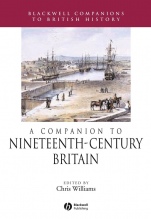
A Companion to Nineteenth–Century Britain
ISBN 9780631225799
Autor: Chris Williams
Wydawca: Wiley
Dostępność: 3-6 tygodni
Cena: 883,05 zł
Przed złożeniem zamówienia prosimy o kontakt mailowy celem potwierdzenia ceny.
ISBN13: |
9780631225799 |
ISBN10: |
063122579X |
Autor: |
Chris Williams |
Oprawa: |
Hardback |
Rok Wydania: |
2004-05-10 |
Ilość stron: |
624 |
Wymiary: |
260x182 |
Tematy: |
CV |
A Companion to Nineteenth–Century Britain presents 33 essays by expert scholars on all the major aspects of the political, social, economic, and cultural history of Britain during the late Georgian and Victorian eras. It makes sense of the fascinating new perspectives on this era that have been generated in recent years while not losing sight of broader, more enduring themes. Each essay both distils the current state of historical scholarship and assesses the directions that research is likely to take in future. All the contributions pay attention to the experiences of women as well as of men, and to regional and national variations across Britain and Ireland. Though engaged with cutting–edge theories, including postmodern and post–structuralist perspectives, the contributors avoid technical jargon and assume no prior expert knowledge. The volume is written in a clear and energetic manner, and illustrated with maps and charts where appropriate. Guides to further reading allow readers to follow chosen avenues of investigation with confidence.
List of Maps, Diagrams and Tables. Contributors. Introduction: Chris Williams (University of Wales, Swansea). Part I: Britain and the World . 1. Britain and the World Economy: Anthony Howe (University of East Anglia). 2. Britain and the European Balance of Power: John R. Davis (Kingston University). 3. Britain and Empire: Douglas M. Peers (University of Calgary). 4. The Armed Forces: Edward M. Spiers (University of Leeds). Part II: Politics and Government . 5. The Monarchy and the House of Lords: The ‘Dignified’ Parts of the Constitution: William M. Kuhn (Carthage College in Kenosha, Wisconsin). 6. The State: Philip Harling (University of Kentucky). 7. Political Leadership and Political Parties, 1800–1846: Michael J. Turner (University of Sunderland). 8. Political Leadership and Political Parties, 1846–1900: Michael J. Turner (University of Sunderland). 9. Parliamentary Reform and the Electorate: Michael S. Smith (University of California, Riverside). 10. Politics and Gender: Sarah Richardson (University of Warwick). 11. Political Thought: Gregory Claeys (Royal Holloway, University of London). Part III: Economy and Society . 12. Agriculture and Rural Society: Michael Winstanley (Lancaster University). 13. Industry and Transport: William J. Ashworth (University of Liverpool). 14. Urbanization: Simon Gunn (University of Leicester). 15. The Family: Shani D′Cruze (Manchester Metropolitan University). 16. Migration and Settlement: Ian Whyte (Lancaster University). 17. Standard of Living, Quality of Life: Jane Humphries (University of Oxford). 18. Class and the Classes: Martin Hewitt (Trinity and All Saints, University of Leeds). 19. Economic Thought: Noel Thompson (University of Wales, Swansea). Part IV: Society and Culture. 20. Religion: Mark A. Smith (University of Oxford). 21. Literacy, Learning and Education: Philip Gardner (University of Cambridge). 22. The Press and the Printed Word: Aled Jones (University of Wales, Aberystwyth). 23. Crime, Policing and Punishment: Heather Shore (University of Portsmouth). 24. Popular Leisure and Sport: Andy Croll (University of Glamorgan). 25. Health and Medicine: Keir Waddington (Cardiff University). 26. Sexuality: Lesley A. Hall (University College, London). 27. The Arts: Patricia Pulham (Queen Mary, University of London). 28. The Sciences: Iwan Rhys Morus (University of Wales, Aberystwyth). Part V: The United Kingdom . 29. Politics in Ireland: Christine Kinealy (University of Central Lancashire). 30. Economy and Society in Ireland: Christine Kinealy (University of Central Lancashire). 31. Scotland: E. W. McFarland (Glasgow Caledonian University). 32. Wales: Matthew Cragoe (University of Hertfordshire). 33. British Identities: Chris Williams (University of Wales, Swansea). Bibliography of Secondary Sources. Index
Chris Williams is Professor of Welsh History at the University of Wales, Swansea. He is an editor of the Studies in Welsh History monograph series and a committee member of Llafur, the Welsh People’s History Society. He is the author of Democratic Rhondda: Politics and Society, 1885–1951 (1996), Capitalism, Community and Conflict: The South Wales Coalfield 1898–1947 (1998), and editor (with Duncan Tanner and Deian Hopkin) of The Labour Party in Wales, 1900–2000 (2000) and (with Jane Aaron) of Postcolonial Wales (2005).
"This book is an excellent companion... It is an ideal book for anyone interested in the history of the nineteenth century." Reference Reviews "This most recent addition to the ambitious Blackwell ′Companions′ series in British history is thorough and up–to–date ... For scholars, it will become a well–thumbed historiographical source on their office shelves. Essential." Choice A Choice Outstanding Academic Title of the Year “The Companions to British History…is [an] example of how organization has made a difference in terms of informing the wider public about serious history.” H–Net Reviews
Koszyk
Książek w koszyku: 0 szt.
Wartość zakupów: 0,00 zł
Informacje


Kontakt
Gambit
Centrum Oprogramowania
i Szkoleń Sp. z o.o.
Al. Pokoju 29b/22-24
31-564 Kraków
Siedziba Księgarni
ul. Kordylewskiego 1
31-542 Kraków
+48 12 410 5991
+48 12 410 5987
+48 12 410 5989
Subskrypcje
Administratorem danych osobowych jest firma Gambit COiS Sp. z o.o. Na podany adres będzie wysyłany wyłącznie biuletyn informacyjny.
Autoryzacja płatności

Informacje na temat autoryzacji płatności poprzez PayU.

© Copyright 2012: GAMBIT COiS Sp. z o.o. Wszelkie prawa zastrzeżone.
Projekt i wykonanie: Alchemia Studio Reklamy