


Wydawcy
Katalog tematyczny
- Archeologia (109)
- Ekonomia, finanse, business (13704)
- Filozofia (1445)
- Historia (3040)
- Języki i językoznawstwo (2356)
- Lifestyle, hobby i rozrywka (475)
- Medycyna (9704)
- Nauki humanistyczne (4)
- Nauki o Ziemi i środowisku (2638)
- Nauki ścisłe (20412)
- Nauki społeczne (8486)
- Nauki techniczne (13450)
- Prawo (1696)
- Publikacje informacyjne i interdyscyplinarne (1288)
- Religia i wierzenia (917)
- Technika komputerowa (4067)
- Zdrowie, relacje międzyludzkie i rozwój osobisty (657)





Informacje szczegółowe o książce
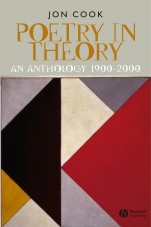
Poetry in Theory: An Anthology 1900–2000
ISBN 9780631225539
Autor: Jon Cook
Wydawca: Wiley
Dostępność: 3-6 tygodni
Cena: 645,75 zł
Przed złożeniem zamówienia prosimy o kontakt mailowy celem potwierdzenia ceny.
ISBN13: |
9780631225539 |
ISBN10: |
0631225536 |
Autor: |
Jon Cook |
Oprawa: |
Hardback |
Rok Wydania: |
2004-06-18 |
Ilość stron: |
664 |
Wymiary: |
248x179 |
Tematy: |
CS |
Poetry in Theory: An Anthology 1900–2000 brings key critical and theoretical texts from the twentieth century which have animated debates about modern poetry. It provides all the material necessary for readers to engage with these debates, and with broader questions about aesthetics, language, culture, and imagination.
Acknowledgements. Introduction. Part I: 1900–20. The Symbolism of Poetry: W.B. Yeats (1900). Three Letters: Rainer Maria Rilke (1903, 1907, 1925). Creative Writers and Daydreaming: Sigmund Freud (1908). Romanticism and Classicism: T. E. Hulme (1911). The Technical Manifesto of Futurist Literature: Filippo Marinetti (1912). Poet Yeats: Rabindrantah Tagore (1912). Robert Frost: Edward Thomas (1914). Poetry as Spoken Art: Amy Lowell (1917). The New Spirit and the Poets: Guillaume Apollinaire (1917). A Retrospect: Ezra Pound (1918). Note on Poetry: Tristan Tzara (1919). On Poetry and On Contemporary Poetry: Velimir Khlebnikov (1919/20). Tradition and the Individual Talent: T. S. Eliot (1919). D. H. Lawrence Preface to New Poems (1920). Prologue to Kora in Hell: William Carlos Williams (1920). Part II: 1921–40. General Aims and Theories: Hart Crane (1925). The Negro Artist and the Racial Mountain: Langston Hughes (1926). How are Verses Made: Vladimir Mayakovsky (1926). Science and Poetry: I. A. Richards (1926). A Survey of Modernist Poetry: Robert Graves and Laura Riding (1928). Seven Types of Ambiguity: William Empson (1930). The Poetic Process: Kenneth Burke (1931). Poetry’s Evidence and Automatic Writing: Paul Eluard and Andre Breton (1932/33). New Bearings in English Poetry: F. R. Leavis (1932). Lorca Play and the Theory of Duende: Frederico Garcia (1933). Poetry and Grammar: Gertrude Stein (1935). Poets with History and Poets Without History: Marina Tsvetaeva (1935). Modernism: Walter Benjamin (1938). The Figure a Poem Makes: Robert Frost (1939). Poetry and Abstract Thought: Paul Valery (1939). Part III: 1941–60. Three Lectures on Poetry: Martin Heidegger (1941/44/46). The Noble Rider and the Sound of Words: Wallace Stevens (1942). Feeling and Precision: Marianne Moore (1944). Poetry and Knowledge: Aime Cesaire (1945). Projective Verse: Charles Olson (1950). A Statement for Poetry: Louis Zukofsky (1950). Is There Any Poetic Writing: Roland Barthes (1953). The Concrete Universal: W. C. Wimsatt (1954). Excerpts from Seminars and Papers: Jacques Lacan (1954/55/57). What is Modern Poetry: Donald Davie (1955). Mallarme’s Experience: Maurice Blanchot (1955). The Pleasure Principle/Writing Poems: Philip Larkin (1957/64). On Lyric Poetry and Society: Theodor Adorno (1957). Closing Statement: Linguistics and Poetics: Roman Jakobson (1960). Part IV: 1961–80. What I See in the Maximus Poems: Edward Dorn (1961). Personism: A Manifesto: Frank O’Hara (1961). When the Mode of the Music Changes/Abstraction in Poetry: Allan Ginsberg (1961/62). The Poet and the City: W. H. Auden (1962). Hunting Is Not Those Heads on the Wall/State/Meant: Imamu Baraka (1964/65). A Sense of Measure: Robert Creeley (1964). The Invisible Avant–Garde: John Ashbery (1968). Closure and Anti–Closure in Modern Poetry: Barbara Herrnstein Smith (1968). Poetic Language, Poetics of Language: Gerard Genette (1969). Intentional Structure of the Romantic Image: Paul de Man (1970). The Muse of History: Derek Walcott (1974). The Ethics of Linguistics: Julia Kristeva (1974). A Modest Proposal: Hans Magnus Enzensberger (1976). Continuity in Language: Veronica Forrest–Thomson (1978). Part V: 1980–2000. The Poe–etic Effect: Soshana Felman (1980). The Dollar Value of Poetry: Charles Bernstein (1983). On Hope: Czeslaw Milosz (1983). Blood, Bread and Poetry: Adrienne Rich (1984). Prologue: The Deed of Writing: Richard Poirier (1987). Even Under the Rine of Terror: Jeremy Cronin (1988). Che cos’e la poesia: Jacques Derrida (1988). The Homosexual Lyric: Thomas Yingling (1990). Avant–Garde or Endgame: Marjorie Perloff (1991). The Woman Poet: Her Dilemma: Evan Boland (1994). The Redress of Poetry: Seamus Heaney (1995). Soul Says: Helen Vendler (1995). Chronology. Select Bibliography. Thematic Index. Index.
Jon Cook is Dean of the Faculty of Arts and Humanities at the University of East Anglia and a Senior Lecturer in the Department of American and English Literature. His published work includes Romanticism and Ideology (1981) , William Hazlitt: Selected Writings (1998) and numerous essays on Romanticism, critical and cultural theory, and contemporary writing .
"Poetry has always provided the most severe test for theory, and this rich, wide–ranging anthology shows just how fruitful the encounter between the two has been. Jon Cook’s excellent collection should prove a salutary lesson for all those who assume, utterly against the evidence, that literary theory has had nothing to say about the shape of the sentences and the texture of the verse." — Terry Eagleton , University of Manchester
Koszyk
Książek w koszyku: 0 szt.
Wartość zakupów: 0,00 zł
Informacje


Kontakt
Gambit
Centrum Oprogramowania
i Szkoleń Sp. z o.o.
Al. Pokoju 29b/22-24
31-564 Kraków
Siedziba Księgarni
ul. Kordylewskiego 1
31-542 Kraków
+48 12 410 5991
+48 12 410 5987
+48 12 410 5989
Subskrypcje
Administratorem danych osobowych jest firma Gambit COiS Sp. z o.o. Na podany adres będzie wysyłany wyłącznie biuletyn informacyjny.
Autoryzacja płatności

Informacje na temat autoryzacji płatności poprzez PayU.

© Copyright 2012: GAMBIT COiS Sp. z o.o. Wszelkie prawa zastrzeżone.
Projekt i wykonanie: Alchemia Studio Reklamy