


Wydawcy
Katalog tematyczny
- Archeologia (109)
- Ekonomia, finanse, business (13704)
- Filozofia (1445)
- Historia (3040)
- Języki i językoznawstwo (2356)
- Lifestyle, hobby i rozrywka (475)
- Medycyna (9704)
- Nauki humanistyczne (4)
- Nauki o Ziemi i środowisku (2638)
- Nauki ścisłe (20412)
- Nauki społeczne (8486)
- Nauki techniczne (13450)
- Prawo (1696)
- Publikacje informacyjne i interdyscyplinarne (1288)
- Religia i wierzenia (917)
- Technika komputerowa (4067)
- Zdrowie, relacje międzyludzkie i rozwój osobisty (657)





Informacje szczegółowe o książce
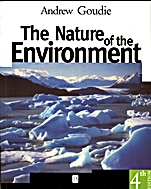
The Nature of the Environment
ISBN 9780631224631
Autor: Andrew S. Goudie
Wydawca: Wiley
Dostępność: 3-6 tygodni
Cena: 662,55 zł
Przed złożeniem zamówienia prosimy o kontakt mailowy celem potwierdzenia ceny.
ISBN13: |
9780631224631 |
ISBN10: |
0631224637 |
Autor: |
Andrew S. Goudie |
Oprawa: |
Hardback |
Rok Wydania: |
2001-05-08 |
Numer Wydania: |
4th Edition |
Ilość stron: |
560 |
Wymiary: |
240x196 |
Tematy: |
AT |
The fourth edition of this highly acclaimed text provides an up–dated examination of the natural environment of the earth at various levels, from the global to the local. Integrating the study of geomorphology, climatology, hydrology, pedology and biogeography, it considers the ways in which we both mould and are moulded by our landscape and environment. The book also presents an historical perspective, and investigates natural climatic changes, hazardous events and human impacts.
This new edition follows the same successful framework of earlier editions, with extra material, including an extra chapter on The Organic World. In addition, a list of key concepts has been added at the end of each chapter and the book now also includes points for review. With substantially more "windows", updated and expanded guides to reading, new plates, diagrams, and tables, and up–to–date examples and case studies, this fourth edition of Nature of the Environment will be welcomed by students and teachers alike.
Please visit the accompanying website at: http://www.blackwellpublishers.co.uk/goudie to view sample material from both the new edition and forthcoming instructor′s manual online.
Spis treści:
Preface.
Acknowledgements.
Part I: The Global Framework:.
1. Global Geological Background.
The Ancient Earth.
Core, Mantle and Crust.
The Nature of the Ocean Floors.
The Surface of the Land.
Earthquakes.
The Shape of the Continents.
The Question of Plates.
Microplates and Exotic Terraces.
The Earth′s Rock Types.
The Subdivisions of the Earth′s History.
Conclusions.
Key Terms and Concepts.
Points for Review.
Further Reading for Chapter 1.
2. Global Climatic Background.
A Vertical Profile Through the Atmosphere.
Global Climate.
World Patterns of Precipitation.
World Patterns of Temperature.
The Major Climatic Zones.
The Hydrological Cycle.<
br>Ocean Currents.
Ocean Atmosphere Interactions.
Climatic Change.
Causes Long–Term Climatic Change.
Sea–Level Changes.
Future Climates.
Conclusions.
Key Terms and Concepts.
Points for Review.
Further Reading for Chapter 2.
3. The Organic World.
Major Vegetation Types.
Human Modifications of Major Vegetation Types.
Floral Realms.
Faunal Realms.
The World′s Great Soil Orders.
Human Modifications of Soil.
Climatic Geomorphology: The Influence of Climate, Soil and Vegetation.
Key Terms and Concepts.
Points for Review.
Further Reading for Chapter 3.
Part II: Major World Zones:.
4. Cold Environments.
Polar Climates.
Vegetation and Wildlife.
Glacier Types.
The Formation of Glacier Ice.
How Glaciers Move.
Glacial Erosion.
Glacial Deposits.
Glacier Ice and Sea–Level Changes.
Permafrost.
Ground Ice.
Thermokarst.
Ice Segregation and Frost Heaving.
Frost Shattering and Soil Formation.
Slope Processes, Avalanches and River Regimes.
Key Terms and Concepts.
Points for Review.
Further Reading for Chapter 4.
5. The Mid–latitudes.
The Westerlies.
Cyclones and Anticyclones.
Air Masses.
Cool Temperate Climates.
Western Margin Warm Temperate Climates (The Mediterranean Type).
Eastern Margin Warm Temperate Climates.
Boreal Forest.
Deciduous Forests.
Mid–Latitude Grasslands.
Mediterranean Evergreen Woodlands.
Soils of Cool Temperate Climates.
Soils of Warm Temperate Climates.
The Impact of Climatic Change on the Landscape.
Loess Sheets.
Dry Valleys and Mis Fit Stream.
Tors.
Natural Hazards in Western Europe.
Key Terms and Concepts.
Points for Review.
Further Reading for Chapter 5.
6. Deserts.
Introduction.
What Causes Aridity?.
Desert Rainfall.
Desert Temperatures.
Past Climates in Deserts.
Desert Vegetation and Animals.
Soils and Surface Mater
ials.
Insolation and Salt Weathering.
Wind Action in Deserts.
Sand Deposition – Dunes.
The Work of Rivers.
Desert Slopes.
Dams, Reservoirs and Inter–Basin Water Transfer.
Land Degradation.
Problems of the Desert Realm.
Key Terms and Concepts.
Points for Review.
Further Reading for Chapter 6.
7. The Tropics.
The General Atmospheric Circulation.
The Wet Tropics.
Tropical Season Climates.
Monsoons.
Tropical Disturbances.
Tropical Rainforests.
Secondary Forest.
Tropical Seasonal Forest and Savannah.
Mangrove Swamps.
Coral Reefs.
Weathering of Rocks.
Slope Movements.
Some Problems of the Humid Tropics.
Key Terms and Concepts.
Points for Review.
Further Reading for Chapter 7.
Part III: Mountain and Maritime Environments:.
8. Mountains.
Introduction.
Mountain Climates.
Snow and the Snow–Line.
Mountain Vegetation.
The Timber–Line.
Alpine Tundra.
Mountain Hazards.
Changing Climates.
Key Terms and Concepts.
Points for Review.
Further Reading for chapter 8.
9. Coasts.
Coastlines.
Waves.
Barrier Beaches and Related Forms.
Tides.
Storm Surges.
Estuaries.
Coastal Dunes.
Salt Marshes.
Coast Erosion.
The Human Impact on the Coastline.
Key Terms and Concepts.
Points for Review.
Further Reading for Chapter 9.
Part IV: Landscapes and Ecosystems:.
10. Plants and Animals.
Ecology and Ecosystems.
Plants and Their Habitats.
Life in the Oceans.
Community.
Succession.
Dispersal and Migration of Plants.
Dispersal and Migration of Animals.
The Importance of Area.
Human Impact on Plants and Animals.
Domestication.
Introductions.
Pollution.
Habitat Change.
Extinction.
Conservation.
Key Terms and Concepts.
Points for Review.
Further Reading for Chapter 10.
11. Tectonic Features.
Introduction.
Volcanoes.
Intrusive Igneous Roc
ks.
Earthquakes.
Man–Made Seismic Activity.
Faults.
Folding.
Key Terms and Concepts.
Points for Review.
Further Reading for Chapter 11.
12. Slopes.
Mass Movements.
Slope Instability.
Other Processes Operating on Slopes.
Slope Forms.
Slope Development Through Time.
Key Terms and Concepts.
Points for Review.
Further Reading for Chapter 12.
13. Soils and Weathering.
Factors of Soil Formation.
Soil Profiles.
Types of Weathering.
Mechanical Weathering.
Chemical Weathering.
Accelerated Soil Erosion.
Key Terms and Concepts.
Points for Review.
Further Reading for Chapter 13.
14. The Hydrological Cycle.
Introduction.
Precipitation.
Interception.
Evapotranspiration.
Infiltration.
Surface Runoff.
Groundwater.
Streamflow and the Hydrograph.
Annual River Regimes.
Lakes.
Key Terms and Concepts.
Points for Review.
Further Reading for Chapter 14.
15. Rivers.
Introduction.
Morphometry of Drainage Basins.
Drainage Basin Patterns.
Concave Long Profiles.
Channel Cross–Section and Hydraulic Geometry.
Channel Patterns.
Flood Plains.
Terraces.
Deltas.
Stream Transport.
Rates of Fluvial Denudation.
Floods.
The Human Impact on Rivers.
Key Terms and Concepts.
Points for Review.
Further Reading for Chapter 15.
16. Cities.
Introduction.
The Climate of Cities.
Air Pollution and its Problems.
Urbanisation and River Flow.
Thermal Pollution River Water.
Soil Erosion and Sediment Yield Associated with Construction and Urbanisation.
Animals in Cities.
Key Terms and Concepts.
Points for Review.
Further Reading for Chapter 16.
Part V: Conclusion:.
17. Nature, Humans and the Environment.
Introduction.
Environmental Complexity.
Environmental Interactions.
The Importance of Scale.
The Influence of Environment on Humans.
The Human Impact.
The Ever–Chang
Koszyk
Książek w koszyku: 0 szt.
Wartość zakupów: 0,00 zł
Informacje


Kontakt
Gambit
Centrum Oprogramowania
i Szkoleń Sp. z o.o.
Al. Pokoju 29b/22-24
31-564 Kraków
Siedziba Księgarni
ul. Kordylewskiego 1
31-542 Kraków
+48 12 410 5991
+48 12 410 5987
+48 12 410 5989
Subskrypcje
Administratorem danych osobowych jest firma Gambit COiS Sp. z o.o. Na podany adres będzie wysyłany wyłącznie biuletyn informacyjny.
Autoryzacja płatności

Informacje na temat autoryzacji płatności poprzez PayU.

© Copyright 2012: GAMBIT COiS Sp. z o.o. Wszelkie prawa zastrzeżone.
Projekt i wykonanie: Alchemia Studio Reklamy