


Wydawcy
Katalog tematyczny
- Archeologia (109)
- Ekonomia, finanse, business (13704)
- Filozofia (1445)
- Historia (3040)
- Języki i językoznawstwo (2356)
- Lifestyle, hobby i rozrywka (475)
- Medycyna (9704)
- Nauki humanistyczne (4)
- Nauki o Ziemi i środowisku (2638)
- Nauki ścisłe (20412)
- Nauki społeczne (8486)
- Nauki techniczne (13450)
- Prawo (1696)
- Publikacje informacyjne i interdyscyplinarne (1288)
- Religia i wierzenia (917)
- Technika komputerowa (4067)
- Zdrowie, relacje międzyludzkie i rozwój osobisty (657)








Informacje szczegółowe o książce
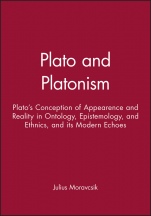
Plato and Platonism: Platos Conception of Appearence and Reality in Ontology, Epistemology, and Ethnics, and its Modern Echoes
ISBN 9780631222545
Autor: Julius Moravcsik
Wydawca: Wiley
Dostępność: 3-6 tygodni
Cena: 264,60 zł
Przed złożeniem zamówienia prosimy o kontakt mailowy celem potwierdzenia ceny.
ISBN13: |
9780631222545 |
ISBN10: |
0631222545 |
Autor: |
Julius Moravcsik |
Oprawa: |
Paperback |
Rok Wydania: |
2000-04-07 |
Ilość stron: |
356 |
Wymiary: |
227x155 |
Tematy: |
HP |
This book offers a rich and highly original treatment of Plato′s views in the areas of epistemology, ontology, and ethics. Moravcsik rightly encourages us to be open to the idea that the study of Plato is valuable not only for historical reasons, but also based on what it can offer to us in our continuing reflections on pivotal topics such as the nature of human flourishing. Moravcsik′s book is essential reading not only for those working in Greek philosophy, but also for anyone who is interested in exploring key approaches to enduring philosophical and human concerns. Susan B. Levin, Smith College.
Plato and Platonism reviews the nature and limits of Platonic interpretation. The book begins with a discussion of Plato′s conception of what a genuine rational discipline (a ′techne′) should be. The author shows how the recollection theory of understanding, the Forms as ultimate explanatory factors, and Plato′s ethics of the right human ideal, all grow out of conditions that are essential to the genuine ′technai′.
Moravcsik goes on to demonstrate how questions about the explanatory power of the Theory of Forms, mainly emerging not from naturalistic or empiricist qualms but from deep reflections on Eleatic doctrines, led to elaboration and modifications in Plato′s ontology. The author reveals that the clearest echoes of the basic Platonic explanatory pattern linking elements of reality may be seen in some of the work on the foundations of mathematics and the related concern with the Eleatic challenge, rather than the ′realism′ of general analytic philosophy. The author also shows how different Plato′s basic ethical questions are from those preoccupying modern philosophy, and what Platonistic ethics might look like today.
Students, academics and researchers will find that Moravcsik′s careful and rigorous analysis offers an understanding of what Platonism in our times would have been like. The book leads us to an appreciation of genuine Platonism, rarely discussed today.
Preface.
Introduction.
Part I: How does Reality Account for Appearances? Plato′s Notions of the Fundamental, the Good and the Intelligible:.
1. Insight and Activity.
2. The Forms: Plato′s Discovery.
3. What We Are and What We Should Be.
Part II: The Many–Splendored Nature of the Forms, and the Ontology of Order:.
4. The Parmenides: Forms and Participation Reconsidered.
5. The Eleatic–proof theory of Forms of the Sophist.
6. The Ontology of Order Reconsidered: The Divisions and the Philebus.
Part III: Platonism, Ancient and Modern:.
7. Platonism in the Philosophy of Mathematics and General Ontology.
8. Platonistic Ethics: Effecting Reorientation and Sustaining Ideals.
Bibliography.
Index.
Julius Moravcsik was educated at Harvard and Oxford and has been Professor of Philosophy at Stanford University since 1968. He was formerly president of the American Philosophical Association and the Society for Ancient Greek Philosophy, and he is the author of three books and numerous articles on ancient Greek philosophy, philosophy of language, and various aspects of value theory.
"As a historian, one may like or dislike Moravcsik′s conception of Plato′s philosophy. Yet, as a philosoper, one cannot but find it provocative. His Plato is not "the Platonist" of modern ontological debates, but neither is he so removed from our present concerns that he can only be an object of antiquarian interest. It is to be hoped that the Issues in Ancient Philosophy series will continue to publish books which similarly challenge our complacency about the adequacy of the pigeon holes in which we place the ancients." Dirk Baltzly, Mind 104, 1995
Koszyk
Książek w koszyku: 0 szt.
Wartość zakupów: 0,00 zł
Informacje


Kontakt
Gambit
Centrum Oprogramowania
i Szkoleń Sp. z o.o.
Al. Pokoju 29b/22-24
31-564 Kraków
Siedziba Księgarni
ul. Kordylewskiego 1
31-542 Kraków
+48 12 410 5991
+48 12 410 5987
+48 12 410 5989
Subskrypcje
Administratorem danych osobowych jest firma Gambit COiS Sp. z o.o. Na podany adres będzie wysyłany wyłącznie biuletyn informacyjny.
Autoryzacja płatności

Informacje na temat autoryzacji płatności poprzez PayU.

© Copyright 2012: GAMBIT COiS Sp. z o.o. Wszelkie prawa zastrzeżone.
Projekt i wykonanie: Alchemia Studio Reklamy