


Wydawcy
Katalog tematyczny
- Archeologia (109)
- Ekonomia, finanse, business (13704)
- Filozofia (1445)
- Historia (3040)
- Języki i językoznawstwo (2356)
- Lifestyle, hobby i rozrywka (475)
- Medycyna (9704)
- Nauki humanistyczne (4)
- Nauki o Ziemi i środowisku (2638)
- Nauki ścisłe (20412)
- Nauki społeczne (8486)
- Nauki techniczne (13450)
- Prawo (1696)
- Publikacje informacyjne i interdyscyplinarne (1288)
- Religia i wierzenia (917)
- Technika komputerowa (4067)
- Zdrowie, relacje międzyludzkie i rozwój osobisty (657)





Informacje szczegółowe o książce
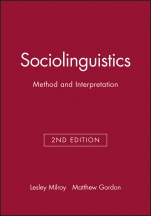
Sociolinguistics: Method and Interpretation
ISBN 9780631222255
Autor: Lesley Milroy, Matthew Gordon
Wydawca: Wiley
Dostępność: 3-6 tygodni
Cena: 232,05 zł
Przed złożeniem zamówienia prosimy o kontakt mailowy celem potwierdzenia ceny.
ISBN13: |
9780631222255 |
ISBN10: |
0631222251 |
Autor: |
Lesley Milroy, Matthew Gordon |
Oprawa: |
Paperback |
Rok Wydania: |
2002-12-28 |
Numer Wydania: |
2nd Edition |
Ilość stron: |
280 |
Wymiary: |
229x152 |
Tematy: |
CF |
Questions of how to access and analyze actual language use are central to the study of language in its social context. Sociolinguistics: Method and Interpretation presents a thorough and practical description of current sociolinguistic methodology while recognizing that methodological decisions can never be separated from questions of theory. The result is a critical account that stresses the need for the entire research process, from the initial design of the project to the interpretation of results, to be grounded in theoretically defensible positions. Milroy and Gordon show how the research paradigm established by a few influential pioneers has been fruitfully expanded by new trends. Sociolinguistics considers issues of speaker selection and data collection; social dimensions of linguistic variation; syntactic and phonological variation; and style–shifting and code–switching. This book is a vital resource for helping readers design their research and evaluate the research of others.
Preface. 1. Sociolinguistics: Models and Methods:. Data and Theory. Earlier Approaches to Linguistic Description. The American Descriptivists. Traditional Dialectology. Adaptations of the Traditional Model. Between Paradigms: Early Urban Studies. Bridging Paradigms: Adaptations of Traditional Dialectology. 2. Locating and Selecting Subjects:. Introductory. Representativeness. Some General Principles. Defining the Sampling Universe. Stratification and Sample Size. Quota and Judgment Sampling. Research Objectives and Sampling: Some Examples. Sampling and Age. Sampling and Social Class. Concluding Remarks. 3. Data Collection:. General Issues. Survey Approaches to Data Collection. Written Questionnaires. Fieldworker–Administered Surveys. Rapid and Anonymous Surveys. Sociolinguistic Interviews. The Structure and Design of the Interview. Interviews as Speech Events. Interview Strategies for Eliciting Casual Speech. Participant Observation. Balancing Fieldwork Strategies: The Belfast Project. The Community Studies. The Belfast Doorstep Survey. The Rural Hinterland Study. Research Ethics. Informed Consent. Preservation of Anonymity and Access to Recordings. Surreptitious Recording. The Researcher′s Responsibility. Conclusion. 4. Language Variation and the social World: Issues in Analysis and Interpretation:. Introductory. Social Categories and Theories of Change. Social Class and Sociolinguistic Research. Models of Social Class. Linguistic Markets. Interpreting Correlations between Language and Social Class. Sex and Gender. Introduction. Social Class and Gender. Gender and Language Variation: Some Further Issues. Ethnicity and Race. Introduction. Language, Race and Ethnicity in the United States. Language and Ethnicity in Northern Ireland. Concluding Remarks. 5. Social Relationships and Social Practices: . Introductory. The Concept of Social Network. Social Network and Community of Practice. Social Networks and Language Variation. Network Structure and Language Shift in Bilingual Communities. Weak Network Ties and Theories of Language Change. Dialect Leveling. The Sociolinguistics of Mobility: Place as a Cultural Concept. Concluding Remarks. 6. Investigating Phonological Variation:. Introductory. Identifying and Selecting Variables. Types of Phonological Variables. Choosing and Specifying Variables. Pilot Studies. Measuring Variation. Auditory Techniques. Instrumental Techniques. An Evaluation of Measurement Techniques. The Linguistic Analysis of Phonological Variables. Defining the Range of Variation. Conditioning Factors. The Relationships among Variants: Issues of Interpretation. Comments about Quantification. Counting Matters. How Many Tokens are Needed?. Use of Statistical Analysis. 7. Beyond Phonology: Analyzing and Interpreting Higher Level Variation:. Introductory. Data Collection Issues. Grammatical Variables and Historical Linguistics. Syntactic Analysis and the Sociolinguistic Variable. Some Early Work. The Principle of Accountability and the Envelope of Variation. Semantic Equivalence and the Discourse Context. Variationist Analysis and Syntactic Theory. Concluding Remarks. 8. Style–shifting and Code–Switching:. Introductory. Style as a Response to Situation. Stylistic Variation as a Function of Attention Paid to Speech. Style as Audience Design. Style as Initiative and Strategic. Code–switching. Introductory. “Allocational” and “Interactional” Paradigms. Language Choice and Code–switching: Three Case Studies. Bilingual Conversations. Concluding Remarks. 9. Epilogue. References. Index.
Lesley Milroy is Professor of Linguistics at the University of Michigan. She is the author of numerous books and articles, including Authority in Language (third edition, 1999) and Language and Social Networks (second edition, Blackwell 1987). Matthew Gordon is Assistant Professor of English at the University of Missouri–Columbia. He is the author of Small–Town Values, Big–City Vowels: A Study of the Northern Cities Shift in Michigan (2001).
‘Milroy and Gordon give us the first comprehensive survey of research methods that takes in the breadth and scope of sociolinguistics as it has come to maturity. They relate analytic methods to research goals and always keep an eye on matters of interpretation and evaluation that give meaning to quantitative and statistical results. This book is a valuable resource not only for students but also for experienced researchers.’ J. K. Chambers, University of Toronto <!––end––> ‘Given the accelerating, visible growth of sociolinguistics, it is surprising that there are practically no books dedicated to methods. This is a welcome exception. But it is more than a discussion of techniques; it is firmly grounded in current sociolinguistic theory. The combination of an experienced fieldworker and analyst, and an up–and–coming scholar has resulted in one of the most useful texts in variation studies to be published in the last decade.’ Walt Wolfram, North Carolina State University
Koszyk
Książek w koszyku: 0 szt.
Wartość zakupów: 0,00 zł
Informacje


Kontakt
Gambit
Centrum Oprogramowania
i Szkoleń Sp. z o.o.
Al. Pokoju 29b/22-24
31-564 Kraków
Siedziba Księgarni
ul. Kordylewskiego 1
31-542 Kraków
+48 12 410 5991
+48 12 410 5987
+48 12 410 5989
Subskrypcje
Administratorem danych osobowych jest firma Gambit COiS Sp. z o.o. Na podany adres będzie wysyłany wyłącznie biuletyn informacyjny.
Autoryzacja płatności

Informacje na temat autoryzacji płatności poprzez PayU.

© Copyright 2012: GAMBIT COiS Sp. z o.o. Wszelkie prawa zastrzeżone.
Projekt i wykonanie: Alchemia Studio Reklamy