


Wydawcy
Katalog tematyczny
- Archeologia (109)
- Ekonomia, finanse, business (13704)
- Filozofia (1445)
- Historia (3040)
- Języki i językoznawstwo (2356)
- Lifestyle, hobby i rozrywka (475)
- Medycyna (9704)
- Nauki humanistyczne (4)
- Nauki o Ziemi i środowisku (2638)
- Nauki ścisłe (20412)
- Nauki społeczne (8486)
- Nauki techniczne (13450)
- Prawo (1696)
- Publikacje informacyjne i interdyscyplinarne (1288)
- Bibliotekoznawstwo, informacja naukowa i muzealnictwo (433)
- Encyklopedie i leksykony (181)
- Informacja naukowa (88)
- Zagadnienia interdyscyplinarne (391)
- Religia i wierzenia (917)
- Technika komputerowa (4067)
- Zdrowie, relacje międzyludzkie i rozwój osobisty (657)





Informacje szczegółowe o książce
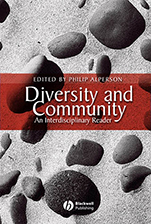
Diversity and Community: An Interdisciplinary Reader
ISBN 9780631219460
Autor: Philip Alperson
Wydawca: Wiley
Dostępność: 3-6 tygodni
Cena: 577,50 zł
Przed złożeniem zamówienia prosimy o kontakt mailowy celem potwierdzenia ceny.
ISBN13: |
9780631219460 |
ISBN10: |
0631219463 |
Autor: |
Philip Alperson |
Oprawa: |
Hardback |
Rok Wydania: |
2002-11-08 |
Ilość stron: |
368 |
Wymiary: |
235x160 |
Tematy: |
GTS |
Diversity and Community: An Interdisciplinary Reader is a collection of newly–commissioned essays that explore the notion of community in its many theoretical, practical, and cultural manifestations. The book examines the nature of community, the relation of individual and group identity to community norms and values, and the possibilities for cross–cultural understanding. Throughout, the volume deals with issues confronting many diverse communities including African, African–American, Asian–American, Native American, Latin–American, Anglo– and Franco–Canadian, Canadian Aboriginal, Japanese, gay and lesbian, computer–mediated, and counter–culture communities.Including contributions from thinkers such as Martha Nussbaum, Jean Bethke Elsthain, D.A. Masolo, Mary Hawkesworth, Lewis Gordon, Maria Lugones, Crispin Sartwell, Duane Champagne, and Frank Cunningham, as well as work by several new theorists, this book is a solid, comprehensive investigation into an important issue.
List of Contributors. Preface. Introduction: Diversity and Community: Philip Alperson (Temple University). Part I: Community and Its Contestations:. 1. Communities and Community: Critique and Retrieval: Jean Bethke Elsthain (University of Chicago) and Christopher Beem (Johnson Foundation). 2. Community at the Margin: Crispin Sartwell (Maryland Institute College of Art). 3. Impure Communities: Maria Lugones (SUNY–Binghampton). 4. Identities: The Dynamical Dimensions of Diversity: Chuck Dyke (Temple University) and Carl Dyke (Methodist College). 5. From Village to Global Contexts: Ideas, Types, and the Making of Communities: D. A. Masolo (University of Louisville). 6. Obligation Across Generations: A Consideration in the Understanding of Community Formation: Lewis R. Gordon (Brown University). Part II: Community, Constitutive Identities, and Resisting Subjects:. 7. Citizenship or Transgression?: Dilemmas of the US Movement for Lesbian/Gay Rights: Arlene Stein (Rutgers University). 8. Diversity, Inequality, and Community: African Americans and People of Color in the United States: J. Blaine Hudson (University of Louisville). 9. Renewing American Indian Nations: Cosmic Communities and Spiritual Autonomy: Duane Champagne (University of California at Los Angeles). 10. Nations and Nationalism: The Case of Canada/Quebec: Frank Cunningham (University of Toronto). 11. Love, Care, and Women’s Dignity: The Family as a Privileged Community: Martha Nussbaum (University of Chicago). 12. Community and Society, Melancholy and Sociopathy: Osborne Wiggins (University of Louisville) and Michael A. Schwartz (Johns Hopkins University School of Medicine). Part III: Community, Culture, and Education:. 13. The Role of Art in Sustaining Communities: Marcia Muelder Eaton (University of Minnesota). 14. Images of Community in American Popular Culture: Eileen John (University of Louisville) and Nancy Potter (University of Louisville). 15. Virtual Communities: Chinatowns Made in America: Gary Y. Okihiro (Columbia University). 16. Villages, Local and Global: Observations on Computer–Mediated and Geographically Situated Communities: Samuel Oluoch Imbo (Hamline University). 17. The University as a Universe of Communities: Mary Hawkesworth (Rutgers University). Index.
Philip Alperson is Professor of Philosophy at Temple University. He is the editor of several books including The Philosophy of the Visual Arts (1992), What Is Music? An Introduction to the Philosophy of Music (1994), and Musical Worlds: New Directions in the Philosophy of Music (1998). He is also the editor of The Journal of Aesthetics and Art Criticism.
"A rich and wonderfully varied collection. These compelling essays – fine examples of clear, politically engaged theorizing – explore many dimensions of community and communal change. Further, the authors challenge themselves and their readers to imagine concrete actions and policies that might turn their visions of truly diverse communities into reality." Martha Ackelsberg, Smith College <!––end––> "This significant and original collection of essays enables scholars from a wide range of disciplines to explore a set of vexed yet centrally important questions about the meanings of community. Alperson has edited an impressively coherent volume whose authors refuse facile formulations, and instead develop insightful and often profound analyses of the ideals and realities of community. This is a must–read book." Judith Gerson, Rutgers University
Koszyk
Książek w koszyku: 0 szt.
Wartość zakupów: 0,00 zł
Informacje


Kontakt
Gambit
Centrum Oprogramowania
i Szkoleń Sp. z o.o.
Al. Pokoju 29b/22-24
31-564 Kraków
Siedziba Księgarni
ul. Kordylewskiego 1
31-542 Kraków
+48 12 410 5991
+48 12 410 5987
+48 12 410 5989
Subskrypcje
Administratorem danych osobowych jest firma Gambit COiS Sp. z o.o. Na podany adres będzie wysyłany wyłącznie biuletyn informacyjny.
Autoryzacja płatności

Informacje na temat autoryzacji płatności poprzez PayU.

© Copyright 2012: GAMBIT COiS Sp. z o.o. Wszelkie prawa zastrzeżone.
Projekt i wykonanie: Alchemia Studio Reklamy