


Wydawcy
Katalog tematyczny
- Archeologia (109)
- Ekonomia, finanse, business (13704)
- Filozofia (1445)
- Historia (3040)
- Języki i językoznawstwo (2356)
- Lifestyle, hobby i rozrywka (475)
- Medycyna (9704)
- Nauki humanistyczne (4)
- Nauki o Ziemi i środowisku (2638)
- Nauki ścisłe (20412)
- Nauki społeczne (8486)
- Edukacja (229)
- Kryminologia, opieka spełeczna (284)
- Obronność (10)
- Polityka (1389)
- Psychologia (777)
- Socjologia (410)
- Społeczeństwo i kultura (187)
- Nauki techniczne (13450)
- Prawo (1696)
- Publikacje informacyjne i interdyscyplinarne (1288)
- Religia i wierzenia (917)
- Technika komputerowa (4067)
- Zdrowie, relacje międzyludzkie i rozwój osobisty (657)





Informacje szczegółowe o książce
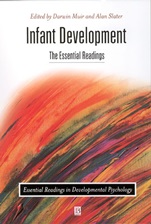
Infant Development: The Essential Readings
ISBN 9780631217473
Autor: Darwin Muir, Alan Slater
Wydawca: Wiley
Dostępność: 3-6 tygodni
Cena: 284,55 zł
Przed złożeniem zamówienia prosimy o kontakt mailowy celem potwierdzenia ceny.
ISBN13: |
9780631217473 |
ISBN10: |
0631217479 |
Autor: |
Darwin Muir, Alan Slater |
Oprawa: |
Paperback |
Rok Wydania: |
2000-02-12 |
Ilość stron: |
404 |
Wymiary: |
228x152 |
Tematy: |
JC |
Discoveries by researchers into infant development are some of the most exciting and important to be found in the study of human development, and they have been the subject of intense speculation and theorizing. Despite the fact that, as adults, we can remember little about the times and places when we acquired knowledge in infancy, that information does remain with us for the rest of our lives. Infant Development: The Essential Readings introduces the reader to the field of infancy research and to some of the current, lively controversies within this area.
Each of the articles within the reader has been chosen to reflect the dynamic, changing nature of the subject and the diversity of research and thinking within the are of infant development. The articles have also been selected to be accessible to students at all levels. These articles are all by leading infancy researchers, and they are introduced and contextualized by the editors. Suggestions for further reading are made to give students an ideal starting point for exploration of the key topic in infant development.
Spis treści:
Preface.
Acknowledgments.
Introduction.
Infancy Research: History and Methods: Darwin Muir and Alan Slater.
Part I: Theoretical Issues.
Introduction.
Why Do Infants Do What They Do?.
Introduction.
1. Shifting the Focus From What to Why: C. Rovee–Collier.
The Origins of Knowledge: Nature versus Nurture.
Introduction.
2. Nativism, Empiricism, and the Origins of Knowledge: E.S. Spelke.
Connectionist Modeling.
Introduction.
3. Connectionist Modeling and Infant Development: D.Mareschal.
Part II: Sensation and Perception.
Introduction.
Fetal Sensitivity to Touch.
Introduction.
4. Maturation of Human Fetal Responses to Vibroacoustic Stimulation: B.S. Kisilevsky, D.W. Muir, and J.A. Low.
Early Visual perception.
Introduction.
5. Visual perception in the Young Infant: Early Orga
nization and Rapid Learning: A. Slater.
Intermodal Perception.
Introduction.
6. Increasing Specificity in the Development of Intermodal Perception: L. Bahrick. Social Perception.
Introduction.
7. Look at Me: Five–Month–Old Infants′ Sensitivity to Very Small Deviations in Eye–Gaze During Social Interactions: L.A. Symons, S.M. Hains, and D.W. Muir.
Speech Perception.
Introduction.
8. Becoming a Native Listener: J.F. Werker.
Part III: Cognitive Development.
Introduction.
Newborn Imitation.
Introduction.
9a. Imitation of Facial and Manual Gestures by Human Neonates: A.N. Meltzoff, and M.K Moore.
9b. Resolving the Debate about Early Imitation: A.N. Meltzoff, and M.K. Moore.
Infant Counting.
Introduction.
10. Addition and Subtraction by Human Infants: K. Wynn.
Learning About the Physical World.
Introduction.
11. How Do Infants learn About the Physical World? R. Baillargeon.
The A–not–B Error.
Introduction.
12. Why Do Infants Make A–not–B Errors in a Search Task, Yet Show Memory for the Location of Hidden Objects in a Nonsearch Task? A. Ahmed, and T. Ruffman.
Predicting Later Intelligence.
Introduction.
13. Why Does Infant Attention Predict Adolescent Intelligence? M. Sigman, S.E. Cohen, and L. Beckwith.
Part IV: Social Development and Communication:.
Introduction.
Infant–Directed Speech.
Introduction.
14. Infant Responses to Prototypical melodic Contours in Parental Speech: M. Papoušek, M.H. Bornstein, C. Nuzzo, H. Papoušek, and D. Symmes.
15. Early Word Comprehension in 6–Moth–Olds: R. Tincoff, and P.W. Jusczyk.
Social Referencing.
Introduction.
16. Maternal Emotional Signaling: Its Effect on the Visual Cliff Behavior of 1–Year–Olds: J.F. Sorce, R.N. Emde, J. Campos, and M.D. Klinnert.
Infant Understanding of Others′ Intentions and Theory of Mind.
Introdu
ction.
17. Fourteen–Through 18–Month–Old Infants.
Differentially Imitate Intentional and Accidental Actions: M. Carpenter, N. Akhtar, and M. Tomasello.
Social Attachments.
Introduction.
18. Stability and Transmission of Attachment across Three Generations: D. Benoit, and K. Parker.
Infants with Autism.
Introduction.
19. An Experimental Investigation of Social–Cognitive Abilities in Infants with Autism: Clinical Implications: T. Charman, J. Swettenham, S. Baron–Cohen, A. Cox, G. Baird, and A. Drew.
Index.
Nota biograficzna:
Darwin Muir is Professor of Psychology at Queen′s University, Ontario.
Alan Slater is Senior Lecturer in the School of Psychology at the University of Exeter.
They are co–editors of the recently published Blackwell Reader in Developmental Psychology.
Okładka tylna:
Discoveries by researchers into infant development are some of the most exciting and important to be found in the study of human development, and they have been the subject of intense speculation and theorizing. Despite the fact that, as adults, we can remember little about the times and places when we acquired knowledge in infancy, that information does remain with us for the rest of our lives. Infant Development: The Essential Readings introduces the reader to the field of infancy research and to some of the current, lively controversies within this area.
Each of the articles within the reader has been chosen to reflect the dynamic, changing nature of the subject and the diversity of research and thinking within the are of infant development. The articles have also been selected to be accessible to students at all levels. These articles are all by leading infancy researchers, and they are introduced and contextualized by the editors. Suggestions for further reading are made to give students an ideal starting point for exploration of the ke
y topic in infant development.
Koszyk
Książek w koszyku: 0 szt.
Wartość zakupów: 0,00 zł
Informacje


Kontakt
Gambit
Centrum Oprogramowania
i Szkoleń Sp. z o.o.
Al. Pokoju 29b/22-24
31-564 Kraków
Siedziba Księgarni
ul. Kordylewskiego 1
31-542 Kraków
+48 12 410 5991
+48 12 410 5987
+48 12 410 5989
Subskrypcje
Administratorem danych osobowych jest firma Gambit COiS Sp. z o.o. Na podany adres będzie wysyłany wyłącznie biuletyn informacyjny.
Autoryzacja płatności

Informacje na temat autoryzacji płatności poprzez PayU.

© Copyright 2012: GAMBIT COiS Sp. z o.o. Wszelkie prawa zastrzeżone.
Projekt i wykonanie: Alchemia Studio Reklamy