


Wydawcy
Katalog tematyczny
- Archeologia (109)
- Ekonomia, finanse, business (13704)
- Filozofia (1445)
- Historia (3040)
- Języki i językoznawstwo (2356)
- Lifestyle, hobby i rozrywka (475)
- Medycyna (9704)
- Nauki humanistyczne (4)
- Nauki o Ziemi i środowisku (2638)
- Nauki ścisłe (20412)
- Nauki społeczne (8486)
- Edukacja (229)
- Kryminologia, opieka spełeczna (284)
- Obronność (10)
- Polityka (1389)
- Psychologia (777)
- Socjologia (410)
- Społeczeństwo i kultura (187)
- Nauki techniczne (13450)
- Prawo (1696)
- Publikacje informacyjne i interdyscyplinarne (1288)
- Religia i wierzenia (917)
- Technika komputerowa (4067)
- Zdrowie, relacje międzyludzkie i rozwój osobisty (657)





Informacje szczegółowe o książce
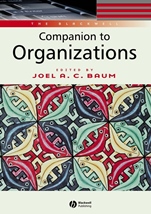
The Blackwell Companion to Organizations
ISBN 9780631216957
Autor: Joel A. C. Baum
Wydawca: Wiley
Dostępność: 3-6 tygodni
Cena: 280,35 zł
Przed złożeniem zamówienia prosimy o kontakt mailowy celem potwierdzenia ceny.
ISBN13: |
9780631216957 |
ISBN10: |
0631216952 |
Autor: |
Joel A. C. Baum |
Oprawa: |
Paperback |
Rok Wydania: |
2005-05-04 |
Ilość stron: |
992 |
Wymiary: |
244x168 |
Tematy: |
JB |
Drawing on the research of more than 50 influential international scholars, this extensive interdisciplinary survey consolidates and evaluates what is known and not known about organizations, and critically examines how we learn about and study them.
The contributions are grouped under ten headings, representing the most important contemporary perspectives on organizations, including networks, ecology and technology, each of which is covered at three levels of organization: intraorganizational, organizational, and interorganizational. For ease of use, each chapter is structured around five common elements: review and evaluation of the literature on that topic; contemporary issues and debates; central questions that remain unanswered; new and emerging directions for research; and connections across levels of organizations.
For newcomers to organization studies, this up–to–date resource provides a foundation for navigating the field and an overview of its complexities. For more experienced students and scholars, it offers a rich source of inspiration and ideas, and clear guidance for designing and carrying out exemplary research.
Spis treści:
List of Figures.
List of Tables.
Contributors.
Preface: Howard E. Aldrich.
Acknowledgments.
Companion to Organizations: An Introduction: Joel A. C. Baum (University of Toronto) and Timothy J. Rowley (University of Toronto).
Part I: Intraorganizational Level:.
1. Intraorganizational Institutions: Kimberly D. Elsbach (University of California, Davis).
2. Intraorganizational Networks: Holly Raider (INSEAD) and David J. Krackhardt (Carnegie Mellon University.
3. Intraorganizational Ecology: Charles Galunic (INSEAD) and John M. Weeks (INSEAD).
4. Intraorganizational Evolution: Massimo Warglien (University of Venezia).
5. Intraorganizational Cognition and Interpretation: C. Marlena Fiol (University of Colorado at Denver).
6. Intraorganizational Power
and Dependence: Daniel J. Brass (University of Kentucky).
7. Intraorganizational Technology: Melissa Schilling (University of Boston).
8. Intraorganizational Learning: Linda Argote (Carnegie Mellon University) and Ron Ophir (York University).
9. Intraorganizational Complexity and Computation: Kathleen Carley (Carnegie Mellon University).
10. Intraorganizational Economics: Edward Zajac (Northwester University) and James Westphal (University of Texas, Austin).
Part II: Organizational Level:.
11. Organizational Institutions: Donald A. Palmer (University of California, Davis) and Nicole W. Biggart (University of California, Davis).
12. Organizational Networks: Ranjay Gulati (Northwestern University), Dania Dialdin (Erasmus University) and Lihua Wang (Columbia University).
13. Organizational Ecology: Joel A. C. Baum (University of Toronto) and Terry L. Amburgey (University of Toronto).
14. Organizational Evolution: Terry L. Amburgey (University of Toronto) and Jitendra V. Singh (University of Pennsylvania).
15. Organizational Cognition and Interpretation: Theresa K. Lant (New York University).
16. Organizational Power and Dependence: William Ocasio (Northwestern University).
17. Organizational Technology: Michael L. Tushman (Harvard Business School) and Wendy Smith (Harvard Business School).
18. Organizational Learning: Martin Schulz (University of Washington).
19. Organizational Complexity and Computation: Kathleen M. Eisenhardt (Stanford University) and Mahesh Bhatia (Stanford University).
20. Organizational Economics: Brian S. Silverman (Harvard Business School).
Part III: Interorganizational Level:.
21. Interorganizational Institutions: David Strang (Cornell University) and Wesley Sine (University of Maryland Business School).
22. Interorganizational Networks: Wayne E. Baker (University of Michigan Business School) and Robert R. Faulkner (University of Massachusetts).
23. Interorganizational Ecol
ogy: Haygreeva Rao (Northwestern University).
24. Interorganizational Evolution: Henrich R. Greve (Norwegian School of Management).
25. Interorganizational Cognition and Interpretation: Joseph Porac (New York University) and Yuri Mishina (Michighan State University).
26. Interorganizational Power and Dependence: Mark Mizruchi (University of Michigan) and Mina Yoo (University of Washington Business School).
27. Interorganizational Technology: Toby E. Stuart (Columbia University).
28. Interorganizational Learning: Paul Ingram (Columbia University).
29. Interorganizational Complexity and Computation: Olav Sorenson (University of California at Los Angeles).
30. Interorganizational Economics: Arjen van Witteloostuijn (University of Groningen).
Part IV: Organizational Epistemology and Research Methods:.
31. Updating Organizational Epistemology: Jane Azevedo (Formerly Sunshine Coast University College).
32. Contemporary Debates in Organizational Epistemology: Mihnea C. Moldoveanu (University of Toronto) and Joel A. C. Baum (University of Toronto).
33. Model–Centered Organizational Epistemology: Bill McKelvey (University of California at Los Angeles).
34. Survey Research Methods: David Knoke (University of Minnesota), Peter V. Marsden (Harvard University) and Arne Kallebert (University of North Carolina at Chapel Hill).
35. Archival Research Methods: John Mohr (University of California at Santa Barbara) and Marc Ventresca (University of Oxford).
36. Simulation Research Methods: Kevin Dooley (Arizona State University).
37. Grounded Theory Research Methods: Deborah Dougherty (Rutgers University).
38. Field Research Methods: Andrew H. Van de Ven (University of Minnesota) and M. Scott Poole (Texas A&M University).
Appendix. Glossary of Organizational Epistemology Terms: Bill McKelvey (University of California at Los Angeles).
Index.
Nota biograficzna:
Joel A. C. Baum is Canadian
National Chair in Strategy and Organization at the Rotman School of Management, University of Toronto. His research has been published in a wide range of prestigious management and social science journals. He is a member of the editorial boards of Administrative Science Quarterly and Academy of Management Journal, Editor–in–Chief of Advances in Strategic Management, and founding co–editor of Strategic Organization – SO!.
Okładka tylna:
Drawing on the research of more than 50 influential international scholars, this extensive interdisciplinary survey consolidates and evaluates what is known and not known about organizations, and critically examines how we learn about and study them.
The contributions are grouped under ten headings, representing the most important contemporary perspectives on organizations, including networks, ecology and technology, each of which is covered at three levels of organization: intraorganizational, organizational, and interorganizational. For ease of use, each chapter is structured around five common elements: review and evaluation of the literature on that topic; contemporary issues and debates; central questions that remain unanswered; new and emerging directions for research; and connections across levels of organizations.
For newcomers to organization studies, this up–to–date resource provides a foundation for navigating the field and an overview of its complexities. For more experienced students and scholars, it offers a rich source of inspiration and ideas, and clear guidance for designing and carrying out exemplary research.
Koszyk
Książek w koszyku: 0 szt.
Wartość zakupów: 0,00 zł
Informacje


Kontakt
Gambit
Centrum Oprogramowania
i Szkoleń Sp. z o.o.
Al. Pokoju 29b/22-24
31-564 Kraków
Siedziba Księgarni
ul. Kordylewskiego 1
31-542 Kraków
+48 12 410 5991
+48 12 410 5987
+48 12 410 5989
Subskrypcje
Administratorem danych osobowych jest firma Gambit COiS Sp. z o.o. Na podany adres będzie wysyłany wyłącznie biuletyn informacyjny.
Autoryzacja płatności

Informacje na temat autoryzacji płatności poprzez PayU.

© Copyright 2012: GAMBIT COiS Sp. z o.o. Wszelkie prawa zastrzeżone.
Projekt i wykonanie: Alchemia Studio Reklamy