


Wydawcy
Katalog tematyczny
- Archeologia (109)
- Ekonomia, finanse, business (13704)
- Filozofia (1445)
- Historia (3040)
- Języki i językoznawstwo (2356)
- Lifestyle, hobby i rozrywka (475)
- Medycyna (9704)
- Nauki humanistyczne (4)
- Nauki o Ziemi i środowisku (2638)
- Nauki ścisłe (20412)
- Nauki społeczne (8486)
- Edukacja (229)
- Kryminologia, opieka spełeczna (284)
- Obronność (10)
- Polityka (1389)
- Psychologia (777)
- Socjologia (410)
- Społeczeństwo i kultura (187)
- Nauki techniczne (13450)
- Prawo (1696)
- Publikacje informacyjne i interdyscyplinarne (1288)
- Religia i wierzenia (917)
- Technika komputerowa (4067)
- Zdrowie, relacje międzyludzkie i rozwój osobisty (657)





Informacje szczegółowe o książce
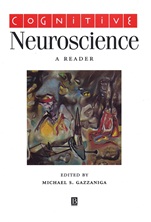
Cognitive Neuroscience: A Reader
ISBN 9780631216605
Autor: Michael S. Gazzaniga
Wydawca: Wiley
Dostępność: 3-6 tygodni
Cena: 323,40 zł
Przed złożeniem zamówienia prosimy o kontakt mailowy celem potwierdzenia ceny.
ISBN13: |
9780631216605 |
ISBN10: |
063121660X |
Autor: |
Michael S. Gazzaniga |
Oprawa: |
Paperback |
Rok Wydania: |
2000-04-30 |
Ilość stron: |
540 |
Wymiary: |
251x179 |
Tematy: |
JC |
Cognitive Neuroscience: A Reader provides the first definitive collection of readings in this burgeoning area of study. Michael S. Gazzaniga has brought together papers ranging from the earliest articles discussing brain plasticity through to papers recently published in the area of executive functioning.
The Reader is divided into distinct sections such as the History of Cognitive Neuroscience, Methods, Language and Unconscious Processing. Each of these sections contain four or five representative articles by eminent researchers that illustrate important methodological, empirical and theoretical issues. The sections are both introduced and contextualized by the author, and a selection of further reading is also provided.
Cognitive Neuroscience: A Reader will give professors not only a comprehensive reference volume for their own use, but also an ideal text to recommend to students.
Spis treści:
Preface.
Acknowledgments.
Part I: History and Methods of CNS:.
1. The Birth of the Cognitive Neuroscience Institute: M. S. Gazzaniga.
2. Perspectives on Cognitive Neuroscience: P. S. Churchland and T. J. Sejnowski.
3. Electrical and Magnetic Brain Recordings: S. A. Hillyard.
4. Behind the Scenes of Functional Brain Imaging: M. E. Raichle.
Part II: Perception:.
5. Exploration of the Primary Visual Cortex: D. H. Hubel.
6. The Parietal System and Some Higher Brain Functions: Vernon B. Mountcastle.
7. The Visual Pathways Mediating Perception and Prehension: M. A. Goodale, L. S. Jakobson and P. Servos.
8. Neural Mechanisms for Forming a Perceptual Decision: C. D. Salzman and W. T. Newsome.
9. James J. Gibson – An appreciation: K. Nakayama.
Part III: Attention:.
10. Attentional networks: M. I. Posner and S. Dehaene.
11. Attentional Resolution and the Locus of Visual Awareness: S. He, P. Cavanagh and J. Intriligator.
12. Information–Processing of Visual
–Stimuli in an Extinguished Field: B. T. Volpe, J. E. Ledoux and M. S. Gazzaniga.
13. Negative Priming Between Pictures and Words in a Selective Attention Task – Evidence for Semantic Processing of Ignored Stimuli: S. P. Tipper and J. Driver.
Part IV: Imagery:.
14. Mental Rotation of Three–Dimensional Objects: R. N. Shepard, and J. Metzler.
15. Unilateral Neglect of Representational Space: E. Bisiach, & C. Luzzatti,.
16. Topographical Representations of Mental Images in Primary Visual Cortex: S. M. Kosslyn, W. L. Thompson, I. J. Kim & N. M. Alpert.
Part V: Plasticity and Development:.
17. The Effect of Crossing Nerves to Antagonistic Muscles in the Hind Limb of the Rat: R. W. Sperry.
18. Spatial Integration and Cortical Dynamics: C. D. Gilbert, A. Das, M. Ito, M. Kapadia and G. Westheimer.
19. Cortical Mechanisms of Cognitive Development: Mark H. Johnson.
Part VI: Memory:.
20. Loss of Recent Memory after Bilateral Hipposcampal Lesions: W. B. Scoville and B. Milner.
21. Episodic Memory, Semantic Memory, and Amnesia: L. R. Squire and S. M. Zola.
22. Working Memory – The Interface Between Memory and Cognition: A. Baddeley.
23. Understanding Implicit Memory: A Cognitive Neuroscience Approach: D. L. Schacter.
Part VII: Action and Executive Function:.
24. Cognitive Neurophysiology of the Motor Cortex: A. P. Georgopoulos, Masato Taira, Alexander Lukashin.
25. Vision for the Control of Movement: R. H. Wurtz.
26. Combining Versus Gating Motor Programs: Differential Roles for Cerebellum and Basal Ganglia?: W. T. Thach, J. W. Mink, H. P. Goodkin, & J. G. Keating.
27. Attention to Action: Willed and Automatic Control of Behavior: D. A. Norman and T. Shallice.
28. Architecture of the Prefrontal Cortex and the Central Executive: P. S. Goldman–Rakic.
Part VIII: Language:.
29. Category–Specific Naming Deficit Following Cer
ebral Infarction: J. Hart, R. S. Berndt, and A. Caramazza.
30. Right–Hemisphere Language Following Brain Bisection – A 20–Year Perspective: M. S. Gazzaniga.
31. Current Thinking on Language Structures: Marta Kutas.
Part IX: Evolution:.
32. Why Does the Brain Have So Many Visual Areas?: J. H. Kaas.
33. Antibodies and Learning: Selection versus Instruction: Jerne, Niels and Kaj.
34. The Argument From Animals to Humans in Cognitive Neuroscience: T. M. Preuss.
Index.
Nota biograficzna:
Michael S. Gazzaniga founded and presides over the Cognitive Neuroscience Institute and is currently the David T. McGalughlin Distinguished Professor at Dartmouth College. He has written and edited many books in the field of Cognitive Neuroscience, his research focussing on split–brain patients.
Okładka tylna:
Cognitive Neuroscience: A Reader provides the first definitive collection of readings in this burgeoning area of study. Michael S. Gazzaniga has brought together papers ranging from the earliest articles discussing brain plasticity through to papers recently published in the area of executive functioning.
The Reader is divided into distinct sections such as the History of Cognitive Neuroscience, Methods, Language and Unconscious Processing. Each of these sections contain four or five representative articles by eminent researchers that illustrate important methodological, empirical and theoretical issues. The sections are both introduced and contextualized by the author, and a selection of further reading is also provided.
Cognitive Neuroscience: A Reader will give professors not only a comprehensive reference volume for their own use, but also an ideal text to recommend to students.
Koszyk
Książek w koszyku: 0 szt.
Wartość zakupów: 0,00 zł
Informacje


Kontakt
Gambit
Centrum Oprogramowania
i Szkoleń Sp. z o.o.
Al. Pokoju 29b/22-24
31-564 Kraków
Siedziba Księgarni
ul. Kordylewskiego 1
31-542 Kraków
+48 12 410 5991
+48 12 410 5987
+48 12 410 5989
Subskrypcje
Administratorem danych osobowych jest firma Gambit COiS Sp. z o.o. Na podany adres będzie wysyłany wyłącznie biuletyn informacyjny.
Autoryzacja płatności

Informacje na temat autoryzacji płatności poprzez PayU.

© Copyright 2012: GAMBIT COiS Sp. z o.o. Wszelkie prawa zastrzeżone.
Projekt i wykonanie: Alchemia Studio Reklamy