


Wydawcy
Katalog tematyczny
- Archeologia (109)
- Ekonomia, finanse, business (13704)
- Filozofia (1445)
- Historia (3040)
- Języki i językoznawstwo (2356)
- Lifestyle, hobby i rozrywka (475)
- Medycyna (9704)
- Nauki humanistyczne (4)
- Nauki o Ziemi i środowisku (2638)
- Nauki ścisłe (20412)
- Nauki społeczne (8486)
- Nauki techniczne (13450)
- Prawo (1696)
- Publikacje informacyjne i interdyscyplinarne (1288)
- Religia i wierzenia (917)
- Technika komputerowa (4067)
- Zdrowie, relacje międzyludzkie i rozwój osobisty (657)





Informacje szczegółowe o książce
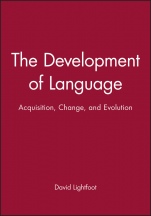
The Development of Language: Acquisition, Change, and Evolution
ISBN 9780631210603
Autor: David Lightfoot
Wydawca: Wiley
Dostępność: 3-6 tygodni
Cena: 285,60 zł
Przed złożeniem zamówienia prosimy o kontakt mailowy celem potwierdzenia ceny.
ISBN13: |
9780631210603 |
ISBN10: |
0631210601 |
Autor: |
David Lightfoot |
Oprawa: |
Paperback |
Rok Wydania: |
1998-11-23 |
Ilość stron: |
300 |
Wymiary: |
229x152 |
Tematy: |
CF |
How and why do languages change over time? Could the way an individual child develops affect aggregate language change? What do the mechanisms of change tell us about the evolution of language in our species? To answer these questions, David Lightfoot looks closely at young children. A child develops a grammar on exposure to some triggering experience. A small perturbation in the trigger may entail a different grammar in the next population of speakers, with dramatic effects. This "sensitive dependence on initial conditions" is the key to explaining how languages change, and why they change in fits and starts. The "cue–based" approach to language acquisition presented here is a radical departure from formal models of language learning. Lightfoot challenges conventional understanding by showing that language change is essentially contingent – unpredictable but explainable; and he contests how far natural selection enables us to understand the evolution of the language faculty in the species.
Foreword. Part I: Introduction: . 1. Progress or Degeneration?. 2. The Records, our Witnesses. 3. Lack of Change and Historical Explanation. 4. Our Odyssey. Part II: The Nineteenth: Century of History: . 5. Historical Relationships. 6. Sound Change. 7. Historical Explanations. 8. Determinist Views of History. Part III: Grammars and Language Acquisition: . 9. We Know More than we Learn. 10. The Nature of Grammars. 11. The Acquisition Problem: The Poverty of the Stimulus. 12. The Analytical Triplet. 13. Real–Time Acquisition of Grammars. Part IV: Gradualism and Catastrophes: . 14. Grammars and Change. 15. Social Grammars. 16. Gradualism, Imagined and Real. 17. Catastrophes. 18. Competing Grammars. 19. The Spread of New Grammars. 20. Parametric Change. Part V: The Loss of Case and its Syntactic Effects: . 21. Case. 22. Middle English Split Genitives. 23. Inherent Case and Thematic Roles in Early English. 24. The Loss and Origin of Case Systems. Part VI: Cue–Based Acquisition and Change in Grammars: . 25. Models of Learnability. 26. Cue–Based Acquisition and Loss of Verb–Second. 27. V–to–I Raising and its Cue. 28. Creolization and Signed Languages. Part VII: Equilibrium and Small Punctuations: . 29. Equilibrium. 30. English Auxiliary Verbs in the Eighteenth Century. 31. French chez. Part VIII: Historicism: The Use and Abuse of Clio: . 32. Principles of History. 33. Clio Working through Biology. 34. Diachronic Reanalyses. 35. Trajectories. Part IX: The Evolution of the Language Faculty: . 36. Bumpiness. 37. Explaining Evolution. 38. A UG Condition on Movement Traces. 39. The Condition is Maladaptive. 40. Conclusion. Part X: A Science of History: . 41. Classical and Chaotic Views of Science. 43. History as an Epiphenomenon. References. Index.
David Lightfoot is Professor of Linguistics at the University of Maryland, College Park where he is also Associate Director of the program in Neural and Cognitive Science. His books include The Language Lottery and How to Set Parameters .
"My favourite parts were those that gave detailed explanations for learning in the context of a changing language input: how children solve the problem of an emergent syntactic property, one that doesn′t appear to cohere with the rest of the system, with the result that the grammar is reorganized in the next generation." Lila Gleitman "David Lightfoot is addressing the core questions of the study of language: what it is, how it comes to be that way, how the child acquires it. His account is richly textured, integrating many different approaches with lucidity and insight. His analyses and conclusions are challenging and provocative, both for specialists in the particular areas he brings together, and for those seeking a clear picture of current understanding and open problems." Noam Chomsky ′There can be little question that it will represent a major work, required reading for anyone with interests in this area.′ Mark Hale, Concordia University "This book challenges conventional understanding of language learning by showing that language change is essentially contingent–unpredictable but explainable. The role of natural selection in facilitating the understanding of the evolution of the language faculty in the human species is contested." Psycholinguistics
Koszyk
Książek w koszyku: 0 szt.
Wartość zakupów: 0,00 zł
Informacje


Kontakt
Gambit
Centrum Oprogramowania
i Szkoleń Sp. z o.o.
Al. Pokoju 29b/22-24
31-564 Kraków
Siedziba Księgarni
ul. Kordylewskiego 1
31-542 Kraków
+48 12 410 5991
+48 12 410 5987
+48 12 410 5989
Subskrypcje
Administratorem danych osobowych jest firma Gambit COiS Sp. z o.o. Na podany adres będzie wysyłany wyłącznie biuletyn informacyjny.
Autoryzacja płatności

Informacje na temat autoryzacji płatności poprzez PayU.

© Copyright 2012: GAMBIT COiS Sp. z o.o. Wszelkie prawa zastrzeżone.
Projekt i wykonanie: Alchemia Studio Reklamy