


Wydawcy
Katalog tematyczny
- Archeologia (109)
- Ekonomia, finanse, business (13704)
- Filozofia (1445)
- Historia (3040)
- Języki i językoznawstwo (2356)
- Lifestyle, hobby i rozrywka (475)
- Medycyna (9704)
- Nauki humanistyczne (4)
- Nauki o Ziemi i środowisku (2638)
- Nauki ścisłe (20412)
- Nauki społeczne (8486)
- Nauki techniczne (13450)
- Prawo (1696)
- Publikacje informacyjne i interdyscyplinarne (1288)
- Religia i wierzenia (917)
- Technika komputerowa (4067)
- Zdrowie, relacje międzyludzkie i rozwój osobisty (657)





Informacje szczegółowe o książce
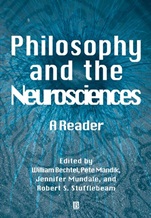
Philosophy and the Neurosciences: A Reader
ISBN 9780631210443
Autor: William Bechtel, Pete Mandik, Jennifer Mundale, Robert Stufflebeam
Wydawca: Wiley
Dostępność: 3-6 tygodni
Cena: 643,65 zł
Przed złożeniem zamówienia prosimy o kontakt mailowy celem potwierdzenia ceny.
ISBN13: |
9780631210443 |
ISBN10: |
063121044X |
Autor: |
William Bechtel, Pete Mandik, Jennifer Mundale, Robert Stufflebeam |
Oprawa: |
Hardback |
Rok Wydania: |
2001-09-20 |
Ilość stron: |
496 |
Wymiary: |
249x181 |
Tematy: |
HP |
Philosophy and the Neurosciences is the first systematic integration of philosophy of mind and philosophy of science with neuroscience research. As philosophers have come to focus more and more on the relationship between mind and brain, they have had to take greater account of theory and research in the neurosciences. Likewise, as neuroscientists have learned more about cognitive structures and functions, their investigations have expanded and merged with traditional questions from the philosophy of mind. By introducing key themes in philosophy of mind, philosophy of science and the fundamental concepts of neuroscience, this text provides philosophers with the necessary background to engage the neurosciences and offers neuroscientists an introduction to the relevant tools of philosophical analysis. Study questions, figures, and references to further reading are provided in each chapter to enhance the reader′s understanding of how philosophy and the neurosciences are related in their exploration of the human mind.
Preface and Acknowledgements. Part I: Neurophilosophical Foundations. Introduction to Part I: Neurophilosophical Foundations (Pete Mandik). 1. Philosophy Meets the Neurosciences (William Bechtel, Pete Mandik, and Jennifer Mundale). 2. Brain Metaphor and Brain Theory (John G. Daugman). 3. Neuroanatomical Foundations for Cognition: The Neuron Doctrine and Brain Mapping (Jennifer Mundale). 4. Epistemic Issues in Procuring Evidence About the Brain: The Importance of Research Instruments and Techniques (William Bechtel and Robert S. Stufflebeam). Questions for Further Study and Reflection Concerning Neurophilosophical Foundations. Part II: Language. Introduction to Part II: Language (William Bechtel). 5. Remarks on the Seat of the Faculty of Articulate Language Followed by an Observation of Aphemia (Paul Broca). 6. Recent Works on Aphasia (Carl Wernicke). 7. The Processing of Single Words Studied with Positron Emission Tomography (Steven E. Petersen and Julie A. Fiez). 8. Modularity, Domain Specificity and the Development of Language (Elizabeth Bates). 9. Linking Cognition and Brain: The Cognitive Neuroscience of Language (William Bechtel). Questions for Further Study and Reflection Concerning Language. Part III: Vision. Introduction to Part III: Vision (William Bechtel). 10. Brain Mechanisms of Vision (David H. Hubel and Torsten N. Wiesel). 11. Object Vision and Spatial Vision: Two Cortical Pathways (Mortimer Mishkin, Leslie G. Ungerleider, and Kathleen A. Macko). 12. Neural Mechanisms of Form and Motion Processing in the Primate Visual System (David C. van Essen and Jack L. Gallant). 13. Decomposing and Localizing Vision: An Exemplar for Cognitive Neuroscience (William Bechtel). Questions for Further Study and Reflection Concerning Vision. Part IV: Consciousness. Introduction to Part IV: Consciousness (Pete Mandik). 14. Consciousness and Neuroscience (Francis Crick and Christof Koch). 15. A Neurofunctional Theory of Visual Consciousness (Jesse Prinz). 16. The Nature of Pain ( Valerie G. Hardcastle. 17. The Neurobiology and Philosophy of Subjectivity (Pete Mandik). Questions for Further Study and Reflection Concerning Consciousness. Part V: Representation. Introduction to Part V: Representation (Pete Mandik). 18. Representations: From Neural Systems to Cognitive Systems (William Bechtel). 19. The Architecture of Representation (Rick Grush). 20. Of Sensory Systems and the ′Aboutness′ of Mental States (Kathleen Akins). 21. Brain Matters: A Case Against Representations in the Brain (Rob Stufflebeam) Questions for Further Study and Reflection Concerning Representation. Part VI: Reduction. Introduction to Part VI: Reduction (Jennifer Mundale). 22. Intertheoretic Reduction: A Neuroscientist′s Field Guide (Paul M. Churchland and Patricia S. Churchland). 23. Explanatory Pluralism and the Co–Evolution of Theories of Science (Robert N. McCauley). 24. McCauley′s Demand for a Co–Level Competitor (Paul M. Churchland and Patricia S. Churchland). Questions for Further Study and Reflection Concerning Reduction. Author Index. Subject Index.
William Bechtel is Professor and Chair of Philosophy and Director of the Philosophy–Neuroscience–Psychology Program at Washington University in St. Louis. He is editor of the international journal Philosophical Psychology and his publications include A Companion to Cognitive Science (co–edited, Blackwell, 1998), Connectionism and the Mind (co–authored, second edition, Blackwell, 2002) and Discovering Complexity (1993). Pete Mandik is Assistant Professor and Associate Director fo the Cognitive Science Laboratory at William Patterson University of New Jersey Jennifer Mundale is Assistant Professor of Philosophy at Central Florida University. Robert S. Stufflebeam is Assistant Professor of Philosophy at the University of New Orleans.
"William Bechtel and his colleagues have set about creating a genuine teaching aid." Journal of Consciousness Studies "The first of its kind, Philosophy and the Neurosciences is sure to find an eager audience in neuroscience and philosophy. Under the encyclopedic and judicious guidance of Bill Bechtel, the editors have assembled a genuinely useful collection, provided insightful introductions to each section, and included a sample of groundbreaking papers from the history of neuroscience." Patricia Smith Churchland, University of California, San Diego <!––end––> "The philosophy of neuroscience finally has a good teaching text. This nicely edited collection is a collage of classic and contemporary papers by neuroscientists and some solid, yet innovative philosophy." Peter Machamer, University of Pittsburgh
Koszyk
Książek w koszyku: 0 szt.
Wartość zakupów: 0,00 zł
Informacje


Kontakt
Gambit
Centrum Oprogramowania
i Szkoleń Sp. z o.o.
Al. Pokoju 29b/22-24
31-564 Kraków
Siedziba Księgarni
ul. Kordylewskiego 1
31-542 Kraków
+48 12 410 5991
+48 12 410 5987
+48 12 410 5989
Subskrypcje
Administratorem danych osobowych jest firma Gambit COiS Sp. z o.o. Na podany adres będzie wysyłany wyłącznie biuletyn informacyjny.
Autoryzacja płatności

Informacje na temat autoryzacji płatności poprzez PayU.

© Copyright 2012: GAMBIT COiS Sp. z o.o. Wszelkie prawa zastrzeżone.
Projekt i wykonanie: Alchemia Studio Reklamy