


Wydawcy
Katalog tematyczny
- Archeologia (109)
- Ekonomia, finanse, business (13704)
- Filozofia (1445)
- Historia (3040)
- Języki i językoznawstwo (2356)
- Lifestyle, hobby i rozrywka (475)
- Medycyna (9704)
- Nauki humanistyczne (4)
- Nauki o Ziemi i środowisku (2638)
- Nauki ścisłe (20412)
- Nauki społeczne (8486)
- Nauki techniczne (13450)
- Prawo (1696)
- Publikacje informacyjne i interdyscyplinarne (1288)
- Religia i wierzenia (917)
- Technika komputerowa (4067)
- Zdrowie, relacje międzyludzkie i rozwój osobisty (657)





Informacje szczegółowe o książce
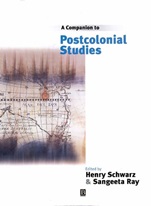
A Companion to Postcolonial Studies
ISBN 9780631206637
Autor: Henry Schwarz, Sangeeta Ray
Wydawca: Wiley
Dostępność: 3-6 tygodni
Cena: 266,70 zł
Przed złożeniem zamówienia prosimy o kontakt mailowy celem potwierdzenia ceny.
ISBN13: |
9780631206637 |
ISBN10: |
0631206639 |
Autor: |
Henry Schwarz, Sangeeta Ray |
Oprawa: |
Paperback |
Rok Wydania: |
2004-10-21 |
Ilość stron: |
636 |
Wymiary: |
254x178 |
Tematy: |
CS |
This volume examines the tumultuous changes that have occurred and are still occurring in the aftermath of European colonization of the globe from 1492 to 1947. Ranging widely over the major themes, regions, theories and practices of postcolonial study today, the volume presents original essays by the leading proponents of postcolonial study in the Americas, Europe, India, Africa, East and West Asia. Their contributions provide clear introductions to the major social and political movements underlying colonization and decolonization, accessible histories of the literature and culture, separate regions affected by European colonization, and introductory essays on the major thinkers and intellectual schools that have informed strategies of national liberation worldwide. This volume is unique in providing an incisive summary of the long history and theory of modern European colonization in local detail and global scale. It will be a necessary reference tool for years to come.
List of Contributors. Foreword: Upon Reading the Companion to Postcolonial Studies (Gayatri Chakravorty Spivak, Columbia University). Acknowledgments. Mission Impossible: Introducing Postcolonial Studies in the US Academy (Henry Schwarz, Georgetown University) . Part I: Historical And Theoretical Issues. 1. Imperialism, Colonialism, Postcolonialism (Neil Larsen, University of California at Davis). 2. Postcolonial Feminism/Postcolonialism and Feminism (Rajeswari Sunder Rajan, George Washington University; You–me Park, George Washington University). 3. Heterogeneity and Hybridity: Colonial Legacy, Postcolonial Heresy (David Theo Goldberg, Arizona State University). 4. Postcolonialism and Postmodernism (Ato Quayson, Pembroke College). 5. Postcolonial Studies in the House of US Multiculturalism (Jenny Sharpe, University of California at Los Angeles). 6.Global Capital and Transnationalism (Crystal Bartolovich, Syracuse University) . Part II: The Local And The Global. 7. A Vindication of Double Consciousness (Doris Sommer, Harvard University). 8. Human Understanding and (Latin) American Interests – The Politics and Sensibilities of Geohistorical Locations (Walter D. Mignolo, Duke University). 9. US Imperialism: Global Dominance without Colonies (Donald E. Pease, Dartmouth College). 10. Indigenousness and Indigeneity ( Jace Weaver, Yale University). 11. Creolization, Orality, and Nation Language in the Caribbean (Supriya Nair, Tulane University). 12. Middle–class Consciousness and Patriotic Literature in South Asia (Sumit Sarkar, Delhi University). 13. Africa: Varied Colonial Legacies (Tejumola Olaniyan, University of Virginia). 14. The "Middle East"? Or … / Arabic Literature and the Postcolonial Predicament (Magda M. Al–Nowaihi, Columbia University). 15. King Kong in Hong kong: Watching the "Handover" from the USA (Rey Chow, Brown University). 16. Japan and East Asia (Sandra Buckley, State University of New York at Albany). 17. Intellectuals, Theosophy, and Failed Narratives of the Nation in Late Colonial Java (Laurie J. Sears, University of Washington). 18. Settler Colonies (Anna Johnston, University of Queensland); Alan Lawson, University of Queensland). 19. Ireland After History (David Lloyd, Scripps College). 20. Global Disjunctures, Diasporic Differences, and the New World (Dis–)Order (Ali Behdad, University of California at Los Angeles). 21. Home, Homo, Hybrid: Translating Gender (Geeta Patel, Wellesley College) . Part III: The Inventiveness Of Theory. 22. Humanism in Question: Fanon and Said (Anthony C. Alessandrini, Kent State University). 23. Spivak and Bhaba (Bart Moore–Gilbert, Goldsmiths College). 24. A Small History of Subaltern Studies (Dipesh Chakrabarty, University of Chicago). 25. Feminist Theory in Perspective (Ipshita Chandra, Jadavpur University). 26. Global Gay Formations and Local Homosexualities (Katie King, University of Maryland, College Park) . Part IV: Cultural Studies And Postcolonialism. 27. Rethinking English: Postcolonial English Studies (Gaurav Desai, Tulane University). 28. Postcolonial Legality (Upendra Baxi, University of Warwick). 29. Race, Gender, Class, Postcolonialism: Toward a New Humanistic Paradigm? (Bruce Robbins, Rutgers University). Postscript: Popular Perceptions of Postcolonial Studies After 9/11 (Sangeeta Ray, University of Maryland, College Park). Index.
Henry Schwarz is Associate Professor of English at Georgetown University, He is author of Writing Cultural History in Colonial and Postcolonial India (1997) and co–editor of Reading the Shape of the World: Toward an International Cultural Studies (1996) and Contributions to Bengal Studies: An International and Interdisciplinary Approach (1998). He has published in literary theory, cultural studies, Indian literature, and English imperialism. He is currently US Regional Editor of Interventions: International Journal of Postcolonial Studies. Sangeeta Ray is currently the Director of the Asian American Studies program at the University of Maryland as well as Associate Professor in the English Department. She has published extensively on feminist postcolonial issues. She is author of En–Gendering India: Woman and Nation in Colonial and Postcolonial Narratives (1999).
"The present volume is one of the largest and most intellectually ambitious collections of essays to emerge in the past decade. Highly recommended, upper–division undergraduates and above in social science and humanities." ( Choice )
Koszyk
Książek w koszyku: 0 szt.
Wartość zakupów: 0,00 zł
Informacje


Kontakt
Gambit
Centrum Oprogramowania
i Szkoleń Sp. z o.o.
Al. Pokoju 29b/22-24
31-564 Kraków
Siedziba Księgarni
ul. Kordylewskiego 1
31-542 Kraków
+48 12 410 5991
+48 12 410 5987
+48 12 410 5989
Subskrypcje
Administratorem danych osobowych jest firma Gambit COiS Sp. z o.o. Na podany adres będzie wysyłany wyłącznie biuletyn informacyjny.
Autoryzacja płatności

Informacje na temat autoryzacji płatności poprzez PayU.

© Copyright 2012: GAMBIT COiS Sp. z o.o. Wszelkie prawa zastrzeżone.
Projekt i wykonanie: Alchemia Studio Reklamy