


Wydawcy
Katalog tematyczny
- Archeologia (109)
- Ekonomia, finanse, business (13704)
- Filozofia (1445)
- Historia (3040)
- Języki i językoznawstwo (2356)
- Lifestyle, hobby i rozrywka (475)
- Medycyna (9704)
- Nauki humanistyczne (4)
- Nauki o Ziemi i środowisku (2638)
- Nauki ścisłe (20412)
- Nauki społeczne (8486)
- Nauki techniczne (13450)
- Prawo (1696)
- Publikacje informacyjne i interdyscyplinarne (1288)
- Religia i wierzenia (917)
- Technika komputerowa (4067)
- Zdrowie, relacje międzyludzkie i rozwój osobisty (657)






Informacje szczegółowe o książce
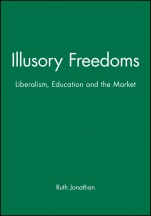
Illusory Freedoms: Liberalism, Education and the Market
ISBN 9780631204596
Autor: Ruth Jonathan
Wydawca: Wiley
Dostępność: 3-6 tygodni
Cena: 162,75 zł
Przed złożeniem zamówienia prosimy o kontakt mailowy celem potwierdzenia ceny.
ISBN13: |
9780631204596 |
ISBN10: |
0631204598 |
Autor: |
Ruth Jonathan |
Oprawa: |
Paperback |
Rok Wydania: |
1997-10-16 |
Ilość stron: |
254 |
Wymiary: |
228x152 |
Tematy: |
HP |
This book examines education as a touchstone for recasting some of the intractable problems of social theory. Trends in education policy from the post–war reformist settlement to the consumerist, market ethos of recent years, with the UK as an illustrative example, provide the practical focus. The resurgence of a neo–liberal approach to the ordering of society and education throws into sharp relief perennial tensions between freedom and equality, public and private good, the individual and the state which have long bedevilled liberalism. Jonathan argues that attention to the conundra of liberal education theory and practice gives grounding for a socially–situated understanding of the self, with important implications for liberalism′s conception of free agency. Both neo–liberalism and liberal neutralism are shown to be untenable in theory and inadequate to guide the social practice which significantly contributes to autonomy, understood as a social value.
Spis treści:
Introduction.
Part I:. Reordering Society: Reforming Education: .
1.1 Education and politics in a changing social order.
1.2 From consensus to contestation in a neutralist framework.
1.3 Education and preferences; a paradox?.
1.4 The re–forming of education.
1.5 Conclusion.
Part II: Reform: Rhetoric, Rationale and Representation:.
2.1 Privatising the public sphere: rationale and rhetoric.
2.2 The virtues of the market.
2.3 A suitable case for treatment: persuasion and plausibility.
2.4 Conclusion.
Part III: Educational ′Goods′: Value and Benefit:.
3.1 Public project: private aspirations.
3.2 Conflicting aspirations: public benefit and private reward.
3.3 The value of educational ′goods′.
3.4 Conclusion.
Part IV: Rights and Choices:.
4.1 The power of ′rights talk′.
4.2 Rights to education: beneficiaries of education.
4.3 Par
ents′ rights and consumer rights.
4.4 The good of each, of all and of none.
4.5 Conclusion.
Part V: Freedom and the Individual:.
5.1 From practice to theory.
5.2 Liberty and equality.
5.3 The ′two concepts of liberty′ debate.
5.4 ′Thick′ and ′thin′ conceptions of equality.
5.5 Liberty, equality and equity.
5.6 Conclusion.
Part VI: The Self and Its Preferences: .
6.1 How ′individual′ is individual freedom?.
6.2 Individuals and their attributes: talents and abilities.
6.3 Understandings, tastes and values.
6.3 The family, the state and the individual.
6.4 Autonomy and individualism.
6.5 The social distribution of freedom.
6.6 Conclusion.
Part VII: Liberalism and Liberal Education:.
7.1 Neo–liberalism and education.
7.2 Liberal education: problems of theory and practice.
7.3 Liberal theory revisited.
7.4 Re–forming education; theory and practice.
7.5 Conclusion.
Nota biograficzna:
Ruth Jonathan is Professor of Educational Theory at the Institute for the Study of Education and Society, University of Edinburgh. Formerly Head of the Education Department, she is currently Director of the Graduate School for the Faculty of Social Sciences.
Okładka tylna:
This book examines education as a touchstone for recasting some of the intractable problems of social theory. Trends in education policy from the post–war reformist settlement to the consumerist, market ethos of recent years, with the UK as an illustrative example, provide the practical focus. The resurgence of a neo–liberal approach to the ordering of society and education throws into sharp relief perennial tensions between freedom and equality, public and private good, the individual and the state which have long bedevilled liberalism. Jonathan argues that attention to the conundra of liberal education theory a
nd practice gives grounding for a socially–situated understanding of the self, with important implications for liberalism′s conception of free agency. Both neo–liberalism and liberal neutralism are shown to be untenable in theory and inadequate to guide the social practice which significantly contributes to autonomy, understood as a social value.
Koszyk
Książek w koszyku: 0 szt.
Wartość zakupów: 0,00 zł
Informacje


Kontakt
Gambit
Centrum Oprogramowania
i Szkoleń Sp. z o.o.
Al. Pokoju 29b/22-24
31-564 Kraków
Siedziba Księgarni
ul. Kordylewskiego 1
31-542 Kraków
+48 12 410 5991
+48 12 410 5987
+48 12 410 5989
Subskrypcje
Administratorem danych osobowych jest firma Gambit COiS Sp. z o.o. Na podany adres będzie wysyłany wyłącznie biuletyn informacyjny.
Autoryzacja płatności

Informacje na temat autoryzacji płatności poprzez PayU.

© Copyright 2012: GAMBIT COiS Sp. z o.o. Wszelkie prawa zastrzeżone.
Projekt i wykonanie: Alchemia Studio Reklamy