


Wydawcy
Katalog tematyczny
- Archeologia (109)
- Ekonomia, finanse, business (13704)
- Filozofia (1445)
- Historia (3040)
- Języki i językoznawstwo (2356)
- Lifestyle, hobby i rozrywka (475)
- Medycyna (9704)
- Nauki humanistyczne (4)
- Nauki o Ziemi i środowisku (2638)
- Nauki ścisłe (20412)
- Nauki społeczne (8486)
- Nauki techniczne (13450)
- Prawo (1696)
- Publikacje informacyjne i interdyscyplinarne (1288)
- Religia i wierzenia (917)
- Technika komputerowa (4067)
- Zdrowie, relacje międzyludzkie i rozwój osobisty (657)





Informacje szczegółowe o książce
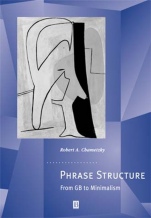
Phrase Structure: From GB to Minimalism
ISBN 9780631201595
Autor: Robert A. Chametzky
Wydawca: Wiley
Dostępność: 3-6 tygodni
Cena: 311,85 zł
Przed złożeniem zamówienia prosimy o kontakt mailowy celem potwierdzenia ceny.
ISBN13: |
9780631201595 |
ISBN10: |
0631201599 |
Autor: |
Robert A. Chametzky |
Oprawa: |
Paperback |
Rok Wydania: |
2000-09-16 |
Ilość stron: |
192 |
Wymiary: |
250x183 |
Tematy: |
CF |
This is the first and only book to provide an introduction to the fundamental theoretical issues of phrase structure in the Principles & Parameters approach to syntax. It provides in–depth analyses of basic phrase structure concepts and detailed examinations of different theoretical positions from within the Principles & Parameters tradition.
The book approaches phrase structure through close discussion of Chomsky′s The Minimalist Program (1995), Kayne′s Antisymmetry of Syntax (1994) and the author′s own A Theory of Phrase Markers and the Extended Base (1996), with a chapter devoted to each of these books. Throughout, the focus is almost exclusively on theoretical considerations such as primitive and derived concepts, theoretical architecture, simplicity and naturalness of extensions of basic ideas, internal coherence and consistency, and explanatory adequacy, with natural language data and analysis playing virtually no role.
The structuring concepts and questions include the relation of argument structure to syntactic structure; headedness and endocentricity; the status of functional versus lexical categories; X–Bar Theory; and the respective statuses of precedence and dominance.
Preface.
Acknowledgments.
Introduction.
Our Topic.
Introduction.
Crucial Concepts/Themes.
The Alternatives.
Conclusion/Evaluation.
Phrase Structure, the Past.
PS rules and grammars.
If not Phrase Structure, what?.
Dependency Theory.
Categorial Grammar.
X–Bar Theory.
And so what?.
Part I: Phrase Structure in Principles & Parameters Syntax.
1. The Issues.
2. Structuralization and argument alignment.
3. Subjects in PS.
4. Adjunct(ion)s.
5. Heads in PS.
6. Functional vs. Lexical Categories.
7. Chomsky (1986a) and the ′generalization′ hypothesis.
8. Fukui & Speas (1986), Fukui (1995), & Speas (1990): Functional Heads.
9. Abney (1987): Functional Elements.
10. Grimshaw (1991): From Extended Projection to a theoretical impasse.
11. Lebeaux (1988): Closed Class Items and a theoretical opening.
12. X–Bar Theory.
13. Rules.
14. Binary Branching.
15. How to order a phrase marker.
Part II: The School of Athens.
16. The Work.
17. TPM′s Two Part Harmony.
18. PM Theory.
19. C–command.
20. Extending the Base.
21. Islands: PS of No Return.
22. Syntactic Structure & Argument Structure.
23. Structuralization & Argument Alignment.
24. Subjects.
25. Adjunct(ion)s.
26. Heads & Exocentricity.
27. Heads.
28. Exocentricity: the Gerund.
29. Functional Categories.
30. X–Bar Theory.
31. PS Rules.
32. Branching.
33. PM Ordering.
Part III: View of Toledo.
34. The Chapter.
35. The Work.
36. The LCA.
37. X–Bar Derived.
38. Specifiers & Adjunction.
39. Subsequence, precedence, word order.
40. Theoretical Considerations.
41. Substantive Considerations.
42. Et Seq.
43. And, again.
44. Syntactic Structure & Argument Structure.
45. Structuralization & Argument Alignment.
46. Subjects.
47. Adjunct(ion)s.
48. Heads.
49. Functional Categories.
50. X–Bar Theory.
51. Derive & Concur.
52. Branching.
53. PM Ordering.
Part IV: Less is More.
54. The Work.
55. The Computational Component.
56. Against Move.
57. The Numeration.
58. PS in TMP.
59. Minimal Mechanics.
60. Spanners in the Works.
61. Merge.
62. Select.
63. Merge, again.
64. Labels and Terms.
65. Merge, one more time.
66. Conclusions.
67. Syntactic Structure & Argument Structure.
68. Structuralization: Theta–relatedness.
69. Structuralization: Argument Alignment.
70. Subjects.
71. Adjunct(ion)s.
72. Adjuncts.
73. Adjunctions.
74. Heads.
75. Functional Categories.
76. Functional Categories & Movement.
77. Functional Categories: Fact or Fiction.
78. "Additional Elements.".
79. Branching.
80. PM Ordering.
Part V: Conclusion.
Beginning of the End.
"Derive," he said.
The Derivationalist′s Case.
A Representationalist Alternative.
Now you tell us?.
REALLY Minimalist phrase structure.
. . . made to be broken.
References.
Index.
Robert A. Chametzky is Assistant Dean in the College of Arts & Sciences at Cornell University. He is author of A Theory of Phrase Markers and the Extended Base (1996).
"Chametzky has written a lucid and penetrating overview of recent theories of phrase structure, which addresses issues that are both fundamental and daunting. He carefully separates recent proposals into their component parts, revealing how various theories differ, what properties they share, and where they fail to live up to their minimalist claims." Peggy Speas, University of Massachusetts, Amherst
"This book could have been called ′Every Question you ever had about Phrase Structure and were Afraid to Ask′. Both thought–provoking and provocative, it will interest any serious student of the GB tradition and how it shaped the emerging Minimalist Program." Juan Uriagereka, University of Maryland, College Park
Koszyk
Książek w koszyku: 0 szt.
Wartość zakupów: 0,00 zł
Informacje


Kontakt
Gambit
Centrum Oprogramowania
i Szkoleń Sp. z o.o.
Al. Pokoju 29b/22-24
31-564 Kraków
Siedziba Księgarni
ul. Kordylewskiego 1
31-542 Kraków
+48 12 410 5991
+48 12 410 5987
+48 12 410 5989
Subskrypcje
Administratorem danych osobowych jest firma Gambit COiS Sp. z o.o. Na podany adres będzie wysyłany wyłącznie biuletyn informacyjny.
Autoryzacja płatności

Informacje na temat autoryzacji płatności poprzez PayU.

© Copyright 2012: GAMBIT COiS Sp. z o.o. Wszelkie prawa zastrzeżone.
Projekt i wykonanie: Alchemia Studio Reklamy