


Wydawcy
Katalog tematyczny
- Archeologia (109)
- Ekonomia, finanse, business (13704)
- Filozofia (1445)
- Historia (3040)
- Języki i językoznawstwo (2356)
- Lifestyle, hobby i rozrywka (475)
- Medycyna (9704)
- Nauki humanistyczne (4)
- Nauki o Ziemi i środowisku (2638)
- Nauki ścisłe (20412)
- Nauki społeczne (8486)
- Nauki techniczne (13450)
- Prawo (1696)
- Publikacje informacyjne i interdyscyplinarne (1288)
- Religia i wierzenia (917)
- Technika komputerowa (4067)
- Zdrowie, relacje międzyludzkie i rozwój osobisty (657)





Informacje szczegółowe o książce
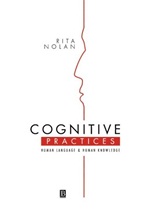
Cognitive Practices
ISBN 9780631189749
Autor: Rita Nolan
Wydawca: Wiley
Dostępność: 3-6 tygodni
Cena: 200,55 zł
Przed złożeniem zamówienia prosimy o kontakt mailowy celem potwierdzenia ceny.
ISBN13: |
9780631189749 |
ISBN10: |
0631189742 |
Autor: |
Rita Nolan |
Oprawa: |
Paperback |
Rok Wydania: |
2009-05-08 |
Ilość stron: |
182 |
Wymiary: |
229x159 |
Tematy: |
HP |
How does human language contribute to the cognitive edge humans have over other species? This question eludes most current theories of language and knowledge. Incorporating research results in psychology and cutting a path through a broad range of philosophical debates, Nolan develops a strikingly original account of language acquisition which holds important implications for standard theories of language and the philosophical foundations of cognitive science.
Preface.
Introduction.
Part I: Language and Cognitive Dynamics:.
1. The Question.
2. Language Realism.
3. Cognitive Dynamics.
4. Society and Language.
5. Desiderata for a Theory of Language.
6. The Standard Theory.
7. Foci for Revision.
Part II: The Code Metaphor for Languages:.
8. The Semantic Content of the Code Metaphor.
9. Referential Semantics: Breaking the Code?.
10. The New Code Theory.
11. Mature Competency and Language Learning.
Part III: Language Entry:.
12. Linguistic Constructionalism.
13. The Fallacy of Linguistic Supervenience.
14. Semantic Theory and Language Learning.
15. Reconceptualizing Language Acquisition.
16. How Long Does it Take?.
17. Superordination.
18. The Cognitive Import of Superordination.
19. The Categorical Structure of Discourse.
20. Conclusion.
Part IV: Society in Mind:.
21. The Superordination Hypothesis.
22. Unavailable Routes to Language Entry.
23. Two Questions.
24. Interpreting Early Speech.
25. Early Syntax.
26. But What Is Predication?.
Part V: From Response to Assertion:.
27. Is There a Transition from Response to Assertion.
28. Subjects and Predicates.
29. Formal Approaches to Predication.
30. Sensation, Perception, Conception and Judgement.
31. Categories of Perception, Categories of Conception.
32. The Generality Constraint.
33. Developmental Data.
34. From Perceptual Categories to Conceptual Categories.
35. The Emergence of Predication.
36. Some Consequences of "Thick" Superordination.
Part VI: Discursive Practices:.
37. Matant Predicates.
38. Conceptual Structures.
39. Towards a Topology of Concepts.
40. Conceptual Structures.
41. Meaning as Analogical.
42. Discourse Genres.
43. Non–Gricean Pragmatists.
44. Socially Contingent Phenomena.
45. The Attitudes as Socially Contingent.
46. Substructural Indeterminacy.
References.
Index.
Rita Nolan is Professor of Philosophy at the State University of New York at Stony Brook. She has written on topics in the philosophy of language, social epistemology, and Wittgenstein.
"Rita Nolan successfully criticizes ideas –among them, Fodor′s ′language of thought′ model and Chomsky′s ′innateness hypothesis′ –that have dominated cognitive psychology and linguistics for decades. But this is much more than a critical book, valuable as good philosophical criticism always is; with a remarkable combination of philosophical imagination and breadth of knowledge, she illuminates the entire area of philosophy and psychology of language. The social practice account of language that she proposes sheds light on a host of topics (including the philosophy of the earlier and the later Wittgenstein), and it leads her to suggest a novel but highly plausible reconceptualization of the development of logical and linguistic skills in the child that will fascinate psychologists as well as philosophers." Hilary Putnam, Harvard University
Koszyk
Książek w koszyku: 0 szt.
Wartość zakupów: 0,00 zł
Informacje


Kontakt
Gambit
Centrum Oprogramowania
i Szkoleń Sp. z o.o.
Al. Pokoju 29b/22-24
31-564 Kraków
Siedziba Księgarni
ul. Kordylewskiego 1
31-542 Kraków
+48 12 410 5991
+48 12 410 5987
+48 12 410 5989
Subskrypcje
Administratorem danych osobowych jest firma Gambit COiS Sp. z o.o. Na podany adres będzie wysyłany wyłącznie biuletyn informacyjny.
Autoryzacja płatności

Informacje na temat autoryzacji płatności poprzez PayU.

© Copyright 2012: GAMBIT COiS Sp. z o.o. Wszelkie prawa zastrzeżone.
Projekt i wykonanie: Alchemia Studio Reklamy