


Wydawcy
Katalog tematyczny
- Archeologia (109)
- Ekonomia, finanse, business (13704)
- Filozofia (1445)
- Historia (3040)
- Języki i językoznawstwo (2356)
- Lifestyle, hobby i rozrywka (475)
- Medycyna (9704)
- Nauki humanistyczne (4)
- Nauki o Ziemi i środowisku (2638)
- Nauki ścisłe (20412)
- Nauki społeczne (8486)
- Nauki techniczne (13450)
- Prawo (1696)
- Publikacje informacyjne i interdyscyplinarne (1288)
- Religia i wierzenia (917)
- Technika komputerowa (4067)
- Zdrowie, relacje międzyludzkie i rozwój osobisty (657)





Informacje szczegółowe o książce
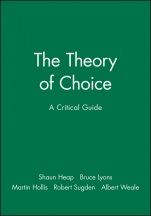
The Theory of Choice: A Critical Guide
ISBN 9780631183228
Autor: Shaun Heap, Bruce Lyons, Martin Hollis, Robert Sugden, Albert Weale
Wydawca: Wiley
Dostępność: 3-6 tygodni
Cena: 324,45 zł
Przed złożeniem zamówienia prosimy o kontakt mailowy celem potwierdzenia ceny.
ISBN13: |
9780631183228 |
ISBN10: |
0631183221 |
Autor: |
Shaun Heap, Bruce Lyons, Martin Hollis, Robert Sugden, Albert Weale |
Oprawa: |
Paperback |
Rok Wydania: |
1992-03-26 |
Ilość stron: |
416 |
Wymiary: |
227x152 |
Tematy: |
KC |
Apple or pears? Guns or butter? Liberty or death? We experience life as a series of choices, large and small. What makes a choice rational? A common answer is that a rational agent calculates the probable net benefits of each possible course of action and chooses the one that best satisfies his or her given preferences. Rational choice is thus about means, not ends, a view which has been most deeply analysed in economic, and that is now becoming crucial throughout the social sciences. The Theory of Choice provides an authoritative and comprehensive introduction to the fundamental principles of rational choice theory, game theory, and to their implications and limitations.
The book is in three parts with a section of keywords. Part I covers individual choice, analyzing the theory of decision making by an individual who need not consider the effect on other people’s decisions. This includes the study of rationality, consumer theory and autonomy.
Part II examines interactive choice in which the actions taken by one person depend on, and influence, those taken by others. The modern key to understanding such situations is game theory. The final part covers collective choice where individuals group together to agree a common strategy or policy, which is then implemented. This section includes surveys of social choice, democracy, power and social justice.
Finally, the Keywords section contains notes on the major concepts, technicalities and thinkers.
The Theory of Choice is the result of collaboration between three economists, a philosopher and a political scientist. It will become essential reading for students across a range of disciplines and for professional social scientists wanting a lively introduction to these important ideas.
Spis treści:
Introduction.
Part I: Individual Choice:.
1. Rationality.
2. Consumer Theory.
3. How People Choose.
4. Risk, Ignorance and Imaginat
ion.
5. Homo Economicus; Homo Sociologicus.
6. Autonomy.
Part II: Interactive Choice:.
7. Game Theory.
8. Bargaining.
9. Game Theory Applied.
10. Organizations.
11. Cultural Exchange.
12. Anarchic Order.
Part III: Collective Choice:.
13. Social Choice.
14. Democracy.
15. Power.
16. Planning.
17. Agendas.
18. Social Justice.
Keywords.
Bibliography.
Index.
Nota biograficzna:
Shaun Hargreaves Heap is Lecturer in Economics, Martin Hollis is Professor of Philosophy, Bruce R. Lyons is enior Lecturer in Economics, Robert Sugden is Professor of Economics and Albert Weake is Professor of Politics, all at the School of Economic and Social Studies, University of East Anglia, Norwich.
Okładka tylna:
Apple or pears? Guns or butter? Liberty or death? We experience life as a series of choices, large and small. What makes a choice rational? A common answer is that a rational agent calculates the probable net benefits of each possible course of action and chooses the one that best satisfies his or her given preferences. Rational choice is thus about means, not ends, a view which has been most deeply analysed in economic, and that is now becoming crucial throughout the social sciences. The Theory of Choice provides an authoritative and comprehensive introduction to the fundamental principles of rational choice theory, game theory, and to their implications and limitations.
The book is in three parts with a section of keywords. Part I covers individual choice, analyzing the theory of decision making by an individual who need not consider the effect on other people’s decisions. This includes the study of rationality, consumer theory and autonomy.
Part II examines interactive choice in which the actions taken by one person depend on, and influence, those taken by others. The modern key to understanding such sit
uations is game theory. The final part covers collective choice where individuals group together to agree a common strategy or policy, which is then implemented. This section includes surveys of social choice, democracy, power and social justice.
Finally, the Keywords section contains notes on the major concepts, technicalities and thinkers.
The Theory of Choice is the result of collaboration between three economists, a philosopher and a political scientist. It will become essential reading for students across a range of disciplines and for professional social scientists wanting a lively introduction to these important ideas.
Koszyk
Książek w koszyku: 0 szt.
Wartość zakupów: 0,00 zł
Informacje


Kontakt
Gambit
Centrum Oprogramowania
i Szkoleń Sp. z o.o.
Al. Pokoju 29b/22-24
31-564 Kraków
Siedziba Księgarni
ul. Kordylewskiego 1
31-542 Kraków
+48 12 410 5991
+48 12 410 5987
+48 12 410 5989
Subskrypcje
Administratorem danych osobowych jest firma Gambit COiS Sp. z o.o. Na podany adres będzie wysyłany wyłącznie biuletyn informacyjny.
Autoryzacja płatności

Informacje na temat autoryzacji płatności poprzez PayU.

© Copyright 2012: GAMBIT COiS Sp. z o.o. Wszelkie prawa zastrzeżone.
Projekt i wykonanie: Alchemia Studio Reklamy