


Wydawcy
Katalog tematyczny
- Archeologia (109)
- Ekonomia, finanse, business (13704)
- Filozofia (1445)
- Historia (3040)
- Języki i językoznawstwo (2356)
- Lifestyle, hobby i rozrywka (475)
- Medycyna (9704)
- Nauki humanistyczne (4)
- Nauki o Ziemi i środowisku (2638)
- Nauki ścisłe (20412)
- Nauki społeczne (8486)
- Nauki techniczne (13450)
- Prawo (1696)
- Publikacje informacyjne i interdyscyplinarne (1288)
- Bibliotekoznawstwo, informacja naukowa i muzealnictwo (433)
- Encyklopedie i leksykony (181)
- Informacja naukowa (88)
- Zagadnienia interdyscyplinarne (391)
- Religia i wierzenia (917)
- Technika komputerowa (4067)
- Zdrowie, relacje międzyludzkie i rozwój osobisty (657)





Informacje szczegółowe o książce
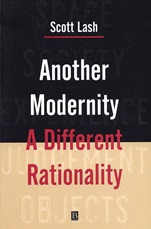
Another Modernity: A Different Rationality
ISBN 9780631164999
Autor: Scott Lash
Wydawca: Wiley
Dostępność: 3-6 tygodni
Cena: 296,10 zł
Przed złożeniem zamówienia prosimy o kontakt mailowy celem potwierdzenia ceny.
ISBN13: |
9780631164999 |
ISBN10: |
0631164995 |
Autor: |
Scott Lash |
Oprawa: |
Paperback |
Rok Wydania: |
1999-06-14 |
Ilość stron: |
412 |
Wymiary: |
229x153 |
Tematy: |
GTS |
This book is Lash′s most comprehensive statement in social and cultural theory. It is a book addressed to sociologists and philosophers, to students of urban life, modern languages, cultural studies and the visual arts. Alongside the Enlightenment has emerged another modernity. This second modernity has – in opposition to the Enlightenment rationality of progress, order, homogeneity and cognition – initiated a different rationality of uncertainty, transience, experiment, and the unknowable. This second, this other modernity, is present in notions of ′difference′ and ′reflexivity′ so central to the contemporary world–view. The logic, however, of such notions can, itself, lead to the same unhappy abstraction of the first modernity. What is forgotten, Scott Lash argues, is the dimension of the ground. This book consists of explorations into this ground: as place, community, belonging, sociality, tradition, life–world; as symbol, sensation, in the tactile character of the sign. The book addresses the other modernity′s forgotten ground. The first and second modernities co–existed in a state of irresolvable tension along the history of western industrial capitalism. This is thrown into crisis, Lash argues, with the turn of the twenty–first century emergence of the global information culture. What are the implications of this explosion of first and second modernities into today′s technological culture? When the previously existing third space of difference is exploded into the general indifference of information and communication flows? How might we lead our lives in an age in which difference – and indeed the ground itself – become primarily a matter for memory, for mourning?
Acknowledgements. 1. Introduction. Part I: Space: . 2. The First Modernity: Humans and Machines. Garden City and Functionalism. Structuralism. Formalism. Modernist Humanism?. Conclusions. 3. Simulated Humanism: Postmodern Architecture. Avant–gardes. History. Humanism. Complexity. Vernacular. Conclujsions. 4. Ground the City. Fields of Mapping: Grids and Labyrinths. Productions of Space: Classical and Gothic. The Other Modernity: Lived Space in Japan. Urban Space and Allegory. Part II: Society. 5. From System to Symbol: Durkheim and French Sociology. Space and Society. System. Symbol: Durkheim and Mauss. 6. Symbol and Allegory: Simmel and German Sociology. Values and Facts. From Symbol to Allegory. Conclusion. Part III: Experience. 7. The Natural Attitude and the Reflexive Attitude. Alfred Schutz: from Meaning to Understanding Signification and Existence. 8. Difference and Infinity: Derrida. Kant, Husserl, Derrida. Escape from Totality. Time and Self–presence. Three Modes of Signification. Part IV: Judgement. 9. Reflexive Judgement and Aesthetic Subjectivity. Finality of the Object, Singularity of the Subject. Permanence and Finitude: Gadamer. 10. Discourse, Figure....Sensation. The Body With Organs. Greeks, Jews, Pagans. Conclusions. Part V: Objects. 11. Objects that Judge: Latour′s Parliament of Things. Towards a Non–Modern Constitution. Morphisms Weavers and Object Trackers. Ç′accuse. Networks: Spiralling Time and Space. 12. Bad Objects: Virilio. From Cité to War Machine. Death: Bads, Contingency, Theodicy. From War to Cinema. From the Mental and the Instrumental: The End of the Gaze. Polar Inertia: The Last Vehicle. Time of Exposure. 13. The Symbolic in Fragments: Walter Benjamin′s Talking Things. Allegory: The Aesthetics of Destruction. Protestant Ethic, Baroque Melancholy. 14. Conclusion. Notes. Index.
Scott Lash is Director of the Centre for Cultural Studies and Professor of Sociology at Goldsmiths College, University of London. He previously taught at Lancaster University for many years. He was a Humboldt Fellow in Berlin between 1988 and 1990. His previous books include The End of Organized Capitalism (co–author, 1987), Sociology of Postmodernism (1990), Modernity and Identity (co–editor, 1992), Economies of Signs and Space (co–author, 1994), Reflexive Modernization (co–author, 1994) and Detraditionalization (co–editor, 1996). His books have been translated into nine languages.
"Serious, intelligent and innovative, this book compels us to rethink our modern/ postmodern certainties." Mark Poster, Laguna Beach, California
Koszyk
Książek w koszyku: 0 szt.
Wartość zakupów: 0,00 zł
Informacje


Kontakt
Gambit
Centrum Oprogramowania
i Szkoleń Sp. z o.o.
Al. Pokoju 29b/22-24
31-564 Kraków
Siedziba Księgarni
ul. Kordylewskiego 1
31-542 Kraków
+48 12 410 5991
+48 12 410 5987
+48 12 410 5989
Subskrypcje
Administratorem danych osobowych jest firma Gambit COiS Sp. z o.o. Na podany adres będzie wysyłany wyłącznie biuletyn informacyjny.
Autoryzacja płatności

Informacje na temat autoryzacji płatności poprzez PayU.

© Copyright 2012: GAMBIT COiS Sp. z o.o. Wszelkie prawa zastrzeżone.
Projekt i wykonanie: Alchemia Studio Reklamy