


Wydawcy
Katalog tematyczny
- Archeologia (109)
- Ekonomia, finanse, business (13704)
- Filozofia (1445)
- Historia (3040)
- Języki i językoznawstwo (2356)
- Lifestyle, hobby i rozrywka (475)
- Medycyna (9704)
- Nauki humanistyczne (4)
- Nauki o Ziemi i środowisku (2638)
- Nauki ścisłe (20412)
- Nauki społeczne (8486)
- Edukacja (229)
- Kryminologia, opieka spełeczna (284)
- Obronność (10)
- Polityka (1389)
- Psychologia (777)
- Socjologia (410)
- Społeczeństwo i kultura (187)
- Nauki techniczne (13450)
- Prawo (1696)
- Publikacje informacyjne i interdyscyplinarne (1288)
- Religia i wierzenia (917)
- Technika komputerowa (4067)
- Zdrowie, relacje międzyludzkie i rozwój osobisty (657)





Informacje szczegółowe o książce
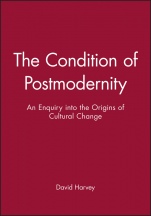
The Condition of Postmodernity: An Enquiry into the Origins of Cultural Change
ISBN 9780631162940
Autor: David Harvey
Wydawca: Wiley
Dostępność: 3-6 tygodni
Cena: 184,80 zł
Przed złożeniem zamówienia prosimy o kontakt mailowy celem potwierdzenia ceny.
ISBN13: |
9780631162940 |
ISBN10: |
0631162941 |
Autor: |
David Harvey |
Oprawa: |
Paperback |
Rok Wydania: |
1991-10-14 |
Ilość stron: |
388 |
Wymiary: |
230x158 |
Tematy: |
JB |
A great deal has been written on what has variously been described as the post–modern condition and on post–modern culture, architecture, art and society. In this new book, David Harvey seeks to determine what is meant by the term in its different contexts and to identify how accurate and useful it is as a description of contemporary experience.
But the book is much more than this: in the course of his investigation the author provides a social and semantic history – from the Enlightenment to the present – of modernism and its expression in political and social ideas and movements, as well as in art, literature and architecture. He considers in particular how the meaning and perception of time and space themselves vary over time and space, and shows that this variance affects individual values and social processes of the most fundamental kind.
This book will be widely welcomed, not only for its clear and critical account of the arguments surrounding the propositions of modernity and post–modernity, but as an incisive contribution to the history of ideas and their relation to social and political change.
Spis treści:
The argument.
Preface.
Acknowledgements.
Part I: The Passage from Modernity to Postmodernity in Contemporary Culture: .
1. Introduction.
2. Modernity and Modernism.
3. Postmodernism.
4. Postmodernism in the City: Architecture and Urban Design.
5. Modernization.
6. POSTmodernISM or postMODERNism?.
Part II: The Political–Economic Transformation of late Twentieth–Century Capitalism: .
7. Introduction.
8. Fordism.
9. From Fordism to Flexible Accumulation.
10. Theorizing the Transition.
11. Flexible Accumulation – Solid Transformation or Temporary Fix?.
Part III: The Experience of Space and Time: .
12. Introduction.
13. Individual Spaces and Times in Social Life.
14. Time and Space as Sources of Social Po
wer.
15. The Time and Space of the Enlightenment Project.
16. Time–space Compression and the Rise of Modernism as a Cultural Force.
17. Time–Space Compression and the Postmodern Condition.
18. Time and Space in the Postmodern Cinema.
Part IV: The Condition of Postmodernity:.
19. Postmodernity as a Historical Condition.
20. Economics with Mirrors.
21. Postmodernism as the Mirror of Mirrors.
22. Fordist Modernism versus Flexible Postmodernism, or the Interpenetration of Opposed Tendencies in Capitalism as a Whole.
23. The Transformative and Speculative Logic of Capital.
24. The Work of Art in an Age of Electronic Reproduction and Image Banks.
25. Responses to Time–Space Compression.
26. The Crisis of Historical Materialism.
27. Cracks in the Mirrors, Fusions at the Edges.
References.
Index.
Nota biograficzna:
David Harvey is Professor of Geography at the Johns Hopkins University. From 1987 to 1993 he held the Halford Mackinder Chair of Geography at Oxford University. His previous books include Social Justice and the City, The Limits to Capital (available in the USA from the University of Chicago Press, and elsewhere from Blackwell Publishers, UK) and The Urban Experience (available in the USA from the Johns University Press, and elsewhere from Blackwell Publishers, UK).
Okładka tylna:
A great deal has been written on what has variously been described as the post–modern condition and on post–modern culture, architecture, art and society. In this new book, David Harvey seeks to determine what is meant by the term in its different contexts and to identify how accurate and useful it is as a description of contemporary experience.
But the book is much more than this: in the course of his investigation the author provides a social and semantic history – from the Enlightenment to the present – of modernism an
d its expression in political and social ideas and movements, as well as in art, literature and architecture. He considers in particular how the meaning and perception of time and space themselves vary over time and space, and shows that this variance affects individual values and social processes of the most fundamental kind.
This book will be widely welcomed, not only for its clear and critical account of the arguments surrounding the propositions of modernity and post–modernity, but as an incisive contribution to the history of ideas and their relation to social and political change.
Koszyk
Książek w koszyku: 0 szt.
Wartość zakupów: 0,00 zł
Informacje


Kontakt
Gambit
Centrum Oprogramowania
i Szkoleń Sp. z o.o.
Al. Pokoju 29b/22-24
31-564 Kraków
Siedziba Księgarni
ul. Kordylewskiego 1
31-542 Kraków
+48 12 410 5991
+48 12 410 5987
+48 12 410 5989
Subskrypcje
Administratorem danych osobowych jest firma Gambit COiS Sp. z o.o. Na podany adres będzie wysyłany wyłącznie biuletyn informacyjny.
Autoryzacja płatności

Informacje na temat autoryzacji płatności poprzez PayU.

© Copyright 2012: GAMBIT COiS Sp. z o.o. Wszelkie prawa zastrzeżone.
Projekt i wykonanie: Alchemia Studio Reklamy