


Wydawcy
Katalog tematyczny
- Archeologia (109)
- Ekonomia, finanse, business (13704)
- Filozofia (1445)
- Historia (3040)
- Języki i językoznawstwo (2356)
- Lifestyle, hobby i rozrywka (475)
- Medycyna (9704)
- Nauki humanistyczne (4)
- Nauki o Ziemi i środowisku (2638)
- Nauki ścisłe (20412)
- Astronomia (294)
- Biologia (5119)
- Biochemia (575)
- Biologia człowieka (14)
- Biologia komórkowa (377)
- Biologia molekularna (398)
- Biologia rozwoju (130)
- Biologia, ogólnie (1277)
- Botanika (280)
- Hydrobiologia (92)
- Mikrobiologia (363)
- Mykologia (22)
- Zoologia (303)
- Chemia (6540)
- Fizyka (3309)
- Matematyka (4574)
- Nauki ścisłe, ogólnie (503)
- Nauki społeczne (8486)
- Nauki techniczne (13450)
- Prawo (1696)
- Publikacje informacyjne i interdyscyplinarne (1288)
- Religia i wierzenia (917)
- Technika komputerowa (4067)
- Zdrowie, relacje międzyludzkie i rozwój osobisty (657)





Informacje szczegółowe o książce
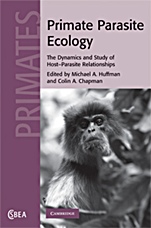
Primate Parasite Ecology
ISBN 9780521872461
Autor: Edited by Michael A. Huffman , Colin A. Chapman
Wydawca: Cambridge University Press
Dostępność: 3-6 tygodni
Cena: 579,60 zł
Przed złożeniem zamówienia prosimy o kontakt mailowy celem potwierdzenia ceny.
ISBN13: |
9780521872461 |
ISBN10: |
0521872464 |
Autor: |
Edited by Michael A. Huffman , Colin A. Chapman |
Oprawa: |
Hardback |
Rok Wydania: |
2009-02-19 |
Ilość stron: |
548 |
Wymiary: |
228 x 152 mm |
Tematy: |
Primates |
Anyone who has spent an extended period in the tropics has an idea, through caring for others or first-hand experience, just what it is like to be a primate parasite host.
Monkeys and apes often share parasites with humans, for example the HIV viruses which evolved from related viruses of chimpanzees and sooty mangabeys, and so understanding the ecology of infectious diseases in non-human primates is of paramount importance.
Furthermore, there is accumulating evidence that environmental change may promote contact between humans and non-human primates and increase the possibility of sharing infectious disease.
Written for academic researchers, this book addresses these issues and provides up-to-date information on the methods of study, natural history and ecology/theory of the exciting field of primate parasite ecology.
Spis treści:
Primate disease ecology, an integrative approach
Part I. Methods to Study Primate-Parasite Interactions
1. Collection methods and diagnostic procedures for primate parasitology
2. Methods of collection and identification of minute nematodes from the feces of primates, with special application to coevolutionary study of pinworms
3. The utility of molecular methods for elucidating primate-pathogen relationships – the Oesophagostomum bifurcum example
4. The application of endocrine measures in primate parasite ecology
5. Using agent-based models to investigate primate disease ecology
Part II. The Natural History of Primate–Parasite Interactions
6. What does a parasite see when it looks at a chimpanzee?
7. Primate malarias, evolution, adaptation, and species jumping
8. Disease avoidance and the evolution of primate social connectivity, Ebola, bats, gorillas, and chimpanzees
9. Primate-parasitic zoonoses and anthropozoonses, a literature review
10. Lice and other parasites as markers of primate evolutionary history
11. Cryptic species and biodiversity of lice from primates
12. Prevalence of Clostridium perfringens in intestinal microflora of non-human primates
13. Intestinal bacteria of chimpanzees in the wild and in captivity - an application of molecular ecological methodologies
14. Gastrointestinal parasites of bonobos in the Lomako Forest, Democratic Republic of Congo
15. Habitat disturbance and seasonal fluctuations of lemur parasites in the rain forest of Ranomafana National Park, Madagascar
16. Chimpanzee-parasite ecology at Budongo Forest (Uganda) and the Mahale Mountains (Tanzania), influence of climatic differences on self-medicative behavior
Part III. The Ecology of Primate–Parasite Interactions
17. Primate exposure and the emergence of novel retroviruses
18. Overview of parasites infecting howler monkeys, Alouatta sp., and potential consequences of human-howler interactions
19. Primate parasite ecology, patterns and predictions from an ongoing study of Japanese macaques
20. Crop raiding, the influence of behavioral and nutritional changes on primate-parasite relationships
21. Can parasites infections be a selective force influencing primate group size? A test with red colobus
22. How does diet quality affect the parasite ecology of mountain gorillas?
23 Host-parasite Dynamics, Connecting Primate Field Data to Theory
Part IV. Conclusions
24. Ways forward in the study of primate disease ecology
25. Useful diagnostic references and images of protozoans, helminths, and nematodes commonly found in wild primates.
Koszyk
Książek w koszyku: 0 szt.
Wartość zakupów: 0,00 zł
Informacje


Kontakt
Gambit
Centrum Oprogramowania
i Szkoleń Sp. z o.o.
Al. Pokoju 29b/22-24
31-564 Kraków
Siedziba Księgarni
ul. Kordylewskiego 1
31-542 Kraków
+48 12 410 5991
+48 12 410 5987
+48 12 410 5989
Subskrypcje
Administratorem danych osobowych jest firma Gambit COiS Sp. z o.o. Na podany adres będzie wysyłany wyłącznie biuletyn informacyjny.
Autoryzacja płatności

Informacje na temat autoryzacji płatności poprzez PayU.

© Copyright 2012: GAMBIT COiS Sp. z o.o. Wszelkie prawa zastrzeżone.
Projekt i wykonanie: Alchemia Studio Reklamy