


Wydawcy
Katalog tematyczny
- Archeologia (109)
- Ekonomia, finanse, business (13704)
- Filozofia (1445)
- Historia (3040)
- Języki i językoznawstwo (2356)
- Lifestyle, hobby i rozrywka (475)
- Medycyna (9704)
- Nauki humanistyczne (4)
- Nauki o Ziemi i środowisku (2638)
- Nauki ścisłe (20412)
- Astronomia (294)
- Biologia (5119)
- Biochemia (575)
- Biologia człowieka (14)
- Biologia komórkowa (377)
- Biologia molekularna (398)
- Biologia rozwoju (130)
- Biologia, ogólnie (1277)
- Botanika (280)
- Hydrobiologia (92)
- Mikrobiologia (363)
- Mykologia (22)
- Zoologia (303)
- Chemia (6540)
- Fizyka (3309)
- Matematyka (4574)
- Nauki ścisłe, ogólnie (503)
- Nauki społeczne (8486)
- Nauki techniczne (13450)
- Prawo (1696)
- Publikacje informacyjne i interdyscyplinarne (1288)
- Religia i wierzenia (917)
- Technika komputerowa (4067)
- Zdrowie, relacje międzyludzkie i rozwój osobisty (657)





Informacje szczegółowe o książce
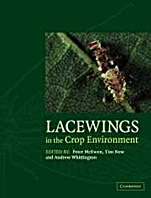
Lacewings in the Crop Environment
ISBN 9780521772174
Autor: Edited by P. K. McEwen , T. R. New , A. E. Whittington
Wydawca: Cambridge University Press
Dostępność: 3-6 tygodni
Cena: 719,25 zł
Przed złożeniem zamówienia prosimy o kontakt mailowy celem potwierdzenia ceny.
ISBN13: |
9780521772174 |
ISBN10: |
0521772176 |
Autor: |
Edited by P. K. McEwen , T. R. New , A. E. Whittington |
Oprawa: |
Hardback |
Rok Wydania: |
2001-06-07 |
Ilość stron: |
564 |
Wymiary: |
246 x 189 mm |
Tematy: |
Insects (entomology) |
Lacewings are predatory insects which attack and kill large numbers of insect pests.
Lacewings in the Crop Environment addresses both the theoretical and practical aspects of lacewing biology and their use in crop protection.
The book opens with a section on lacewing systematics and ecology.
Next, lacewings as predators in a wide variety of commercially important crops are reviewed and this is followed by a section on the principles of using lacewings in pest control.
The possible impact of genetically modified crops on lacewing populations is also discussed.
Finally, a fascinating array of case studies of lacewing use in many crops from around the world is presented, and future uses of lacewings speculated upon.
Lacewings in the Crop Environment is an essential reference work and practical handbook for students, researchers of biological control, integrated pest management and agricultural science, and for field workers using lacewings in pest management programmes worldwide.
Spis treści:
List of contributors
Preface
Part I. Lacewing Systematics and Ecology
1. Introduction to the Neuroptera, what are they and how do they operate? T. R. New
2. Introduction to the systematics and distribution of Coniopterygidae, Hemerobiidae and Chrysopidae used in pest management T. R. New
3. The common green lacewing (Chrysoperla carnea s. lat.) and the sibling species problem C. S. Henry, S. J. Brooks, D. Thierry, P. Duelli and J. B. Johnson
4. Recognition of larval Neuroptera V. J. Monserrat, J. D. Oswald, C. A. Tauber and L. M. Díaz-Aranda
5. Ecology and habitat relationships F. Szentkirályi
6. Natural food and feeding habits of lacewings M. Canard
7. Outlines of lacewing development M. Canard and T. A. Volkovich
Part II. Lacewings in Crops, Introduction
8. Lacewings in field crops P. Duelli
9. Lacewings in fruit and nut crops F. Szentkirályi
10. Lacewings in vegetables, forests and other crops F. Szentkirályi
Part III. Principles, Introduction
11. The use of lacewings in biological control L. J. Senior and P. K. McEwen
12. Mass-rearing, release techniques and augmentation D. A. Nordlund, A. C. Cohen and R. A. Smith
13. Features of the nutrition of Chrysopidae larvae and larval artificial diets I. G. Yazlovetsky
14. Ecological studies of released lacewings in crops K. M. Daane
15. Sampling and studying lacewings in crops T. R. New and A. E. Whittington
16. Interactions with plant management strategies H. Vogt, E. Viñuela, A. Bozsik, A. Hilbeck and F. Bigler
17. Lacewings, biological control and conservation T. R. New
Part IV. Case Studies, Introduction
18. Micromus tasmaniae, a key predator on aphids on field crops on Australasia? P. A. Horne, P. M. Ridland and T. R. New
19. Preliminary notes on Mallada signatus (Chrysopidae) as a predator in field crops in Australia P. A. Horne, T. R. New and D. Papacek
20. An evaluation of lacewing releases in North America K. M. Daane and K. S. Hagen
21. Chrysoperla externa and Ceraeochrysa spp., potential for biological control in the New World tropics and subtropics G. S. Albuquerque, C. A. Tauber and M. J. Tauber
22. Comparative plant substrate specificity of Iberian Hemerobiidae, Coniopterygidae and Chrysopidae V. J. Monserrat and F. Marin
23. Lacewings in Sardinian olive groves R. A. Pantaleoni, A. Lentini and G. Delrio
24. Lacewing occurrence in the agricultural landscape of Pianura Padana R. A . Panataleoni
25. Lacewings and snake-flies in Piedmont vineyards (northwestern Italy) R. A. Pantaleoni and A. Alma
26. Control of aphids by Chrysoperla carnea on strawberry in Italy M. G. Tommasini and M. Mosti
27. Artificial overwintering chambers for Chrysoperla carnea and their application in pest control P. K. McEwen and Ç. Sengonca
28. Lacewings in Andalusian olive orchards M. Campos
29. The green lacewings of Romania, their ecological patterns and occurrence in some agricultural crops M. Paulian
30. Biological control with Chrysoperla lucasina against Aphis fabae on artichoke in Brittany (France) J. C. Maisonneuve
Part V. Conclusion
31. Lacewings in crops, towards the future P. K. McEwen, T. R. New and A. E. Whittington
Taxonomic index
General index.
Koszyk
Książek w koszyku: 0 szt.
Wartość zakupów: 0,00 zł
Informacje


Kontakt
Gambit
Centrum Oprogramowania
i Szkoleń Sp. z o.o.
Al. Pokoju 29b/22-24
31-564 Kraków
Siedziba Księgarni
ul. Kordylewskiego 1
31-542 Kraków
+48 12 410 5991
+48 12 410 5987
+48 12 410 5989
Subskrypcje
Administratorem danych osobowych jest firma Gambit COiS Sp. z o.o. Na podany adres będzie wysyłany wyłącznie biuletyn informacyjny.
Autoryzacja płatności

Informacje na temat autoryzacji płatności poprzez PayU.

© Copyright 2012: GAMBIT COiS Sp. z o.o. Wszelkie prawa zastrzeżone.
Projekt i wykonanie: Alchemia Studio Reklamy